Adding potatoes to the garden
Posted: March 11, 2010 Filed under: 3. Food Security | Tags: food forest, permaculture Comments Off on Adding potatoes to the garden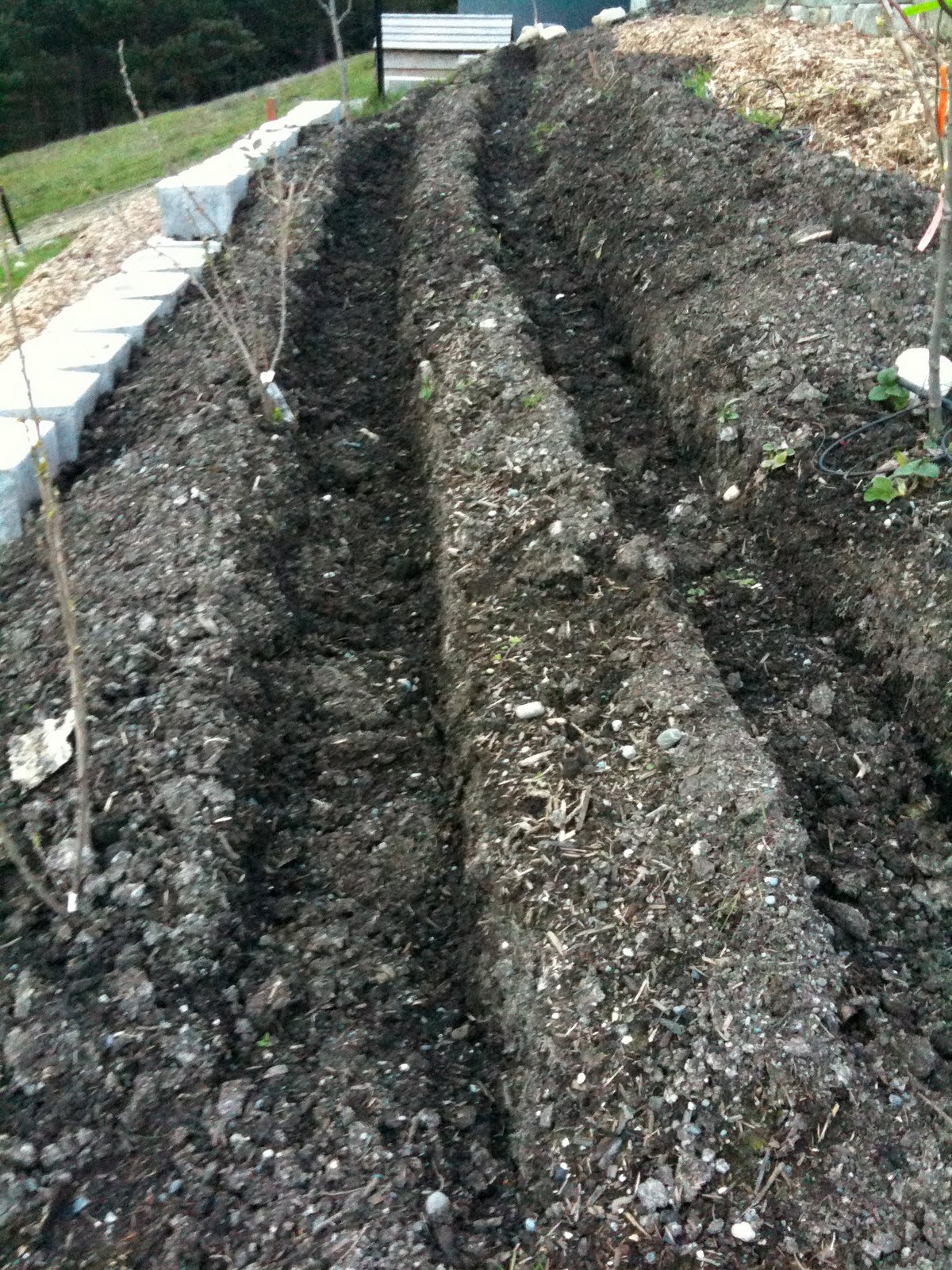
Back from another teaching gig and reinvesting in the garden.
Down in the food forest I added two sets of potatoes as an experiment. The first section is the fairly straightforward trench method so we can do hilling. I dug ~ 200′ of trenches, some in their own dedicated beds and some snaking around our new berry bushes and more two year old fruit trees.
In another section of the food forest that had a site prepped but no topsoil/compost (because I got tired of hauling compost this past summer) I added a line of buckets with potatoes in them. The plan is to add a second vertical layer of buckets (with the bottoms cut out) on top of these as we add more dirt to them during the hilling process.

I went with the buckets for the experiment (and a random trash can) rather than the more popular towers since not many folks actually *doing* the towers were getting good results. I found lots of articles citing the wonders of potato towers written by journalists, but it was clear none of them had actually planted these and watched over them for a season until harvest time. On the other hand, there are many more blog entries by folks actually doing the planting/harvesting with buckets.
And I had truckloads of extra buckets left over from planting the berry bushes and runs to the local deli/bakery for food grade 5-gallon buckets. Reminder: drill holes in the bottom for drainage.
The best part? At the end of the season, I spill the buckets over right where they are in the food forest to make a new bed for a different crop next year. Instead of hauling four yards of dirt down the hill in one day, I do it in small batches over several months…
Hauling manure with a longtail bicycle
Posted: February 9, 2010 Filed under: 3. Food Security, 5. Alt Transportation | Tags: car replacement bicycle, cargo bike, cargonista, electric ute, food forest, kona ute, permaculture Comments Off on Hauling manure with a longtail bicycle
Using my new Wike DIY trailer, I hauled by smelliest load by far this weekend: fresh horse manure.
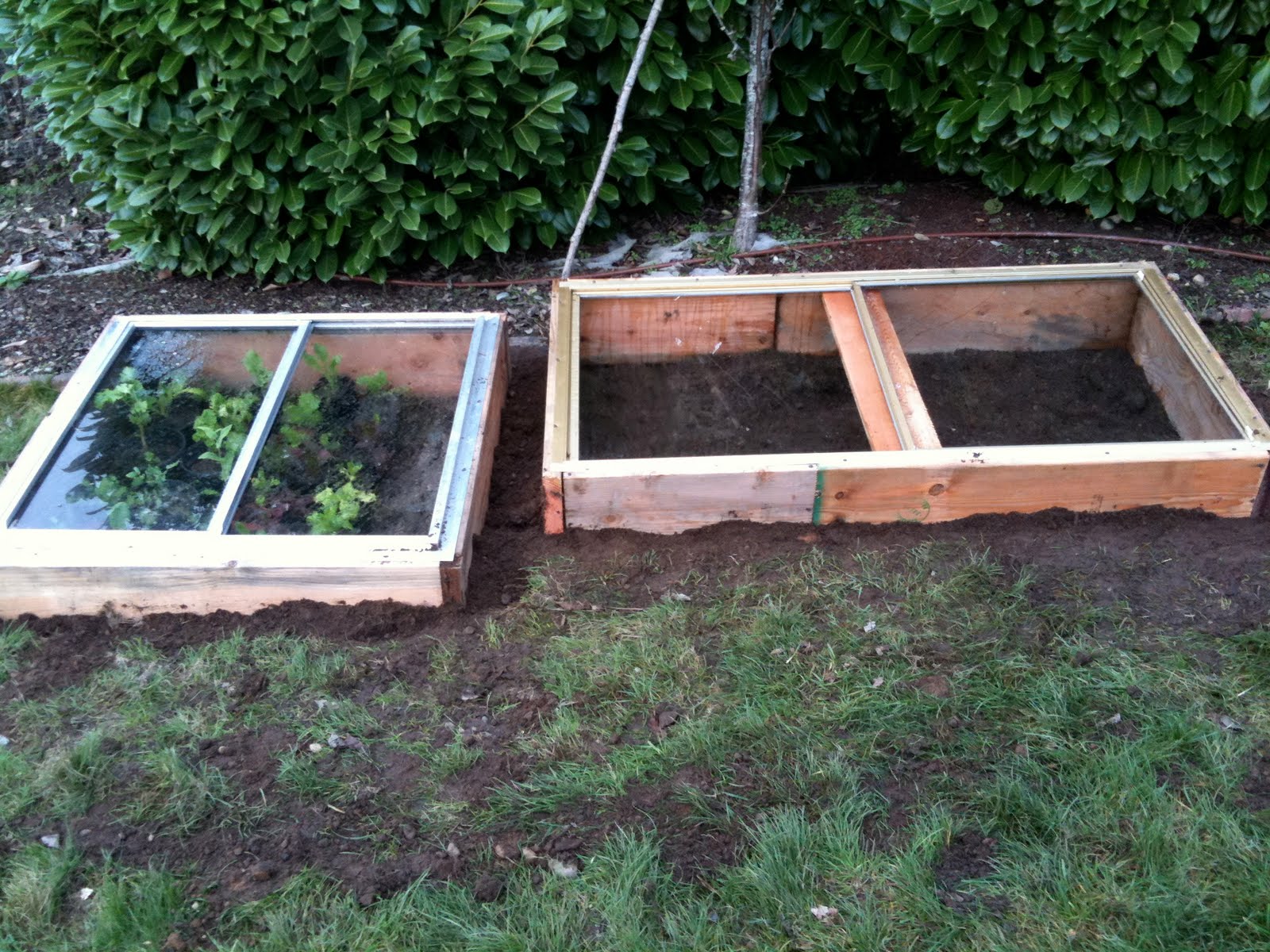
I built a set of “hot beds” to start seedlings last week from scrap lumber and Freecycle window frames. Hot beds are simply cold frames that have some heat source to warm the seedlings in the winter, allowing them to grow faster than an unheated greenhouse or cold frame.
I wanted to experiment with a non-electric heat source, which pretty much just leaves manure. Under the sloped glass roof of the hot bed, we now have 18″ of manure, covered by 6″of dirt, to provide plenty of extra heat for the vegetable seedlings to get a kick start on growing prior to Spring. We’ve got them located on the North side of our property, sloped to the south, to grab as much winter sun as possible.
The cargo bike and Wike trailer did great hauling this load, although the stable owner clearly thought I was nuts showing up with a bicycle to haul manure.
I’ve been testing the replacement eZee battery this past week; getting about 7MPC. Better than the previous 5MPC, but no where close to the claim 20-25MPC in the eZee documentation. Buyer beware.
Roll your own (fruit leathers)
Posted: February 7, 2010 Filed under: 3. Food Security Comments Off on Roll your own (fruit leathers)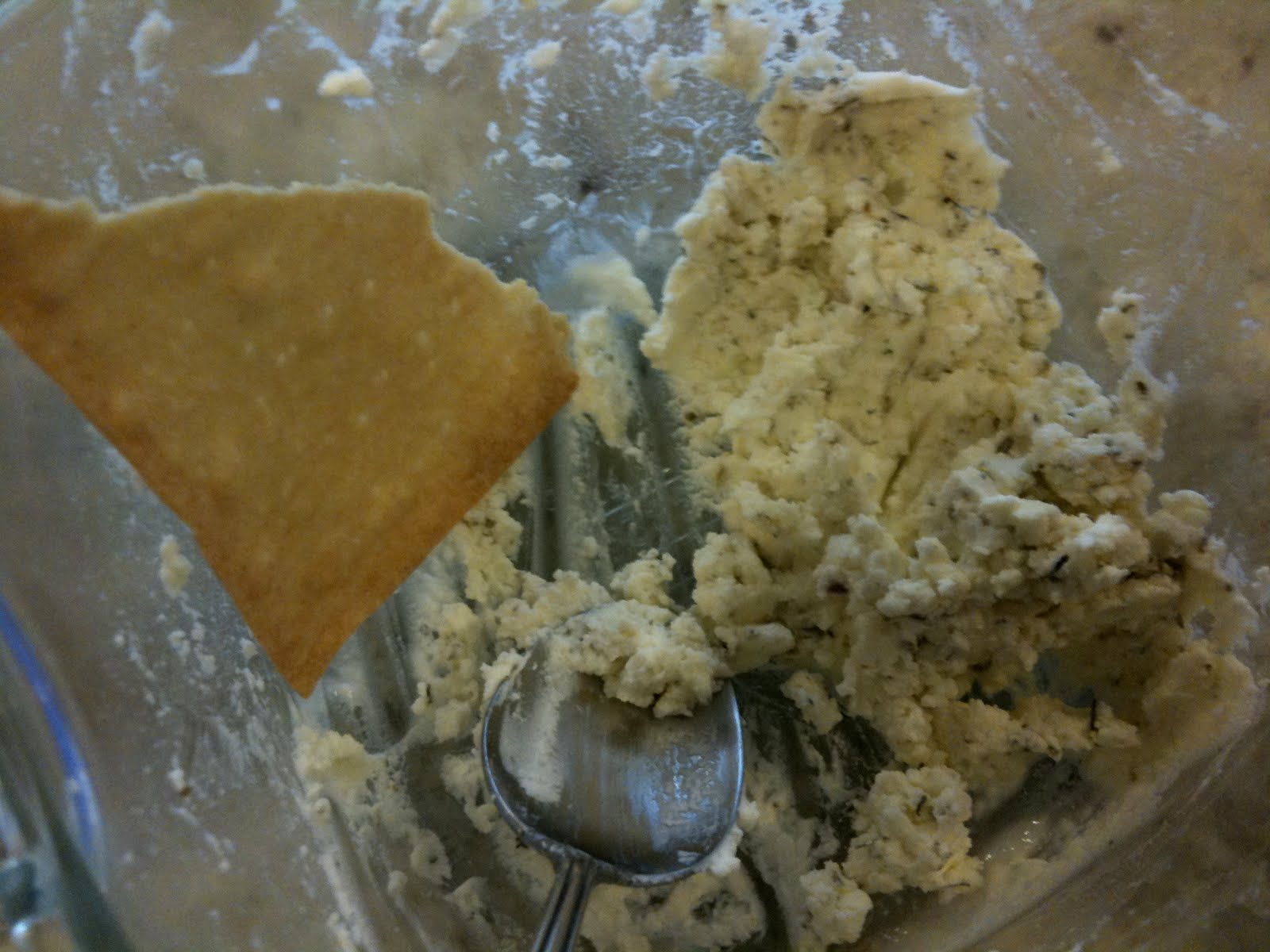
Experimented this week with making our own cheese and fruit leathers. Recommended. Both are easy to do with minimal equipment, and fun to involve the kids. My son took our cheese to sell to the neighbors to raise money for Haiti relief efforts.
We ordered cheese starter cultures from the Cheese Queen Ricki Carroll

The soft cheese pictured here is our Herbs de Provence.
Productive pockets
Posted: February 2, 2010 Filed under: 6. Personal Training | Tags: edc, emergency preparedness, everyday carry, flashlight, knife, pocket knife, torch Comments Off on Productive pockets I was asked what was in my pockets the other day. Odd question, but useful answers. Here’s more details re: a few items I mentioned in a previous productivity post.
I carry the same items in my pockets day in and day out, with one additional flashlight carried during the six months of shorter days during winter.
- Leatherman Expanse pocketknife with both types of full size screwdrivers + bottle opener/carabiner clip
- Space pen + hipster PDA (2.5″ x 3″ cards)
- iPhone 3GS + cheap wired earbuds/mic (because they break every 3 months)
- Streamlight tactical flashlight
- Quark 123 backup flashlight
- Gerber Curve Mini Tool (sometimes alternate with CRKT mini KISS knife on keyring, mostly not) backup blade + screwdrivers + bottle opener
- Paracord king cobra lanyard
- Money clip wallet from Fossil (the best fit for me after dozens of clips over the years)
I’m a dork for pocket knives; my next one is likely the Leatherman Expanse after my current one bites the dust. In a recent trip to a tropical humid location, almost 30% of the knife developed rust…in just two weeks! Weirdest thing, but a bath in naval jelly solved the problem.
Hauling stuff with a cargo bicycle…
Posted: January 26, 2010 Filed under: 5. Alt Transportation | Tags: car replacement bicycle, cargo bike, cargonista, electric ute, kona ute Comments Off on Hauling stuff with a cargo bicycle…
…it sure helps to have an electric hub motor on the hills.
Finished building my new Wike Trailer Kit with salvage materials. The instructions it comes with are almost nonexistent, but Val Dodge has some excellent photo instructions on his blog.
I modified Dodge’s design a bit based on the materials I already had on hand, but the end result is similair: a 2′ x 4′ solid surface on which I can haul any number of big, awkward, heavy items. Not bad for the $130 kit cost.
This addition transforms my wood-paneled station wagon of a bicycle into a wood-paneled station wagon + U-Haul trailer that crisscrossed the US in the 1970s. Love it.
Trying to get it right
Posted: January 21, 2010 Filed under: 5. Alt Transportation | Tags: car replacement bicycle, cargo bike, cargonista, electric ute, kona ute Comments Off on Trying to get it rightA short list of miscues so far in this car-replacement-bicycle experiment. Three examples of when I’ve failed and driven a car by myself.
- When i was sick and had to go to the doctor, who is over in the next town.
- Plugged in battery, but did not turn on charger, and my next trip required hauling stuff. Not smart.
- Lighting equipment failure, discovered right before a dinner party at night.
Several pieces of equipment have also had their miscues. While the Down Low Glow single tube has performed flawlessly as a rear light, the double tube cannot illuminate to full brightness on one of the tubes.
 In the nearby photo, you should be seeing another bright orange glow near the kickstand at the bottom of the bike. The second tube on their double-tube simply does not illuminate more than 20%.
The DLG customer service team has been responsive in diagnosing the ongoing problem; thus far we’ve tried both repairing and then replacing the original tube set. We’re now replacing the battery pack to se if that is the problem. Frustrating.
The battery for the eZee electric hub is even more frustrating. I can’t recommend this system right now as the battery, which promises 20-25 miles per charge, is only delivering 5MPC. A replacement battery is on the way, but even that is a frustrating experience as the US dealer required me to purchase it (another $450 hit) before they would ship it out. Presumably they will credit my account once they receive the defective battery back. Sure hope the new battery delivers the promised MPC.
Carrying kids on a cargo bike
Posted: January 15, 2010 Filed under: 5. Alt Transportation | Tags: car replacement bicycle, cargo bike, cargonista, electric ute, kona ute Comments Off on Carrying kids on a cargo bike
I think we’ve finally got a good solution for transporting my seven year old to school safely on some major roads with a modified Bobike Junior child seat from Europe.
Luckily one of the guys at my local bike shop is handy with metal fabrication, as the base unit needed some significant reworking to fit on the Kona Ute acacia rack. Specific photos of the new base in the photostream.
The end result is a low profile child seat for a 50 pound kiddo, including foot pegs that swivel out of the way to access the saddle bags. Combined with the stoker bar, I just entered SuperHero status with my son. The other kids at school are pretty impressed when we roll up.
I’ve still got room on the rack behind the seat to lash on my cargo, and the panniers can still be loaded to capacity.
Next project: adding a front mounted child seat
The new and improved American “empire”
Posted: January 10, 2010 Filed under: 1. Philosophy, 7. Physical Security | Tags: emergency preparedness, prepper Comments Off on The new and improved American “empire”Dr. Thomas Barnett is a seriously smart fellow. I hope his ideas spread far, wide, and deep into our society so we can see change along the lines that he offers.
Six month progress report
Posted: January 7, 2010 Filed under: 1. Philosophy | Tags: emergency preparedness, prepper Comments Off on Six month progress report
A quick check-in on my goals set out six months ago….here were the topics:
- Water security. Done. Have 5000 gallons of rainwater harvested. It only took about 10 days of rain to gather. Amazing.
- Food security. Done. Regular biointensive gardens + permaculture food forest + backyard chickens installed. Chest freezer + storage closet full of one year’s food as backup.
- Personal training. In progress. Unarmed self defense training is well underway; I’ll continue practicing this in perpetuity. Next up is likely medical training via advanced CPR and EMT classes.
- Physical security. In progress. We start weapons training at local range this month. Motion-sensitive security lights installed. Safe room planned but not constructed. Dogs discussed but not yet purchased.
- Transportation alternatives. Done. The longtail utility bike works well for me, although this might expand to an inexpensive neighborhood electric vehicle (NEV) in the future, replacing one of our gas cars.
- Wealth management. In progress. Actually, it is just on hold. And I don’t have an excuse for the inaction, other than these are very weird economic times. There is zero consensus among money managers what type of investments to be pursuing right now.
- Energy security. In progress. Whole house generator in place. Two cords of wood for fireplace stove in place. Solar hot water tubes scheduled for a March installation. Still have several months left for measuring wind speed for our location to see if wind mills are feasible.
And I’ve avoided getting cauliflower ear so far in MMA training. Thank goodness for arnica
 . 🙂
. 🙂How to ride a longtail with electric assist
Posted: December 2, 2009 Filed under: 5. Alt Transportation | Tags: car replacement bicycle, cargo bike, cargonista, electric ute, kona ute Comments Off on How to ride a longtail with electric assist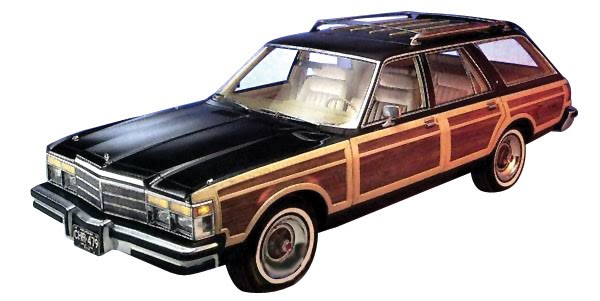
- Avoid braking; it means you’ve likely wasted human or electric energy to get up to speed.
- Conserve battery life; I’m only getting 5MPC versus the claimed 20 out of my eZee battery. It may just be defective; they’re sending a replacement now so this one can be analyzed. But in general, conservation is always a good thing. I try to use the battery in only three scenarios: climbing hills when loaded, getting up to speed quickly, and getting out of a tight jam quickly (like going from a stop to crossing two lanes turning left).
- Don’t assume; given that you travel and approach much faster than drivers expect you to with the electric assist, be careful on roundabouts, turn lanes, etc.
 Opt Out En Masse