Do not buy the eZee bicycle kit
Posted: May 10, 2010 Filed under: 5. Alt Transportation | Tags: cargo bike, cargonista, electric ute, eZee sucks Comments Off on Do not buy the eZee bicycle kit
The eZee electric bicycle kit is not ready for prime time. After going through two batteries and two complete wiring harnesses with six months, I can make that statement with proof.
Neither myself, the pros at my local bike shop, nor the pros at the New York bike shop where I bought the system can figure out why the system randomly supplies 100% power, 10% power, or no power at all when hitting the throttle at the base of a hill. What an expensive, frustrating experiment this has been. My only recourse is to have the NY shop try to repair/resell the system and recoup a small portion of my money. The eZee warranty sucks.
Lesson (re)learned: do not buy a complex product that is not fully supported by your local bike shop.
Thankfully, my local bike shop just started carrying the Bionx electric conversion kit. It is more expensive (ouch) and rear-wheel drive (I wanted front wheel, since all the weight on a longtail is in the back), but my only option at this point. Stay tuned for a review after we get it installed.
Alternative to self defense :: self offense
Posted: April 20, 2010 Filed under: 7. Physical Security | Tags: aikido, BJJ, boxing, brazilian jiu-jitsu, counter attack, emergency preparedness, martial arts, MMA, self defense, self offense Comments Off on Alternative to self defense :: self offenseI joined a second dojo a few weeks ago. The teacher there has extensive experience with boxing, Brazilian Jujitsu (what you do once you’re on the ground for newbies like me), and training students for the sport of MMA. He knows I’m not there for the sport, but the real life applications, and throws me an additional insight from time to time (“here’s what you’d do if you are on concrete…”).
The other aspect I like about this second dojo is the emphasis on full speed, full contact. With fairly complete body armor and *lots* of verbal communication with your partner, we can safely ramp up the sparring while staying in a learning mindset, avoiding that triggered reaction of closing off your mind and going into fight-flight mode.
I’m beginning to think of this less as “self defense” training and more of “self offense” training. Given the scenarios I’m training for (someone trying to abduct my child, etc), my objective is to hit first, even though I am the second to move. A professional trainer named Jerry Lee Peterson came up with this concept first, I think. The idea is the the Bad Guy(s) have made the first move, but through superior conditioning and training, I am the one to land the first significant hit.
Similarly, Paul Evans explains that self-defense is very different than a counter-attack. A defense merely delays the oncoming attack from overwhelming you, whereas a counter-attack stops the attacker by attacking him…which is quite different than defending against him.
Am I ditching my first aikido-based training? No way; it is still the foundation of everything I’m doing, given it’s pure focus of diffusing the negative situation with a positive outcome. How could potentially disabling someone by smashing them in throat and then nuts for a quick “stun and run” be considered positive? Because it is better (legally, ethically) than the alternative. There is a reason the police train in aikido tactics for control and restraint.
Now that I am spending more time on BJJ, I’ve found some interesting thoughts that BJJ instructors are saying about aikido and how one flows into the other. You can see it in Roy Dean, who holds a black belt in both aikido and BJJ. And Ari Bolden, who holds a black belt in aikido, Japanese Jujutsu, and a purple belt under Eddie Bravo. These are genuine Brazilian Jiu-jitsu practitioners demonstrating an appreciation for aikido. That’s got to say something about the art.
And finally, a bit of aikido geek humor
Hard to imagine an aikido competition without the image of two competitors within an arms length telling each other, “Go ahead, grab me. No, you grab me. NO, you grab me.”
Fighting obesity in our country
Posted: April 11, 2010 Filed under: 3. Food Security | Tags: Jamie Oliver Comments Off on Fighting obesity in our country Another TED speaker who really nailed his topic is an English bloke named Jamie Oliver. He’s a chef and an evangelist on a crusade to un-fatten America.
Why us? Because he (correctly) recognizes that if we change our lousy eating habits and toxic food, the rest of the world will follow. Well, that and research clearly shows that we are the fattest, laziest country in the world. Geesh.
How the hell did we go – in such a short amount of time – from having the top minds, top bodies, and top results in the world to a scenario where US children can’t recognize a tomato? If you are like me, when you watch this video you’ll say WTF? at least half a dozen times when looking at the data and case studies Oliver has gathered on our country.
Shrooms
Posted: April 8, 2010 Filed under: 3. Food Security | Tags: morels, mushrooms Comments Off on Shrooms
Oh my gosh. We have morels. We have HUNDREDS of morels. In the middle of our food forest.
I was walking through checking our our potatoes in the ground and the buckets (ones in buckets are growing significantly faster, maybe warmer soil?) and I noticed these things popping up throughout our fruit tree guilds. Ignore the weeds in the nearby photo and take a look at those beautiful mushrooms.
I now have a rival for what I am more excited about, the garlic versus the morels. Wow!
How to use row covers
Posted: April 5, 2010 Filed under: 3. Food Security | Tags: emergency preparedness, food forest, prepper Comments Off on How to use row covers
This past winter we got to start eating our own salad again in February thanks to an experiment with floating row covers
Wow. What a difference this stuff makes. Suggestions: use wooden clothes pins for an inexpensive, easy-to-remove fastener on top of the wire frames.
Between these covered beds in both the raised bed section and the food forest, our cold frames, and our hot beds, we’ve been eating well and have a serious jump start now that spring sunshine has arrived.
How to build a chicken tractor :: version 2.0
Posted: April 2, 2010 Filed under: 3. Food Security | Tags: chicken tractor, portable chicken coop Comments Off on How to build a chicken tractor :: version 2.0
All the birds were OK, just wondering where their roof went. I retrieved my son from school early, bought the largest fishing nets we could find, and tracked down our birds wandering around the pasture before the daily sundown coyote pack visit.
- Aesthetics (for us and neighbors)
- Wind management for entire coop + nest boxes
- Coyote/Raccoon proof
- Weight for daily movement
- Manageable trap door and access to nest boxes for my kids
- Cleaner eggs
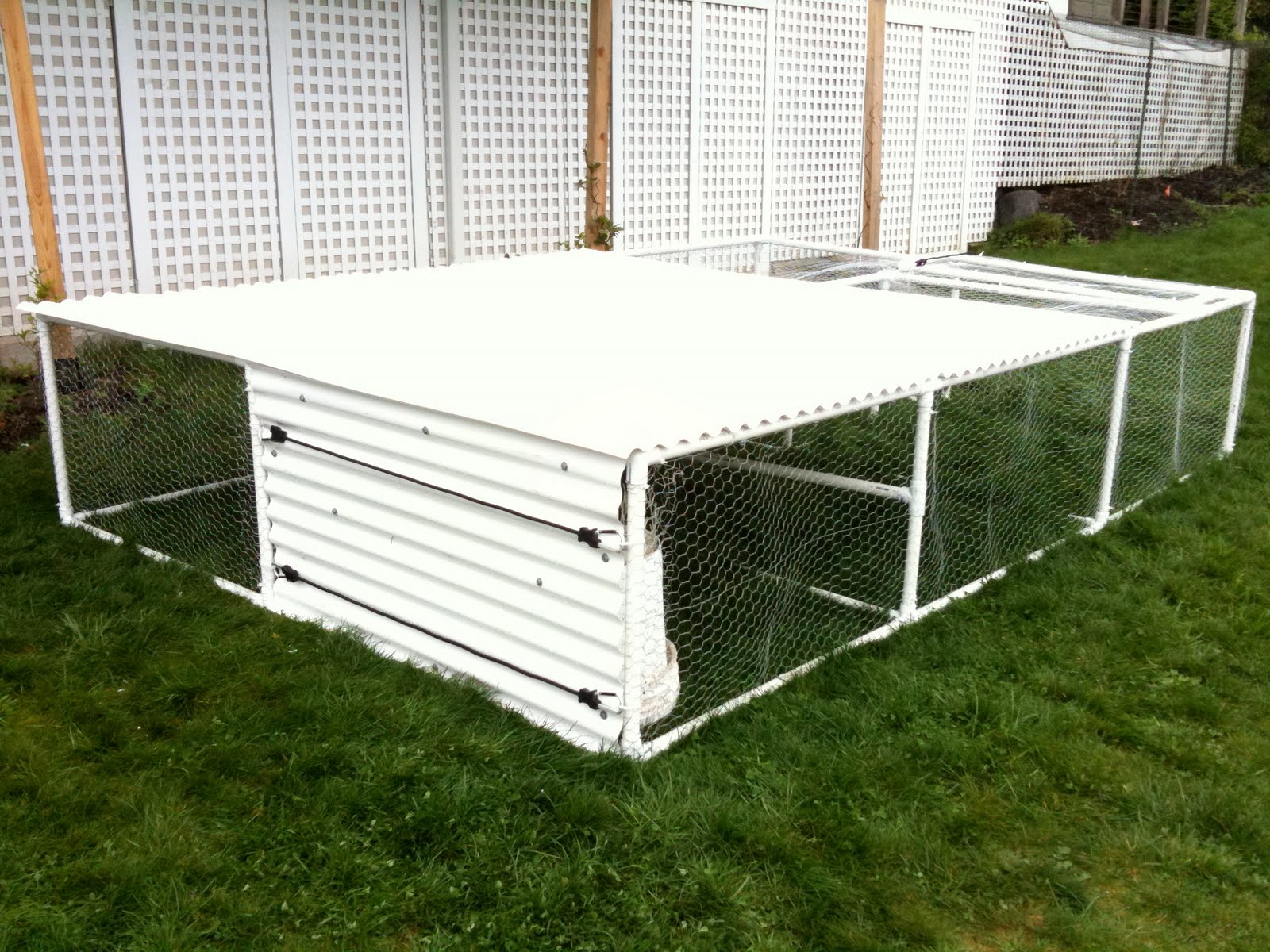
- Flat roof. There are zero flat areas in my back yard, so a flat roof will still shed rain well since the entire coop is always at an angle. The new flat roof allowed me to get away from tarps, which never stay tight nor look attractive for long.
- Solar electric fence
to replace the hardware mesh skirt. The skirt *is* effective against coyotes; we’ve found their scat right next to the coop several times. But it catches on the pasture grass and makes daily movement of the tractor difficult for my wife.
- Horizontal access door (replacing a vertical accessible hatch). You can see it in the accompanying photo, held in place by carabiner lock bungee cords
to thwart the raccoons. See additional detail photos in the nearby photostream. The nest buckets are bolted to this door, which keep s them upright even in strong wind. My seven year old can lift off this panel to retrieve the eggs by himself. With the nest buckets secured, we can use straw rather than sand in the base, which makes for much cleaner eggs.
- 4′ additional roost space with 100% of it under roof. Old design only had 8′ of roost space with 2′ open to the sky (rain).
- Do a dry fit before applying pipe cement and drilling holes.
- Remember overall lengths increase when adding fittings by about 1”. Adjust your pipe lengths accordingly.
- I considered using cattle panels, but at 36 lbs for every 50″ x 16′ section, they would add too much weight. Same for wood versus water pipe. Weight considerations drove alot of our decisions.
- Corrugated plastic roof panels
- Bolts to secure panels (2″ with wide washers and locknuts)
- Silicon to make drill holes for bolts waterproof
- Water pipe (1″ schedule 40)
- Pipe fittings (esoteric ones here)
- Chicken wire (2′ roll)
- Solar electric fence
- 17 gauge wire for electric fence
- 14″ screwdriver to act as a ground for electric fence
- Zip ties (lots and lots)
- Pull ropes with clamp-on end hooks
- Ground stakes
used for dogs to secure coop in high wind
How to live to be 100
Posted: March 28, 2010 Filed under: 1. Philosophy Comments Off on How to live to be 100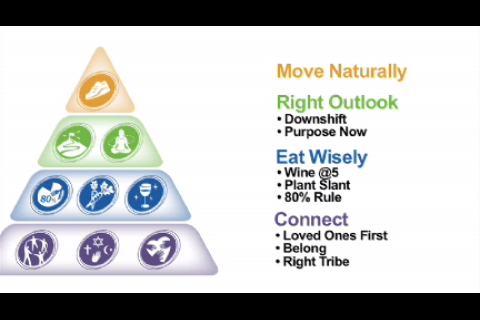
Why are we opting out? Why are we encouraging others in our community to do the same? Well, at a very basic level it is so we can live a *long* peaceful, productive, enjoyable life surrounded by friends.
I got to get caught up on a backlog of TED Talks during a recent set of plane trips. Dan Buettner nails it in this well-research presentation. Summary pictured on right.
Interested? Go watch the full video.
Singing the Electric Blues
Posted: March 24, 2010 Filed under: 5. Alt Transportation | Tags: car replacement bicycle, cargo bike, cargonista, do not buy eZee, electric ute, kona ute Comments Off on Singing the Electric Blues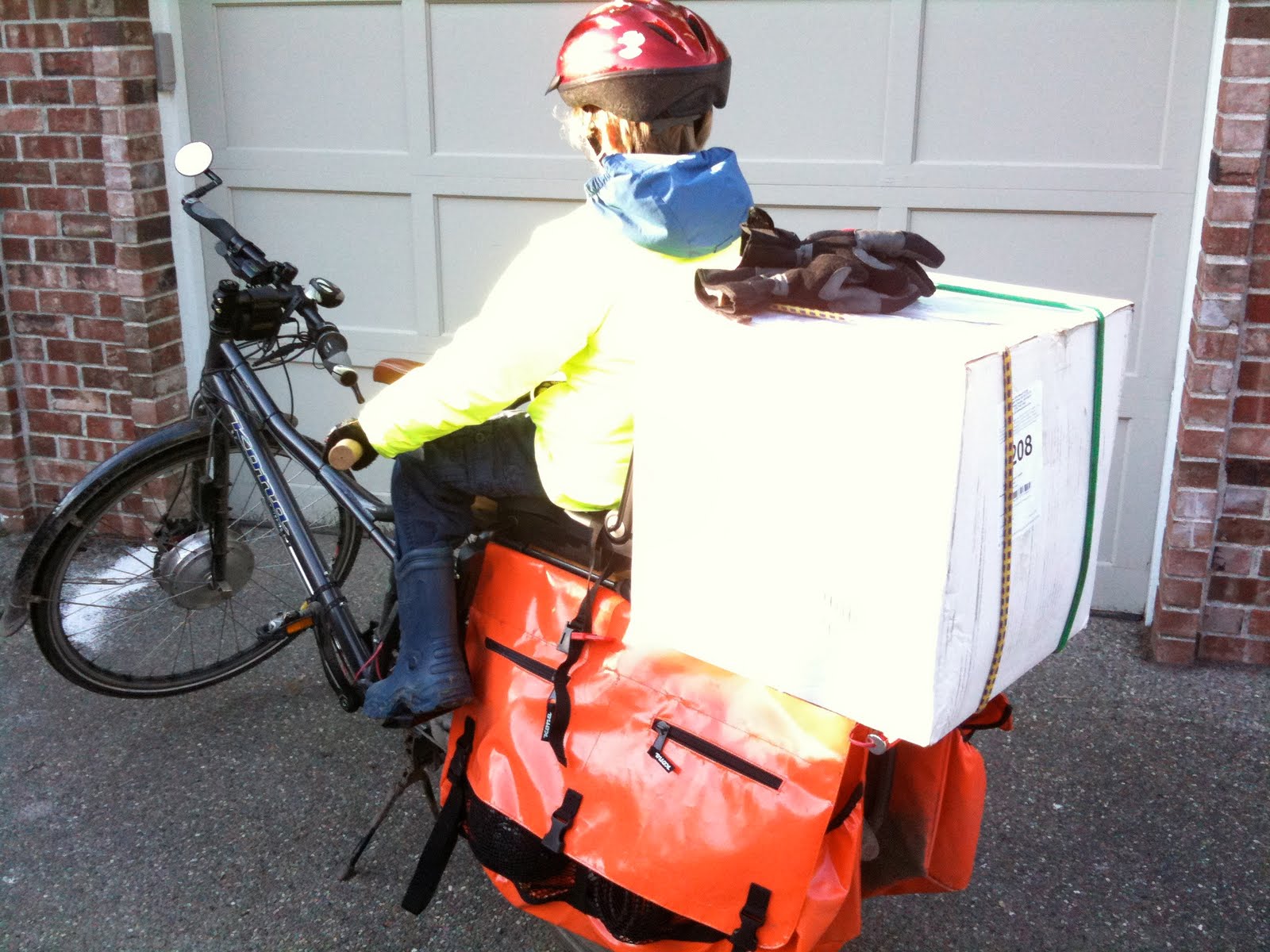
Finally made time to diagnose what’s going on with my eZee electric hub system. Technically speaking, it is busted. Sucks to be me. I am an electrical idiot, so the advice of the eZee vendor of “use a multimeter and find the short” was more than a bit daunting. But that’s exactly what I did and successfully found…nothing.
So I called in a professional electrician (read: $$) to diagnose it and he too found nothing. Yet additional test rides produce the same frustrating results: you are pedaling along like normal, you hit a hill and engage the eZee system and you get…nothing. Well, actually, you get some rapidly blinking random lights from the LED, but nothing from the battery. Try it again in a minute and you get no lights but only 10% of the power from the battery. Try again in another minute and you get nothing from either the LEDs nor the battery.
All connections have been triple-checked and tested. Battery has full charge. And I’m on smooth pavement; no bumps. Frustrating to say the least.
So I’m back to my original ride (a 10 year old, street-converted, dual suspension Klein) and significantly less hauling capacity. Which leaves me with a bad-and-getting-worse experience with the eZee electric hub system. Not recommended.
I’m still under warranty, but the New York vendor is not being terribly helpful, partially because it is difficult to diagnose what’s going on with a system from afar. Hoping this does not turn into a case of Buyer Beware. Definitely make sure your local bike shop can support the system before you buy it (e.g. they’ve got a mechanic who is electrically inclined).
On the plus side, it appears the crew at Down Low Glow figured out they had a bad batch of components for their dual-tube system. The third set of replacement they sent appear to be working well. Kudos to Leif and their crew for not giving up. Recommended.
The joys of garlic
Posted: March 23, 2010 Filed under: 3. Food Security | Tags: food forest, permaculture Comments Off on The joys of garlic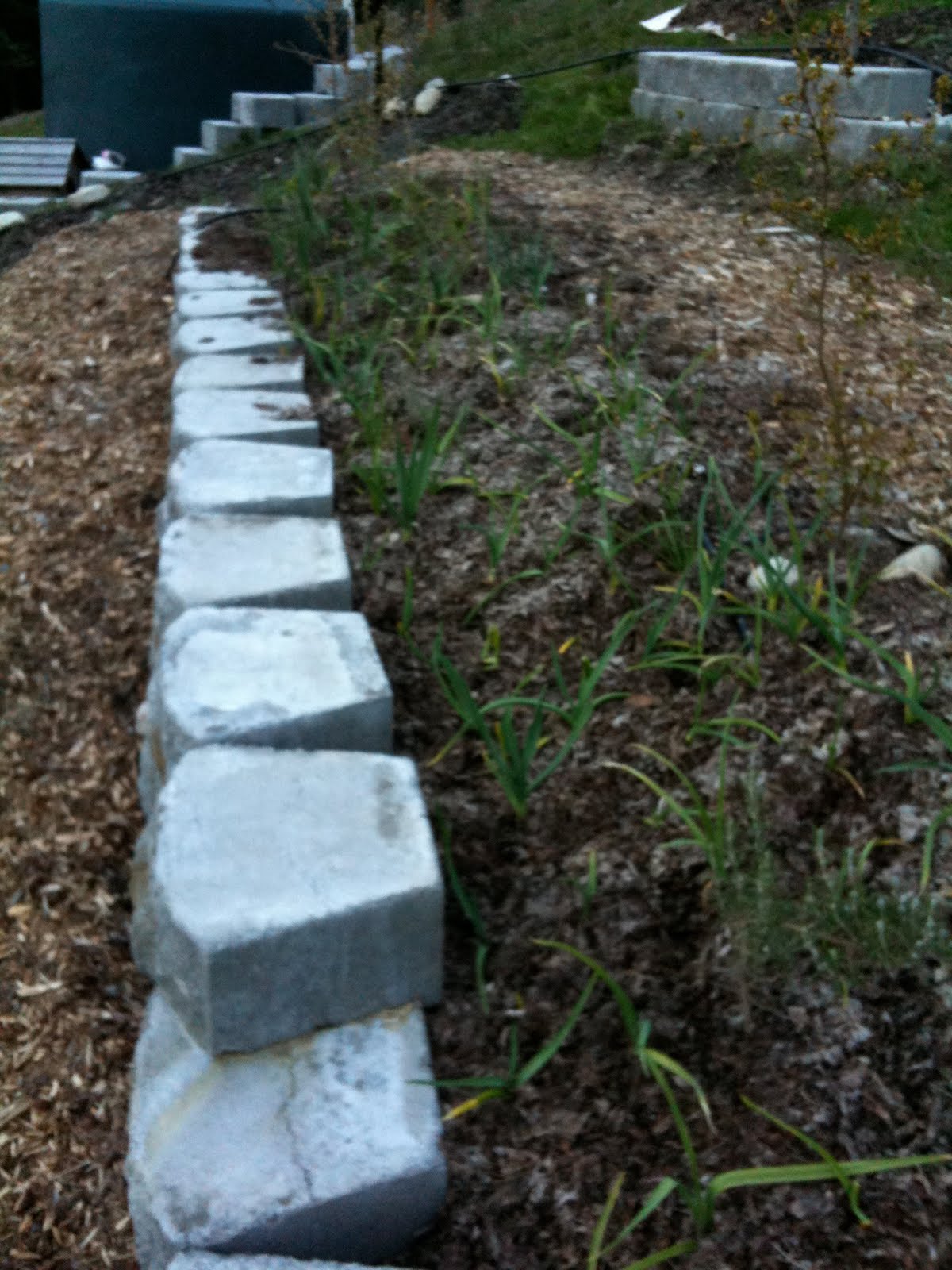
This photo does not really do justice to how exciting of a scene this is: 50′ of garlic. About eight varieties.
Anytime someone is our family gets sick (which is often with little kids), we cook with garlic for a week and it seems to keep the cold/flu from rampaging through the entire family. It’s pretty cool to see a two year old pulling cloves out of the baked garlic, mashing it on homemade bread, and scarfing it down.
This book was particularly helpful for selecting garlic that does well in our area, planting it right, and learning how to harvest/store it to last for months: Growing Great Garlic: The Definitive Guide for Organic Gardeners and Small Farmers
Oh my gosh, I cannot wait.
The progression of a chicken tractor
Posted: March 18, 2010 Filed under: 3. Food Security | Tags: chicken tractor, portable chicken coop Comments Off on The progression of a chicken tractor
Of our 14 layers in our chicken tractor, we’re getting 11 eggs/day during the warmer weeks and 7 eggs/day during the colder weather. Given that our springtime weather fluctuates from 60 degree days for a week down to snow flurries the next, these birds are likely confused a bit.
But given that our family’s daily intake for eggs is only 6 eggs/day, my son has already started his first official business selling the excess eggs to neighbors, $4/dozen. Not bad for organic eggs delivered to your door by a cute kid.
But all is not well the the Great Chicken Tractor. These birds have taken the idea of a pecking order to Olympic heights. One bird is not only clearly the Big Layer, she’s also the Big Bitch. the vengeance with which she pursues the lowest 50 percentile on the pecking order is amazing.
In fact, it’s likely to get her killed. If she keeps this up and one of the lower order birds gets pecked to death, the Big Bitch is going on our dinner table the next night. 75% of our birds have completely bald butts and throat areas. Significantly more feather loss than what molting might account for. And that’s how I ended up with purple hands for a week.
I found a product from England that both heals and leaves a bad-tasting film on the chickens’ skin/feathers. The birds are now running around with purple butts – which is hilarious – but I failed to read the instructions that the stuff seriously stains. Explaining my hands to the folks at the dojo was a bit embarrassing. I finally just settled on, “I was painting my chickens purple, of course.” when asked about it. Got some funny looks, to be sure.
Any other thoughts on excessive pecking behavior? Shoot me an email or add a comment. Thus far we’ve explored diet, space, weather, and stress. I’ve settled on stress, since we find coyote scat right next to the coop on a regular basis.
 Opt Out En Masse