US military prepares for economic collapse
Posted: February 15, 2011 Filed under: 1. Philosophy, 3. Food Security, 6. Personal Training, 7. Physical Security Comments Off on US military prepares for economic collapseI’m glad I live in a country where our military folks have the resources to learn via roleplaying and what-if scenarios. It’s a useful way to learn and explore all the aspects of a given topic. But it also makes me nervous-as-all-get-out when I read this:
The Army has launched an operation called “Unified Quest 2011” in which it studies the “implications of ‘large scale economic breakdown’ inside the United States that would force the Army to keep ‘domestic order amid civil unrest.'” The 2011 Unified Quest lends truth to assertions that the United States is indeed not witnessing an upward economic recovery, as so many in our federal government have asserted. Soldiers are being trained in evacuation and detainment as a response to rioting, revealing the possibility that the United States military may resort to martial law in order to maintain order. Unified Quest 2011 also prepares soldiers to act as diplomats in the event that there is a limited availability of diplomats at combat outposts, or on the streets contending with hungry and angry Americans.Ugh. You can read this either positively or negatively. I’m frankly not sure which is closer to the truth of reality.
The government will not help you
Posted: February 1, 2011 Filed under: 6. Personal Training, 7. Physical Security | Tags: Map Your Neighborhood, MYN Comments Off on The government will not help you
Katrina made landfall as a Category 4 hurricane the same morning this photo was taken. Ugh.
It’s not that government officials and employees do not *want* to help you in a natural disaster – or any kind of emergency – it is that they literally will not *be able* to help you.
When the widespread eco-disaster hits your area, do you think help is on the way from your local, regional, or federal government? The unfortunate answer has proven to be “No.” It only takes one read thru this timeline to understand why regional and federal aid will be shortcoming.
Leave your personal political beliefs out of the equation when reading through the timeline; the US just simply is not prepared for this type of disaster response. This was an epic fail.
Like the frustrated firefighters who have to drive right by the home going up in flames in order to survey their entire small town before they can begin to dispatch the blazes one by one, when a large emergency hits the local level government folks will be overwhelmed and scrambling.
What’s the positive, citizen-led solution to this issue? For our family, it is the Map Your Neighborhood program.
New self-offense class for “normal” folks
Posted: January 25, 2011 Filed under: 6. Personal Training, 7. Physical Security | Tags: self offense Comments Off on New self-offense class for “normal” folks At one of the dojos I train, we’ve begun to build a new self offense class two afternoons a week.
Strangely enough, after a frustrating morning of dealing with politics in the world of Fair Trade companies, it is very satisfying to throw elbows at a target as hard as you can over and over until your elbow is raw and bleeding.
Of course, then you have to provide the same target for your sparring partner. This was even with a thick forearm pad! Where’s my Arnica?
Staying to help
Posted: August 15, 2010 Filed under: 1. Philosophy, 6. Personal Training | Tags: emergency preparedness, go bags, self-reliance Comments Off on Staying to help A recent conversation with a friend reinforced the need to encourage local people to stay and help during an emergency, whether it is a long one or just a few days. Over the course of a few conversations, I could see his outlook change from “I need to escape to another country with my kids” (he’s divorced) to a more positive, healthy attitude of “I need to get trained up so I can stay and help my community.”
That’s a *great* change in attitude, applicable for many situations (I’d still use the Go Bags if you’ve got a nearby chemical spill on the highway). I appreciated watching the stages of my friend’s progression as I port my self-reliance projects from a personal level to a town level.
You can read a similair journey taken by the excellent writer Neil Strauss in his book, Emergency. Another author, Zachary Nowak has an interesting take on this attitude here. His editor Adam Fenderson, founder of the Energy Bulletin, commented on Nowak’s essay:
There is also a ‘third way’, one which combines self-sufficiency/survivalist type tactics with community building and some relatively positive visions. Eco-villages, Richard Heinberg’s lifeboats strategy, and the [Transition] town-scale efforts in places such as Kinsale in Ireland and Willits in California might be considered part of this approach.
Isolationist survivalism, constantly on the guard from marauding hordes, doesn’t sound like an existence most of us would consider worth living. And promoting it, where it takes our energies away from more collective energy descent tactics might actually increase the likelyhood of such uncontrolled collapse and desperate marauders. So the ethics of promoting such an approach are complex.
We publish Zachary’s article because it is full of excellent advice and resources of value to anyone with an interest in taking more than a superficial approach to sustainability (a term which ultimately does mean the same thing as survival.)
“In Transition 1.0” the film
Posted: July 15, 2010 Filed under: 1. Philosophy, 2. Water Security, 3. Food Security, 4. Energy Security, 5. Alt Transportation, 6. Personal Training, 8. Wealth Management | Tags: In Transition 1.0, Transition Towns Comments Off on “In Transition 1.0” the film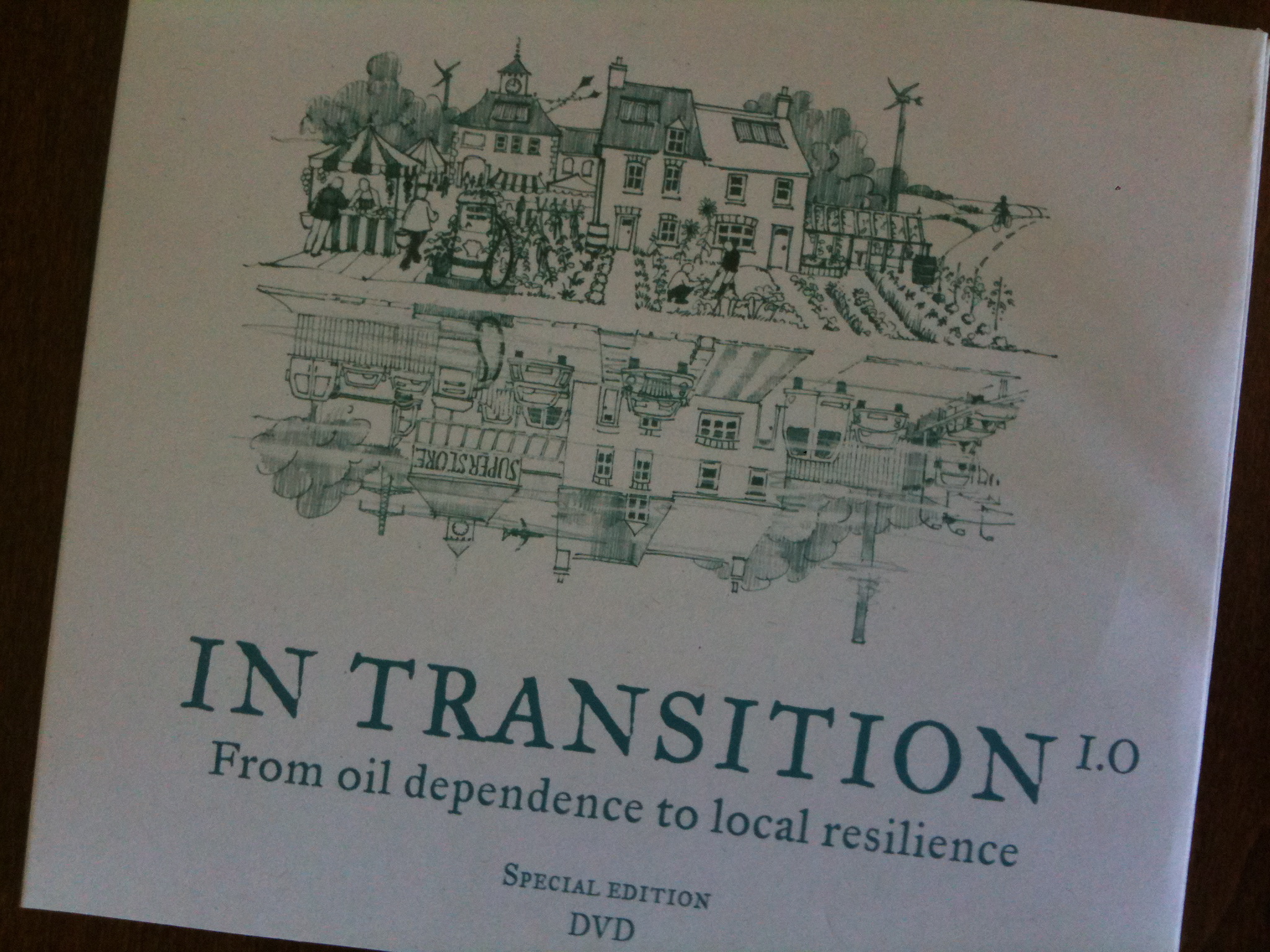 Wow.
Wow.
I think this short collection of vignettes may have just set the direction for my personal and professional time for the next 5+ years.
Highly recommended.
Productive pockets
Posted: February 2, 2010 Filed under: 6. Personal Training | Tags: edc, emergency preparedness, everyday carry, flashlight, knife, pocket knife, torch Comments Off on Productive pockets I was asked what was in my pockets the other day. Odd question, but useful answers. Here’s more details re: a few items I mentioned in a previous productivity post.
I carry the same items in my pockets day in and day out, with one additional flashlight carried during the six months of shorter days during winter.
- Leatherman Expanse pocketknife with both types of full size screwdrivers + bottle opener/carabiner clip
- Space pen + hipster PDA (2.5″ x 3″ cards)
- iPhone 3GS + cheap wired earbuds/mic (because they break every 3 months)
- Streamlight tactical flashlight
- Quark 123 backup flashlight
- Gerber Curve Mini Tool (sometimes alternate with CRKT mini KISS knife on keyring, mostly not) backup blade + screwdrivers + bottle opener
- Paracord king cobra lanyard
- Money clip wallet from Fossil (the best fit for me after dozens of clips over the years)
I’m a dork for pocket knives; my next one is likely the Leatherman Expanse after my current one bites the dust. In a recent trip to a tropical humid location, almost 30% of the knife developed rust…in just two weeks! Weirdest thing, but a bath in naval jelly solved the problem.
Beating the flu
Posted: October 31, 2009 Filed under: 6. Personal Training | Tags: emergency preparedness, prepper Comments Off on Beating the flu Ugh. I feel like I’ve survived death. Swine flu is *not* fun. I picked up the bug on a plane ride back from Chicago. Just finished four days of misery.
Building relationship networks
Posted: July 28, 2009 Filed under: 6. Personal Training | Tags: emergency preparedness, prepper Comments Off on Building relationship networks
More wisdom from Joel Skousen:
“Possessing a few personal friends you can intrinsically trust at all times is one of the most important contingency preperations you can make.”
- Connect the various parts of our small town via ham radio to maintain contact even during emergencies when our phone and cell systems have shown they can be easily overwhelmed. Specifically have these ham radios sit at locations where we are connecting food, water, and reliable heavy transportation (horses). These radios are not sitting at city government offices, but in private homes of clued-in people.
- Map walking/biking/horse riding paths for non-vehicle transportation around our town.
- Create my own personal “Board of Mentors” of those who can train me, help me, and join me in leading our small town in preparedness.
- A close friend who is clued-in and knows many of our local farmers on a first name basis. He’s a rebel rouser who has proven that he can create positive solutions that fly in the face of traditional wisdom. The one who clued me in to Wendell Barry.
- An acquaintance who is an expert on ham radio, electric vehicles as alternative transportation, and has significant financial resources.
- A close friend who has recently become a local micro-farmer / micro-rancher. The one who turned me on to Joel Salatin.
- Several acquaintances who are skilled craftsmen (wood working, plumbing, etc).
- An acquaintance who is a permaculture expert.
- A former student who is an alternative energy expert (solar and wind). We’re setting up a tool next week to measure our wind capabilities for the next year.
- An acquaintance who is an Emergency Medical Technician (EMT) and member of our town’s volunteer fire department. He also trains doing MMA, so he may become a reliable Krav Maga sparring partner as well. Although I’d have to convince him this is not a sport for me, but a way to keep my family and friends safe.
What roles am I missing? You tell me. Either comment below or send me email at optoutenmasse at gmail dot com.
Are you freaking out?
Posted: July 22, 2009 Filed under: 6. Personal Training | Tags: emergency preparedness, prepper Comments Off on Are you freaking out? If any of the topics I’m talking about here freak you out, consider a quick visit to the PeakShrink’s blog (as in Post Peak Oil), specifically this post. Clearly an interesting woman using her skill set to keep “prepper” readers sane and thinking clearly.
Personal productivity
Posted: July 17, 2009 Filed under: 6. Personal Training Comments Off on Personal productivity I’ve been asked how I have time to work on these emergency preparation projects in the midst of several day jobs + two little kids. Three reasons…
 Opt Out En Masse