Bad News Bees
Posted: June 18, 2011 Filed under: 3. Food Security Comments Off on Bad News Bees Just as the Bad News Bears were an unruly bunch of kids, sometimes a hive of bees can develop a rowdy streak.
But good news came with the bad today…
Bad News: one of our hives swarmed, with 30,000 of the bees (half the hive) following a rouge queen out the door. Yikes, that means the remaining 30,000 bees left back in the hive will have a lot of work cut out for them to prepare for the winter.
Good News: I was having a casual work meeting in my backyard discussing the graduate program where I teach with a prospective student at the time, so I got to witness the swarming. Very cool phenomenon; imagine a tornado of bees rising up in front of you.
Bad News: the swarm headed down our hill, and settled on a tree branch…directly over a 2′ tall biting ant hill. Ouch.
Good News: the branch was only 12′ off the ground, easily reachable via an 8′ ladder, which helped us avoid the ants, too.
Bad News: to recapture the swarm, you need a place to put them, and I only had 80% of the needed materials on hand.
Good News: a quick set of phone calls to my local bee-keeping buddies brought out the calvary (pictured here, along with my son the documentarian) who dropped what they were doing and arrived with extra materials in hand (and lots of wisdom for the capture).
Best News: we (that’s the royal we, meaning mostly my beekeeper buddies) successfully captured the swarm and placed them in a temporary hive. After a few days in there I’ll attempt to reintegrate them into their original hive to keep them strong and productive. UPDATE: started the reintegration process; we’ll see what happens in the next 48 hours.
Using a broadfork
Posted: June 16, 2011 Filed under: 3. Food Security Comments Off on Using a broadfork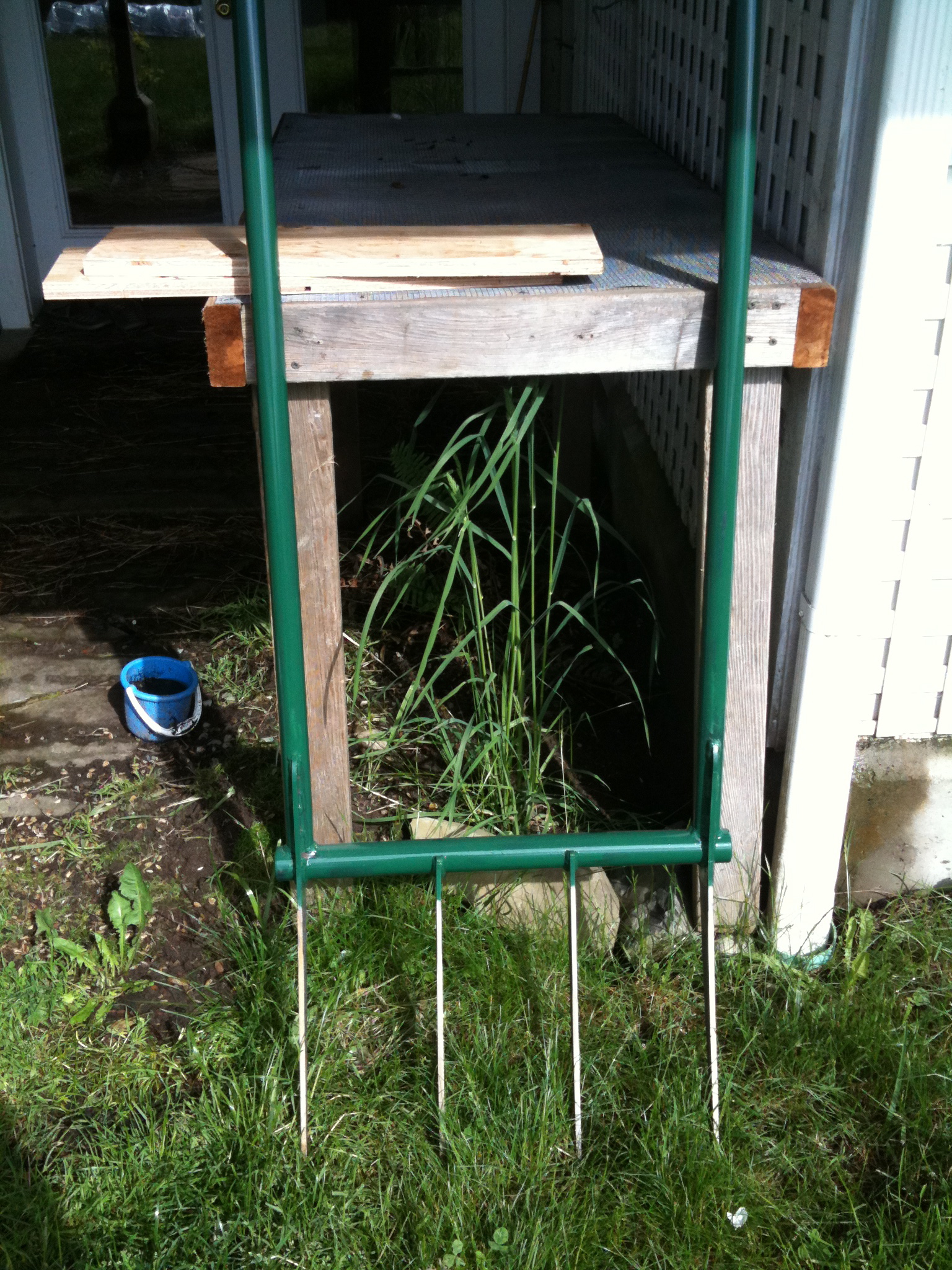 This thing is huge, heavy, and awesome.
Several of the farming blogs I read reference a broadfork, but no one sells them locally. Thankfully a google search gave me two blacksmiths in my region that hand make these useful tools.
Great for everything from harvesting potatoes to adding amendments to your garden beds. With our hard clay that is only 9 inches down, I’ll be putting this thing through it’s paces soon.
What are we eating?
Posted: June 14, 2011 Filed under: 3. Food Security Comments Off on What are we eating? I was recently reorganizing my workshop when I came across our stack of potato tower buckets that I scavenged from our local bakeries and delis.
One of the buckets for “cream cheese icing” caught my eye, specifically the laundry list of chemical ingredients. We’re literally killing ourselves with these food-like substances masquerading as real food. The only true purpose of these chemical compounds is to make corporations money; there is no effort made here for health, beauty, or taste. Ugh.
However, I do enjoy the irony of using the old containers of this chemical crap to grow hyperlocal organic food. 🙂
Overachieving chickens
Posted: May 31, 2011 Filed under: 3. Food Security | Tags: day ranging, golden comets Comments Off on Overachieving chickens I love our Golden Comet laying hens.
They lay an egg a day without pause and many of the eggs are huge (see eggs on left in photo). We keep these oversized ones ourselves rather than include them in the eggs we barter as they simply won’t fit in any egg carton.
Notice the blue Araucana egg is smaller than even the normal size Golden Comet eggs; the blue one is the same size as the eggs you buy in the store.
The Golden Comets are proving to be sweet-tempered with our children, small body weight requiring less feed, very healthy in a day-ranging scenario, and excellent egg producers. Love this breed. Highly recommended.
Thank goodness it’s Spring
Posted: May 20, 2011 Filed under: 3. Food Security Comments Off on Thank goodness it’s Spring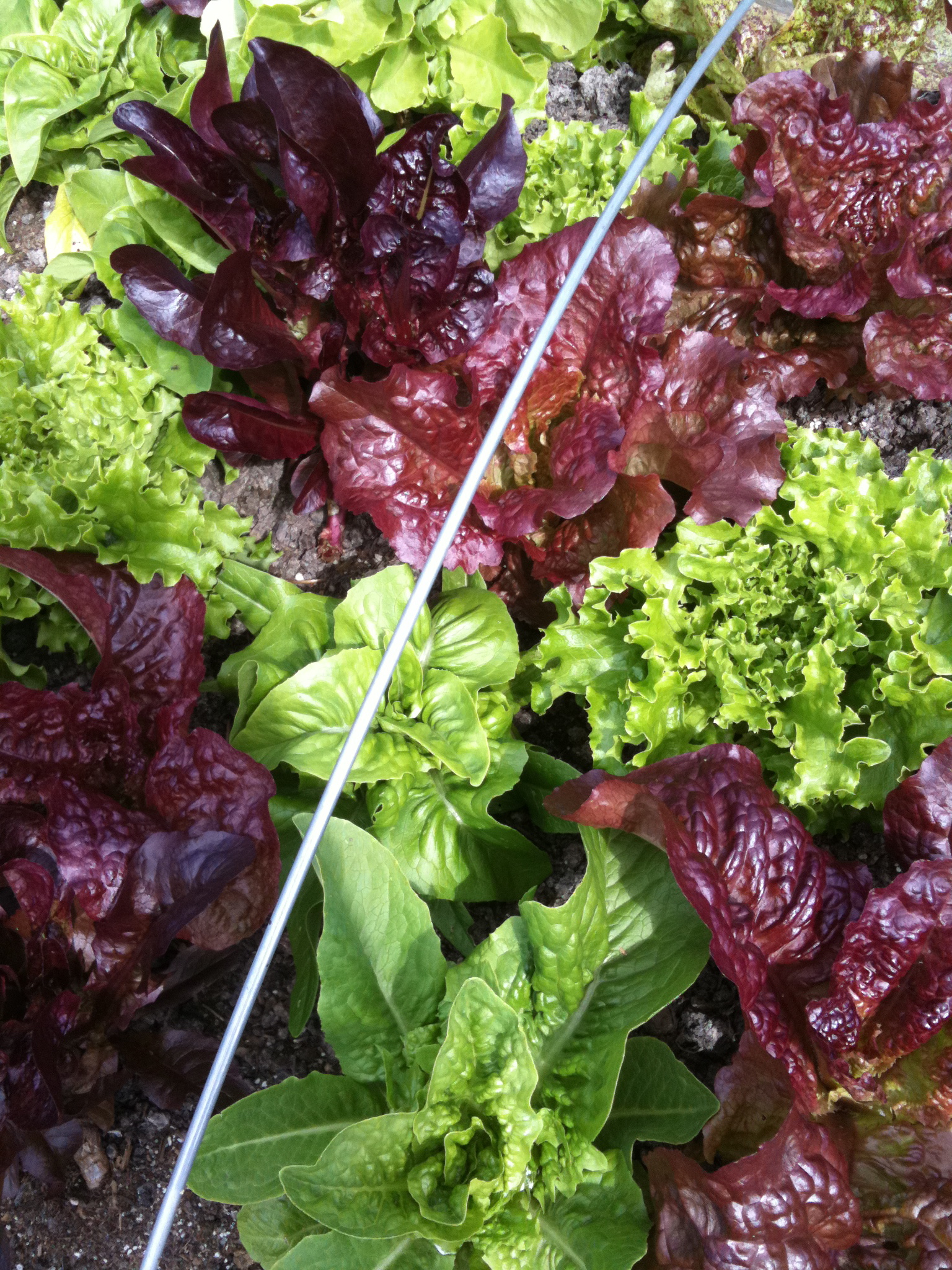 We’ve been waiting for the sun to return from it’s six month hiatus. Our grow lights and cold frames can only do so much food production work on there own.
Thank goodness it’s here!
Spring cleaning, for your food stores
Posted: April 30, 2011 Filed under: 3. Food Security Comments Off on Spring cleaning, for your food stores My OCD tendencies come out each spring as I begin a systematic purge-and-organize of every room in our home.
Spring cleaning makes for a great time to rotate out short-term food stores like fruit and nuts, and check on long-term foods like wheat and rice. For our one-year supply of food, we’ve chosen to simply buy in bulk the items we normally eat, so that even in an emergency, at least we’ve got our familiar (and healthy) comfort foods. Freeze-dried foods are good for Ray Jardine-style lightweight backpacking and not much else.
I get bee with a little help from my friends
Posted: April 26, 2011 Filed under: 3. Food Security | Tags: beekeeping, langstroth hives, master beekeeper, top bar hives Comments Off on I get bee with a little help from my friends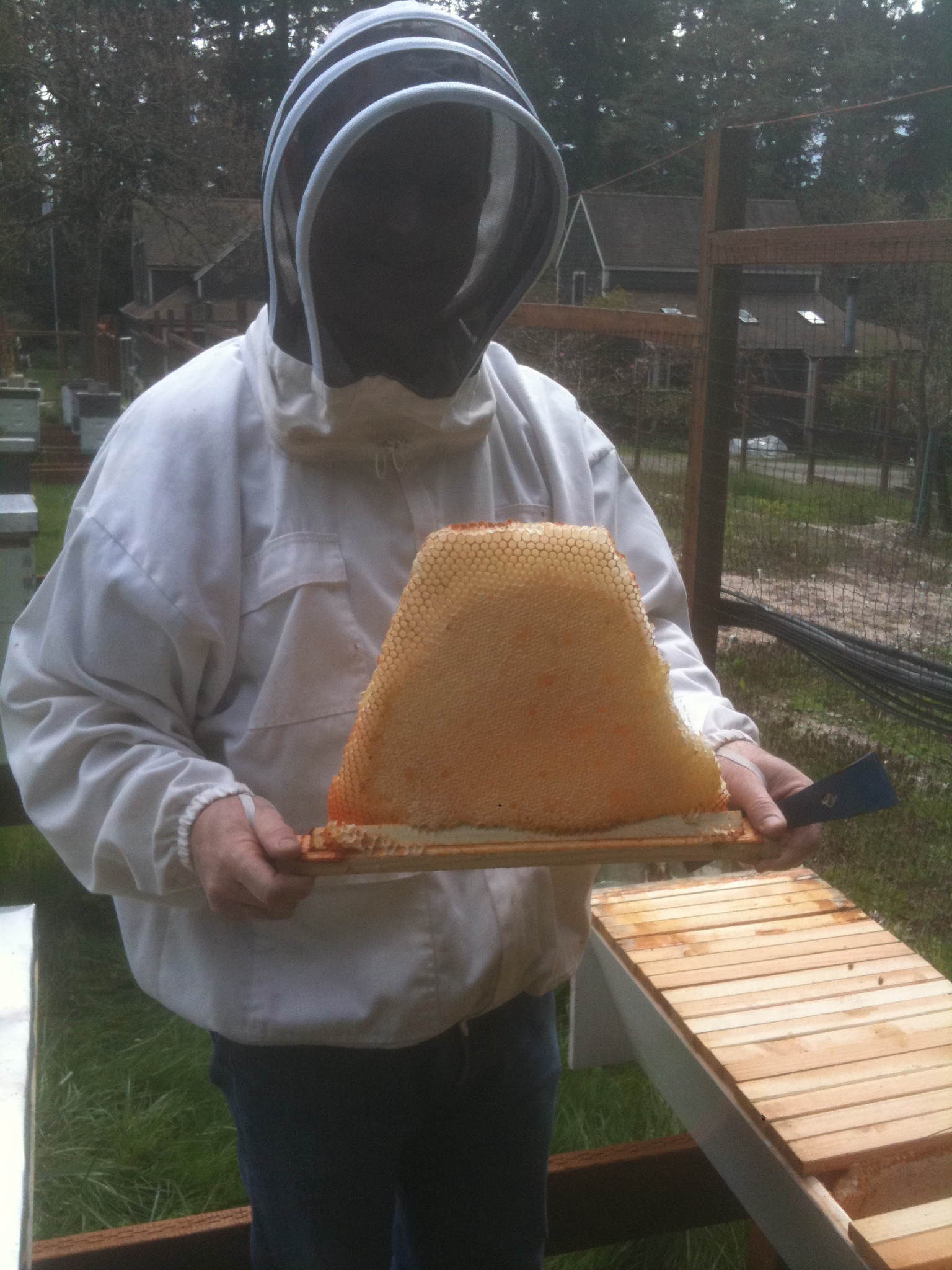 Pictured here is a buddy who happens to be a master beekeeper. While most of the hives around here, including ours, our Langstroth style, he also keeps a few interesting Top Bar style hives, which you can see to his left.
My friend generously took two beautiful honeycombs from an unused Kenyan style hive and dumped them into a five gallon bucket to send home to my family. It’s probably 6 months worth of honey!
He also gave our Langstroth hives a kick start from his own Langstroths by providing 10 full frames of comb + honey to slot into our new hives. Clearly generosity is a characteristic of master beekeepers.
Morels are back!
Posted: April 24, 2011 Filed under: 3. Food Security Comments Off on Morels are back!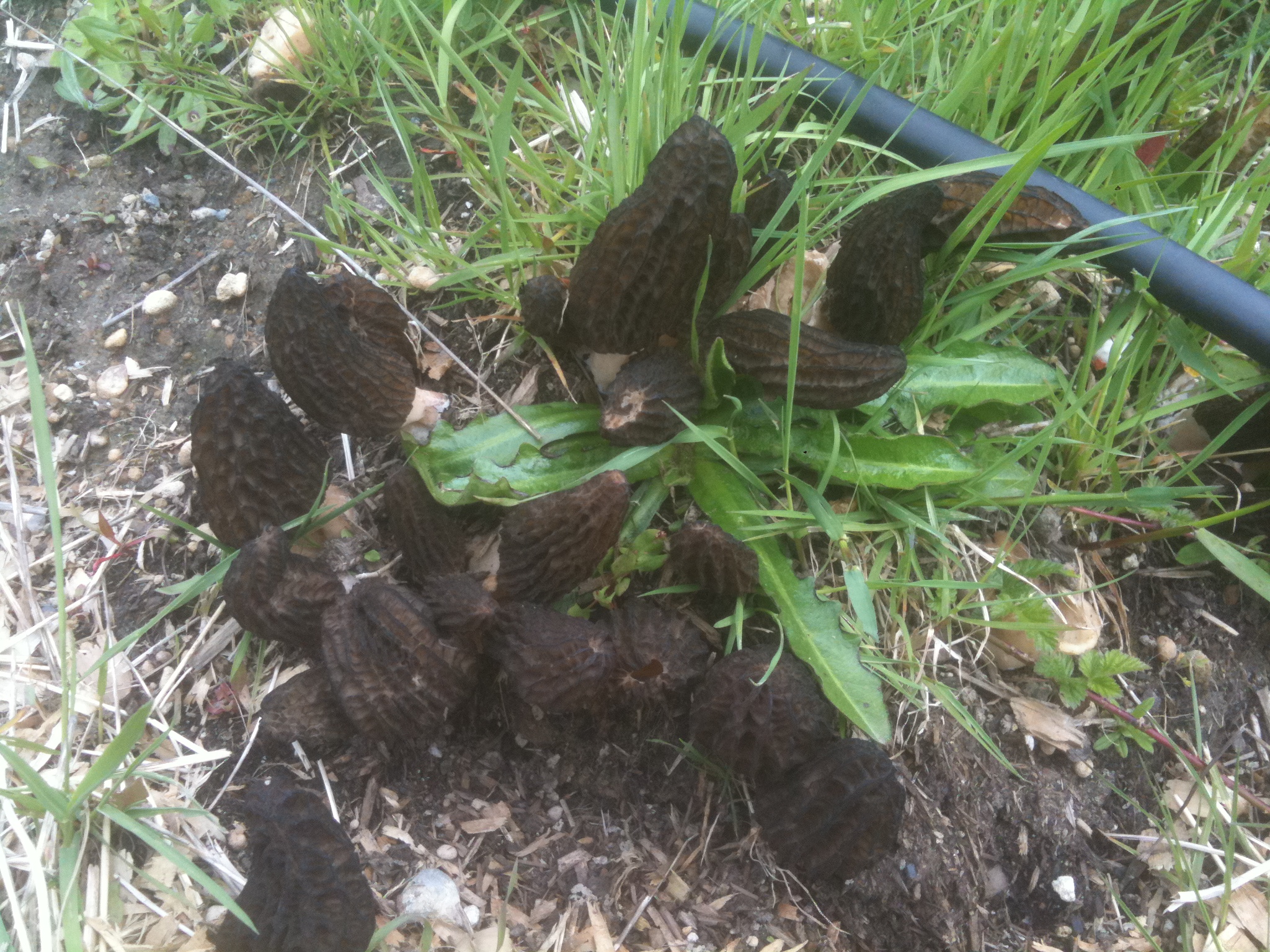 Wow, has this turned into my favorite barter item. Our food forest is producing morels mushrooms again.
Hooray for spring sunshine!
No bump bee installation
Posted: April 23, 2011 Filed under: 3. Food Security | Tags: bee hives, beekeeping, installing new bees Comments Off on No bump bee installation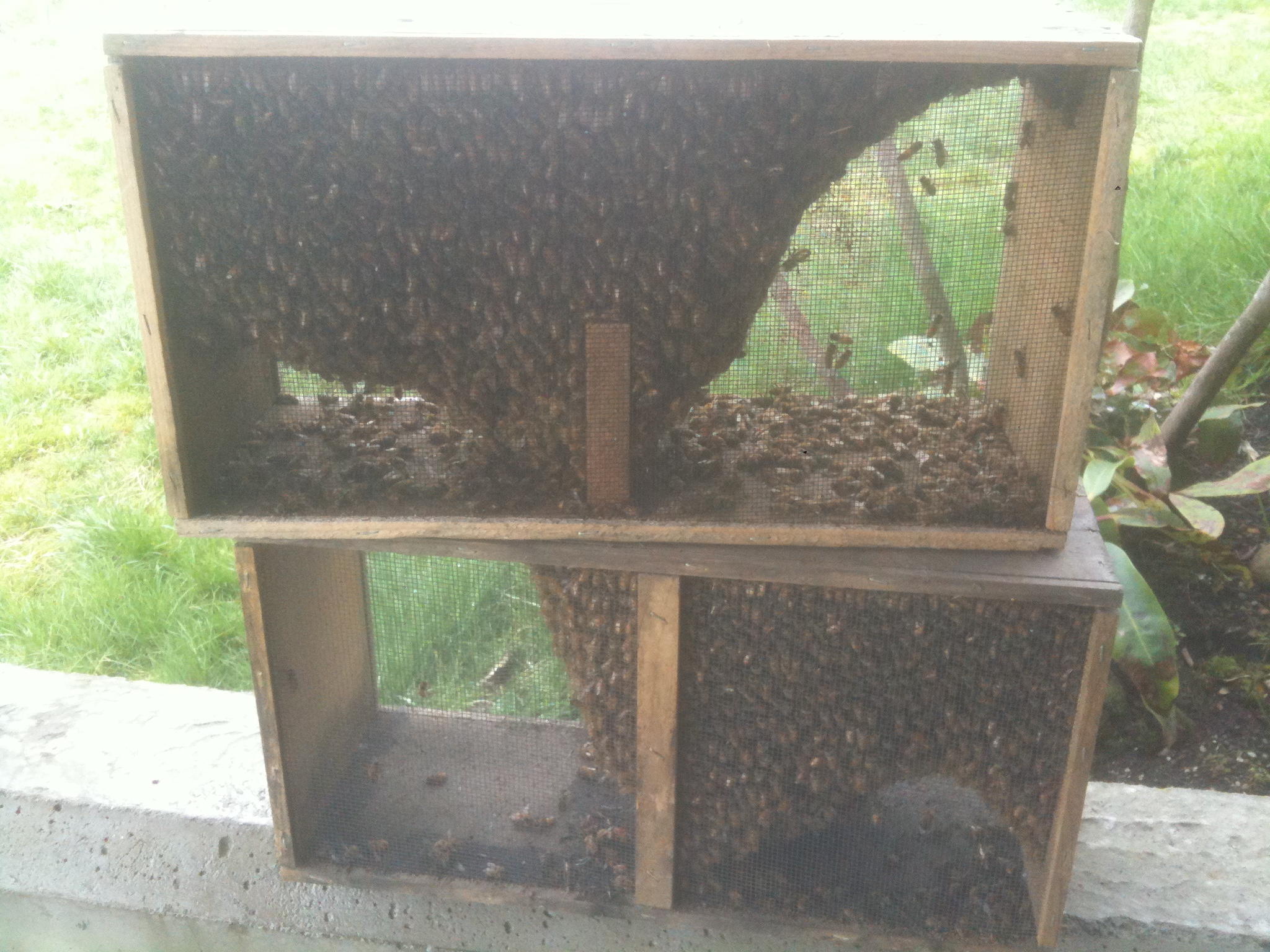 Following the general instructions from this wise fellow, I recently installed our two new colonies of bees.
The main (and important) distinction of this fellow’s method versus others is the lack of a “bump” to knock/pour the bees out of their delivery boxes (pictured nearby) into the hive. By avoiding this bump, you can also completely avoid much of the “required” protection gear. I installed our bees, messed around three times pulling frames in/out, and removed the queen boxes all without any more protection than a pair of gloves and long sleeve shirt.
The only modification I added to the video instructions was to slide a board across the opening as I pulled the feeding can out of the delivery box’s top. This kept the majority inside the box while I got the queen installed with her marshmallow. 24 hours later the marshmallow was gone. Great, low stress way to install a new colony!
Soil blocks experiment
Posted: April 16, 2011 Filed under: 3. Food Security Comments Off on Soil blocks experiment In an attempt to streamline seed starts, we’re experimenting with creating our own soil blocks (they look like brownies in this photo).
While the literature touts this as a great way to eliminate those little plastic seedling pots from your life, I’ve not found them to be such a hassle. We salvage them from local nurseries and they store relatively compactly. Yes, they are made from oil, but so is the big plastic tub in which we’re mixing our soil blocks. At least this tub will last forever; the seedling pots are quite flimsy.
They real problem I’m trying to solve for is transplant shock. By using a series of soil blocks from mini -> small -> in the ground in conjunction with our growing environments of grow lights -> cold frames -> in the ground, I’m hoping to eliminate transplant shock completely.
With soil blocks, you “pot up” a smaller block into a larger block, and eventually into the ground itself, all without ever removing the seedling from it’s surrounding soil.
 Opt Out En Masse