Staying to help
Posted: August 15, 2010 Filed under: 1. Philosophy, 6. Personal Training | Tags: emergency preparedness, go bags, self-reliance Comments Off on Staying to help A recent conversation with a friend reinforced the need to encourage local people to stay and help during an emergency, whether it is a long one or just a few days. Over the course of a few conversations, I could see his outlook change from “I need to escape to another country with my kids” (he’s divorced) to a more positive, healthy attitude of “I need to get trained up so I can stay and help my community.”
That’s a *great* change in attitude, applicable for many situations (I’d still use the Go Bags if you’ve got a nearby chemical spill on the highway). I appreciated watching the stages of my friend’s progression as I port my self-reliance projects from a personal level to a town level.
You can read a similair journey taken by the excellent writer Neil Strauss in his book, Emergency. Another author, Zachary Nowak has an interesting take on this attitude here. His editor Adam Fenderson, founder of the Energy Bulletin, commented on Nowak’s essay:
There is also a ‘third way’, one which combines self-sufficiency/survivalist type tactics with community building and some relatively positive visions. Eco-villages, Richard Heinberg’s lifeboats strategy, and the [Transition] town-scale efforts in places such as Kinsale in Ireland and Willits in California might be considered part of this approach.
Isolationist survivalism, constantly on the guard from marauding hordes, doesn’t sound like an existence most of us would consider worth living. And promoting it, where it takes our energies away from more collective energy descent tactics might actually increase the likelyhood of such uncontrolled collapse and desperate marauders. So the ethics of promoting such an approach are complex.
We publish Zachary’s article because it is full of excellent advice and resources of value to anyone with an interest in taking more than a superficial approach to sustainability (a term which ultimately does mean the same thing as survival.)
Stages of awareness
Posted: August 7, 2010 Filed under: 1. Philosophy, 4. Energy Security | Tags: Chris Martenson, CO2=PxSxExC Comments Off on Stages of awareness “Awareness arrives in stages” is still one of my favorites quotes because it passes the reality test every week in conversations I have with folks local or abroad. And now there is a useful corollary from Chris Martenson.
I personally spent the most time in the Bargaining stage. And although I currently sit at the Acceptance stage, I regularly return to Bargaining. And then I’m reminded of a very real need to get the worldwide carbon emissions to zero by 2050. Holy smokes, that’s a big goal. At least we have some of our brighter minds now thinking about it.
At which stage are you?
“In Transition 1.0” the film
Posted: July 15, 2010 Filed under: 1. Philosophy, 2. Water Security, 3. Food Security, 4. Energy Security, 5. Alt Transportation, 6. Personal Training, 8. Wealth Management | Tags: In Transition 1.0, Transition Towns Comments Off on “In Transition 1.0” the film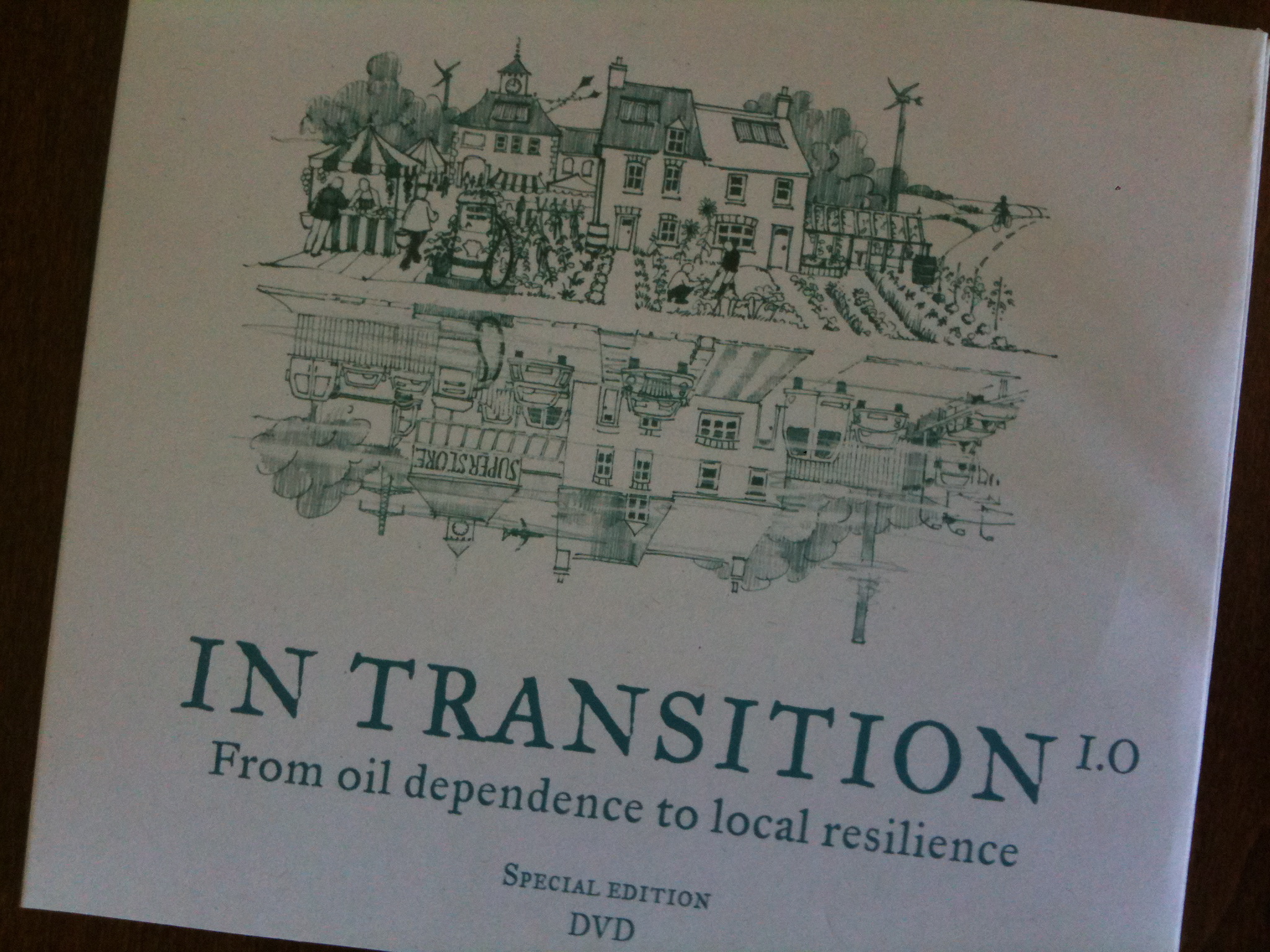 Wow.
Wow.
I think this short collection of vignettes may have just set the direction for my personal and professional time for the next 5+ years.
Highly recommended.
A career of ironies
Posted: June 11, 2010 Filed under: 1. Philosophy Comments Off on A career of ironiesA journalist recently drove this point home to me – in not a terribly kind way – that my chosen career is one of irony. He asked me how I could justify some of these incongruencies:
 I run an international “Fair Trade” company, but my personal life is uber-focused on the “Go Local” movement.
- I write for a major business publication, but am purposely unplugged from all media inputs to my life (try going a month without reading/watching the news, then ask yourself if your life is better/worse).
- My company sells products, but I believe we all need to stop buying more stuff.
- I teach marketing professionally, but take great pains to identify and cut off all access to my life (and my kids) from other marketers’ efforts. And I hate shopping.
- I run a sports company, but don’t follow any sports (college, pro, local). It makes me hyper to just watch sports; I want to play the sport, not be a spectator.
Hypocrite? Not sure. Maybe.
OK, enough navel-gazing. Time to get outside to grow more food.
Apologies to those readers we left behind
Posted: May 26, 2010 Filed under: 1. Philosophy Comments Off on Apologies to those readers we left behind In porting this blog from Blogger to WordPress, there was one primary gotcha…taking our readers with us.
Many apologies for those of you needing to re-subscribe to the blog or who followed a Twitter link that is no longer in service. But after spending a year with Blogger, it was simply driving me nuts. I use WordPress for two other organizations and love it, so it’s time to bite the bullet and port everything over.
Many apologies for the extra hassle!
How to live to be 100
Posted: March 28, 2010 Filed under: 1. Philosophy Comments Off on How to live to be 100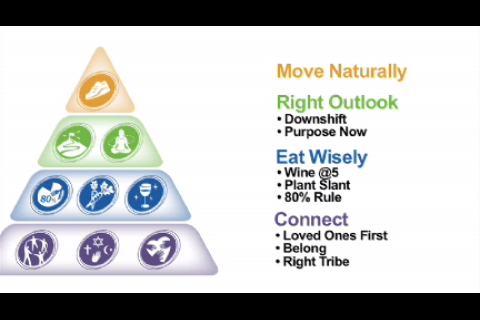
Why are we opting out? Why are we encouraging others in our community to do the same? Well, at a very basic level it is so we can live a *long* peaceful, productive, enjoyable life surrounded by friends.
I got to get caught up on a backlog of TED Talks during a recent set of plane trips. Dan Buettner nails it in this well-research presentation. Summary pictured on right.
Interested? Go watch the full video.
The new and improved American “empire”
Posted: January 10, 2010 Filed under: 1. Philosophy, 7. Physical Security | Tags: emergency preparedness, prepper Comments Off on The new and improved American “empire”Dr. Thomas Barnett is a seriously smart fellow. I hope his ideas spread far, wide, and deep into our society so we can see change along the lines that he offers.
Six month progress report
Posted: January 7, 2010 Filed under: 1. Philosophy | Tags: emergency preparedness, prepper Comments Off on Six month progress report
A quick check-in on my goals set out six months ago….here were the topics:
- Water security. Done. Have 5000 gallons of rainwater harvested. It only took about 10 days of rain to gather. Amazing.
- Food security. Done. Regular biointensive gardens + permaculture food forest + backyard chickens installed. Chest freezer + storage closet full of one year’s food as backup.
- Personal training. In progress. Unarmed self defense training is well underway; I’ll continue practicing this in perpetuity. Next up is likely medical training via advanced CPR and EMT classes.
- Physical security. In progress. We start weapons training at local range this month. Motion-sensitive security lights installed. Safe room planned but not constructed. Dogs discussed but not yet purchased.
- Transportation alternatives. Done. The longtail utility bike works well for me, although this might expand to an inexpensive neighborhood electric vehicle (NEV) in the future, replacing one of our gas cars.
- Wealth management. In progress. Actually, it is just on hold. And I don’t have an excuse for the inaction, other than these are very weird economic times. There is zero consensus among money managers what type of investments to be pursuing right now.
- Energy security. In progress. Whole house generator in place. Two cords of wood for fireplace stove in place. Solar hot water tubes scheduled for a March installation. Still have several months left for measuring wind speed for our location to see if wind mills are feasible.
And I’ve avoided getting cauliflower ear so far in MMA training. Thank goodness for arnica
 . 🙂
. 🙂An experiment in simplicity
Posted: September 27, 2009 Filed under: 1. Philosophy | Tags: emergency preparedness, prepper Comments Off on An experiment in simplicity
How to get your spouse involved
Posted: September 17, 2009 Filed under: 1. Philosophy | Tags: emergency preparedness, prepper Comments Off on How to get your spouse involved
- Earthquakes
- War
- Food/Water shortages
- Looting
I expanded each of these with her to include the areas you see here and launched this blog to document our successes and failures preparing for each of these scenarios in order to encourage others to opt out en masse as well.
 Opt Out En Masse