Avoiding the hospital for only $3
Posted: March 8, 2011 Filed under: 6. Personal Training | Tags: celox, quick clot Comments Off on Avoiding the hospital for only $3A couple of weeks ago  I was pounding in metal t-posts the other day to hold up some bamboo I transplanted from a neighbor. We’re going to grow our own timber poles for future food production projects with it (e.g. fencing, pea trellis, etc).
I was using a two-handed post driver on a very steep slope and somehow managed to glance the tool off the top of the t-post. I proceeded to then slam the post driver at full speed on top of my head, knocking me backwards two feet. I sat down saying, “Doggone, that’s going to leave a mark” and put my hand to my head, expecting to feel a big bump or two. Instead, I pulled back a hand + forearm full of blood, with more pouring down my face a second later. Uh oh.
I knew head wounds bleed a lot, but I’ve never had one myself. Keeping firm pressure on the crown of my head, I stumbled up the hill to the garage, called for my wife, and ripped open a packet of Celox from one of our go bags. By the time we got to the local Urgent Care facility 15 minutes later, the would was completely sealed by the Celox powder. The doctor pulled (hard) multiple times but could not get the cut to reopen. He commented that he saw the same performance from this type of powder during his 2006-07 military tour overseas. He said it saved me from 5-7 staples in my head and a much longer ($) trip to the nearby hospital.
At $30 for a 10 pack, we keep several in each vehicle and near our first aid kits. Well worth $3!
Co-Housing Do’s and Don’ts
Posted: March 5, 2011 Filed under: 7. Physical Security, 8. Wealth Management | Tags: co-housing Comments Off on Co-Housing Do’s and Don’ts In this economy, it’s not unusual to have friends lose their homes. This past year, we took in an empty-nester couple who had lost their home to give them a place to land, recover, and reenergize themselves. We’ve had many other folks live with us before, but it’s always been a short-term stay, measured in weeks. With this couple, their stay was measured in months – and if we had not introduced some “tough love” to the relationship – potentially years.
They are moving out at the end of this month, but only after we had several difficult, heart-to-heart, “welcome to reality” conversations. I think they had planned to stay for years.
Lessons learned:
- Before taking someone into your home to live free of rent and utilities, do your due diligence. There is a reason why they’ve become homeless; you have ever right (even duty, as their friend) to drill down into those reasons.
- Have several face-to-face conversations prior to their move-in about their *specific* goals re: jobs, refilling savings accounts, eliminating debt, how use time, when they expect to leave, etc.
- Set a weekly check-in meeting so you don’t allow unspoken frustrations to boil too long. Try to “clear the air” daily, if possible.
Unexpected appreciations found:
- I appreciate the calm, wise counsel of my wife is now more than ever. Granted, she’s a professionally trained social worker, counselor, and coach, but that’s for helping *other* folks. Applying those same techniques and principles to your own home and family members is a challenge for anyone. She came through this challenge with flying colors, and has taught me many helpful life lessons along the way.
- The laziness of the “housewife without a house” who refused to even seek a job taught me to appreciate my mother more, as they are the same age and both empty nesters. While I love my mother dearly, she drives me crazy on some issues. This experience of having a capable adult sitting around my house all day, not doing chores, but reading books, surfing the web, and talking on the phone, clearly showed me how much I value my mom for her professional/personal devotion to educating high school students. She’s an amazing woman who I now appreciate more than ever.
- I perceived a new, extreme attitude of entitlement with the husband of this couple, despite knowing him for ~10 years. He’s a smart person with good, Big Picture ideas, but has failed for the last 15 years to turn any of those ideas into a reliable revenue stream. For the last three years I’ve counseled him to continue this Big Picture adventures, but in parallel with getting a workaday job to pay the bills (work at a local big box like Home Depot, clerk for a local attorney, tutor high school students in math, anything really).His attitude that a workaday job is beneath him irks me, but also gave me a new-found appreciation for my father. My father always had a primary day job which paid the bills, but he also pursued Big Picture adventures (teaching, community service projects, etc) which may or may not have revenue streams immediately attached to them. That set him up to pursue those adventures full time now that he is retired. I am emulating my father in this aspect, which is one of the highest forms of flattery I can think of.
This experience has not soured us to taking folks into our home again, but it made us realize we need to be more wise in how we do so. Should you be considering the same for your friends when they are down and out (I hope you do), consider using this template we developed based on our miscues to start the conversation:
The new few [weeks/months] will be stressful for you and we’d like to help by having you live in our home.
We expect you to work harder, smarter, and longer than you ever have before, in order to refill your savings account and move into your own place on XX date. In exchange for that level of effort, you can live here free of rent and utilities, with a full bedroom/bathroom suite and unlimited access to a full kitchen of appliances until XX date. You can have as much land as you like to plant crops to offset your grocery bills.
We expect all family members that can physically work to be working – whether that is for monetary income or barter – as you return to the point of housing independence. We expect you’ll cut all expenses to the bone in order to maximize savings. We expect you to give us updates on employment, debt burden, and savings account status each week/month. We expect you to complete a Dave Ramsey course/book.
We also expect you to labor beside us in these specific chores, without having to be reminded:
– Trash and recycling out to side of house and then down to road to pickup spot (weekly).
– Weeding the front and side yard decorative beds (infrequently).
– Weeding the vegetable garden beds in the side and back (frequently).
– Hauling in firewood during the winter (weekly).
– Raising/lowering the western shades for solar gain (daily).
– Do your own dishes, sweeping, etc (daily).
If that sounds like an attractive deal, you are welcome to move in with us.
It’s clear to me that American families will begin to do much more co-housing in the coming years due to hard economic times. Whether it is grandparents-parents-adult children living together again, or simply friends helping friends, we need to get smarter about how we do these living arrangements. This last year taught us that we will only take in folks that bring a “net gain” to the household, folks that you would be glad to have living under your roof in good times or bad because they don’t introduce an overabundance of stress into the household nor bad role-modeling for our kids, and because they help with the much-needed food production chores.
Winter afternoons in the garden
Posted: March 4, 2011 Filed under: 1. Philosophy, 8. Wealth Management Comments Off on Winter afternoons in the garden …digging worms with the ones most important to you.
What a blessing. I am truly wealthy in the best ways during moments like these.
Four Hour Body for backyard growers
Posted: March 3, 2011 Filed under: 6. Personal Training | Tags: 4HB, Four Hour Body Comments Off on Four Hour Body for backyard growers Tim Ferriss has a new book out titled Four Hour Body in which he turns the same uber-productivity focus from his first book (recommended previously) inwards to the human body. Given the number of personal and professional work projects I’ve got going on, I value his OCD tendencies and his clear details about how to keep our bodies healthy and strong in the most time efficient manner possible.
If you spend any amount of time on micro-farming or micro-ranching chores, you understand the need to keep yourself healthy and strong. If you are sick, the chores don’t get done and the food production cycle can get seriously out of whack. And yet, if you are doing this type of backyard farming and modern day homesteading, you are likely always running up against the time pressures of balancing that with your normal day job. So the challenge is how to stay in great shape (so you can do the food production chores you love) with the minimum amount of time (away from your family, away your day job, and away from those same chores).
Highly recommended read for anyone interested in getting/staying strong, losing those unneeded pounds, or taking your current multi-hour workout schedule down to under an hour per week.
Overpopulation
Posted: February 27, 2011 Filed under: 1. Philosophy | Tags: overpopulation Comments Off on Overpopulation The elephant in the room seems to be overpopulation. Our fight against the microbe has been so successful in recent decades that there may just be too many of us.
Some scientists and pundits are claiming we need (!) a virus to correct our population back to sustainable levels. Whether we “need” a corrective plague or not, we might get one anyway.
But starting in on this topic leads to heated and sticky debates about who lives and who dies. I notice almost all NGOs – whether planet-focused, animal-focused, or people-focused – tend to shy away from this conversation publicly.
But I continue to come back to this question, doesn’t it fix everything* if there are less of us demanding resources from the earth and each other?
* peak oil (peak everything, actually), climate change, food shortages, unnecessary plant/animal extinction, water wars…
Protecting chickens from weasels
Posted: February 25, 2011 Filed under: 3. Food Security | Tags: battery, chicken, electronet, raccoon, solar, trap, weasel Comments Off on Protecting chickens from weasels We lost a bird this past winter to a weasel when the solar electronet was struggling with zero sun for a week. The primary lesson I learned was to rotate a backup battery weekly in the winter, with the second one recharging in the garage on a battery tender.
But I also learned the value of traps. What you see pictured here are a humane, no-kill raccoon trap and a smaller weasel trap.
Frankly, I did not know we even had weasels in our area until I compared all the signs from the kill to internet research. Weasels are very productive members of a forest ecosystem, so I don’t want to proactively hunt them. But placing these humane traps between the forest and our chickens serves as an inexpensive barrier to keep both of us happy.
The bait recommended to me by a local trapper is cheap cat food + marshmallows. Yes, marshmallows. Raccoons in particular can’t resist them. 🙂
Best energy investment you can make
Posted: February 22, 2011 Filed under: 4. Energy Security | Tags: energy audit, energy efficiency, insulation, r value Comments Off on Best energy investment you can make …is improving your existing structure with insulation. It’s a relatively inexpensive project with a one year (or less) payback.
As a follow-up to our energy audit, we hired a three-person crew to spend 12 hours under our house adding another layer of high R value insulation.
I would not recommend this as a DIY project. Three pros * 10 hours = 30 hours to do the job right. If I tried this myself, I would make enough mistakes and have to learn the basic efficiencies on the work at first, so we could safely double that hour amount to 60 hours.
And given that I could only work on it in the afternoons, and only on some afternoons since it would be difficult to get to my work phone while fully geared up for insulation (full head protection including a mask), I’m guessing those 60 hours would be spent in 3 hour chunks spread over 20 days.
Three weeks! Yikes. It was well worth the added expense to have pros do it in a single day.
(Double) stacking functions
Posted: February 20, 2011 Filed under: 1. Philosophy | Tags: david allen, gtd, iphone, tim ferriss Comments Off on (Double) stacking functions A typical afternoon finds me outside working on micro-farm chores. But I’m still technically “working” with the various folks that I interact with for my day jobs.
Because I prioritize my Most Important Task in the early AM, stack all email midmorning, actual project work midday, and all phone meetings in the afternoon, I can get away with doing chores while on the phone. I’ve already prepped for those meetings that morning, and a quick review of any needed spreadsheet is possible via my iPhone. Unless I get too close to the chickens, no one has a clue that I am not sitting in some downtown office.
My team eventually learns this portion of my schedule, so invariably almost all of those afternoon conversations start like this:
THEM: Hey, before we get started, what are you doing right now outside?
ME: Well, I’m focused on you, but I’m also [weeding, sowing, repairing, hauling, creating, digging, hammering, measuring, transplanting] something in the food forest.
THEM: Huh, OK. Well anyway, about my sales targets…
And what about the in-person meetings? For my own day jobs, I’ve banned them as counterproductive. If I do need to be face-to-face with someone for a legitimate reason, I schedule it at a cafe near someplace I need to go for an errand. One bicycle trip knocks out both the errand and the in-person meeting.
Permaculture calls this “stacking functions.” But I did not learn this behavior from permaculture, I learned it from guys like David Allen and Tim Ferriss. I guess when you apply those kinds of productivity tricks to permaculture, you could call it double-stacking.
Start your own chicken co-op
Posted: February 17, 2011 Filed under: 3. Food Security | Tags: chicken feed co-op, food co-operative Comments Off on Start your own chicken co-op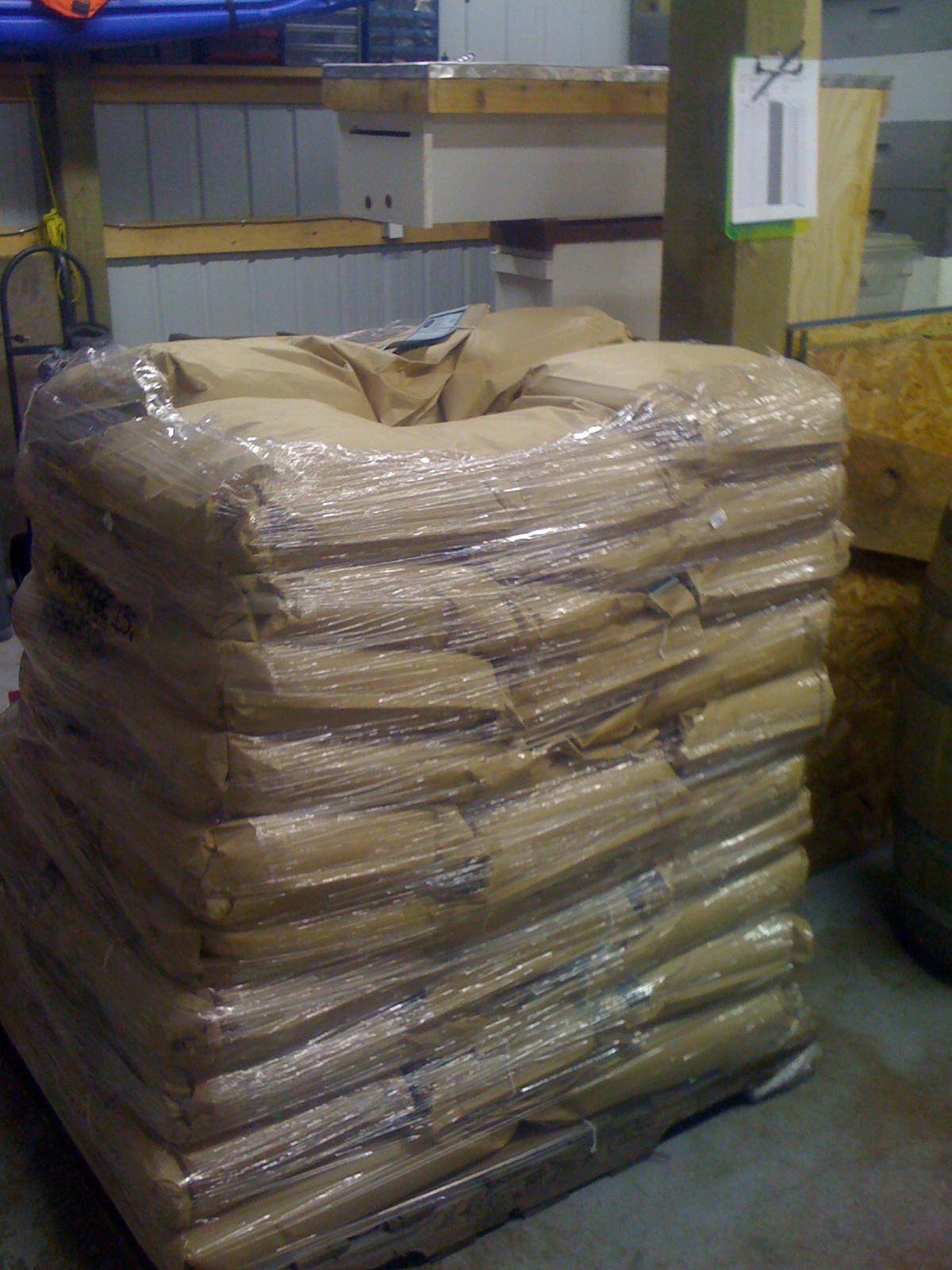 Last year we joined with several other local families doing experiments in building resilience to order chicks and chicken feed in bulk.
Despite ordering very high-end all organic feed, when ordered in bulk we’re paying less than what our local feed store sells non-organic mass market feed. While I am a rabid fan of Go Local, this is one instance where I think it is alright to bypass the local option in order to bring greater resilience to our small town.
We also achieve efficiencies when brooding chicks, sharing equipment and rotating every other season who has the brooding at their place.
All it takes is a few conversations with other backyard chicken folks to get started!
US military prepares for economic collapse
Posted: February 15, 2011 Filed under: 1. Philosophy, 3. Food Security, 6. Personal Training, 7. Physical Security Comments Off on US military prepares for economic collapseI’m glad I live in a country where our military folks have the resources to learn via roleplaying and what-if scenarios. It’s a useful way to learn and explore all the aspects of a given topic. But it also makes me nervous-as-all-get-out when I read this:
The Army has launched an operation called “Unified Quest 2011” in which it studies the “implications of ‘large scale economic breakdown’ inside the United States that would force the Army to keep ‘domestic order amid civil unrest.'” The 2011 Unified Quest lends truth to assertions that the United States is indeed not witnessing an upward economic recovery, as so many in our federal government have asserted. Soldiers are being trained in evacuation and detainment as a response to rioting, revealing the possibility that the United States military may resort to martial law in order to maintain order. Unified Quest 2011 also prepares soldiers to act as diplomats in the event that there is a limited availability of diplomats at combat outposts, or on the streets contending with hungry and angry Americans.Ugh. You can read this either positively or negatively. I’m frankly not sure which is closer to the truth of reality.
 Opt Out En Masse