Hauling manure with a longtail bicycle
Posted: February 9, 2010 Filed under: 3. Food Security, 5. Alt Transportation | Tags: car replacement bicycle, cargo bike, cargonista, electric ute, food forest, kona ute, permaculture Comments Off on Hauling manure with a longtail bicycle
Using my new Wike DIY trailer, I hauled by smelliest load by far this weekend: fresh horse manure.
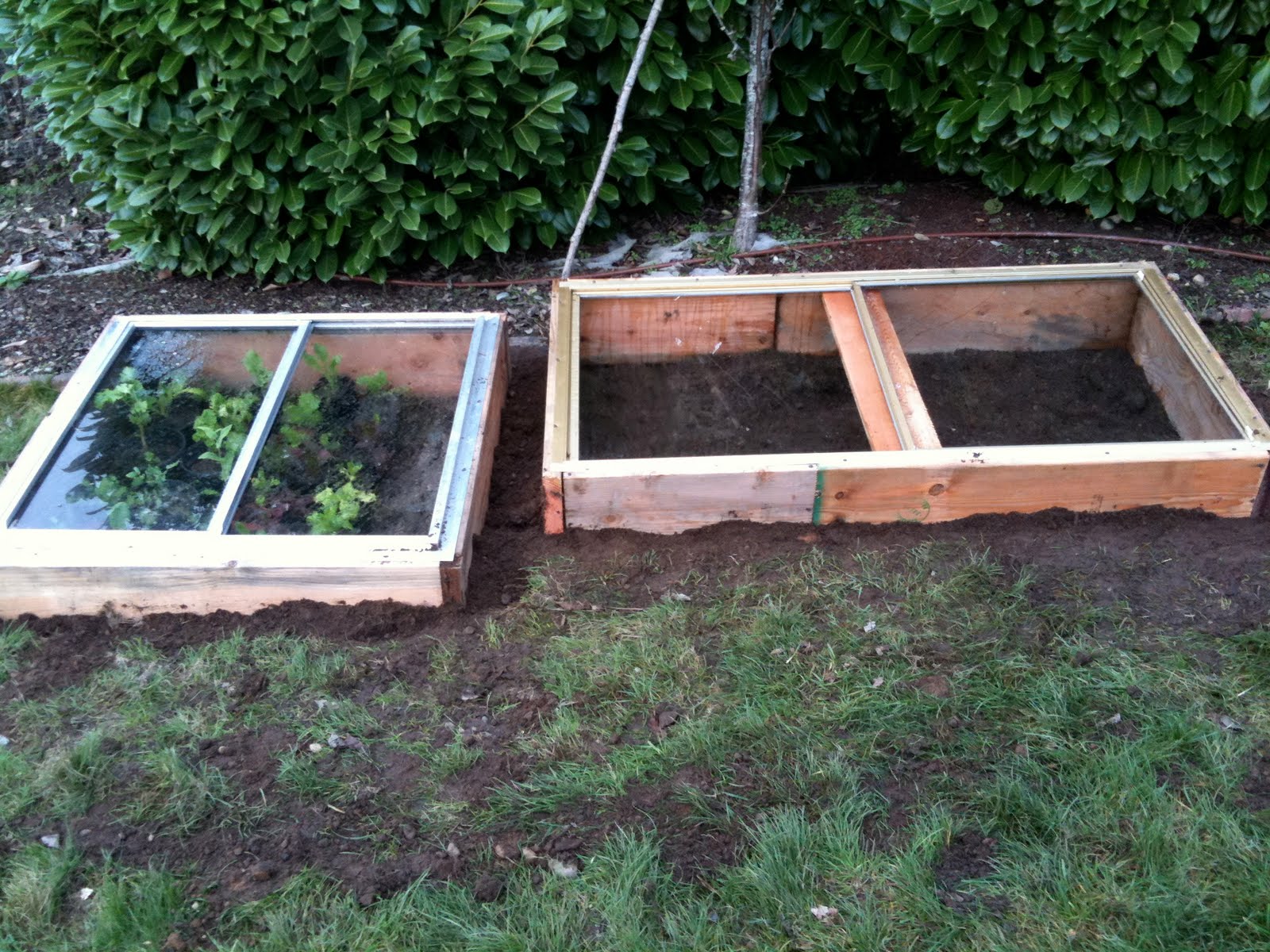
I built a set of “hot beds” to start seedlings last week from scrap lumber and Freecycle window frames. Hot beds are simply cold frames that have some heat source to warm the seedlings in the winter, allowing them to grow faster than an unheated greenhouse or cold frame.
I wanted to experiment with a non-electric heat source, which pretty much just leaves manure. Under the sloped glass roof of the hot bed, we now have 18″ of manure, covered by 6″of dirt, to provide plenty of extra heat for the vegetable seedlings to get a kick start on growing prior to Spring. We’ve got them located on the North side of our property, sloped to the south, to grab as much winter sun as possible.
The cargo bike and Wike trailer did great hauling this load, although the stable owner clearly thought I was nuts showing up with a bicycle to haul manure.
I’ve been testing the replacement eZee battery this past week; getting about 7MPC. Better than the previous 5MPC, but no where close to the claim 20-25MPC in the eZee documentation. Buyer beware.
Roll your own (fruit leathers)
Posted: February 7, 2010 Filed under: 3. Food Security Comments Off on Roll your own (fruit leathers)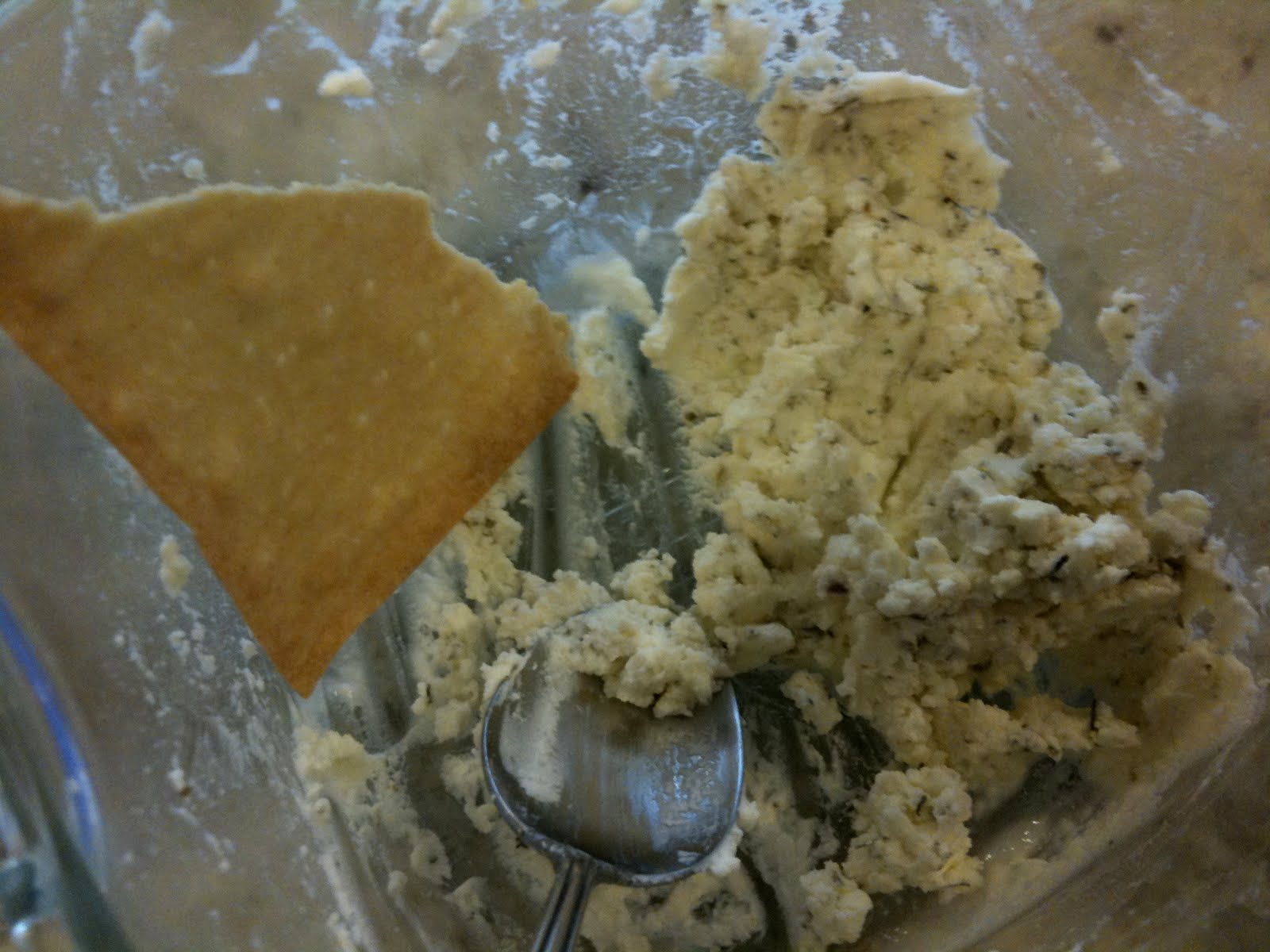
Experimented this week with making our own cheese and fruit leathers. Recommended. Both are easy to do with minimal equipment, and fun to involve the kids. My son took our cheese to sell to the neighbors to raise money for Haiti relief efforts.
We ordered cheese starter cultures from the Cheese Queen Ricki Carroll

The soft cheese pictured here is our Herbs de Provence.
Making food gardens attractive
Posted: November 22, 2009 Filed under: 3. Food Security | Tags: food forest, permaculture Comments Off on Making food gardens attractive Moved our kiwi trellis out of the food forest and up close to the house where it can be hidden from view for just one reason: my wife thinks it is ugly.
Extending the growing season
Posted: November 5, 2009 Filed under: 3. Food Security | Tags: food forest, permaculture Comments Off on Extending the growing season For true emergency planning, you need your garden producing food year round, even in the dead of winter.
Food Forest :: finishing the initial build out
Posted: November 1, 2009 Filed under: 3. Food Security | Tags: food forest, permaculture Comments Off on Food Forest :: finishing the initial build out After we got the dirt/compost into the new beds (on top of cardboard to smother the weeds), we planted a collection of berry bushes. Varieties include seaberries, honeyberries, raspberries, gooseberries, goji berries, goumi berries, and elderberries. We found this permaculture berry guide to be very helpful. We also brought in four more types of grapes and kiwis, both hard and fuzzy, to train along a new trellis.
Building a “food forest”
Posted: October 13, 2009 Filed under: 3. Food Security | Tags: food forest, permaculture Comments Off on Building a “food forest”
We’re creating our version 1.0 food forest. It’s a system of food crops arranged to mimic a natural’s forest ecosystem. Our fruit trees are the top canopy, berry bushes the mid-canopy, with normal vegetables making up the remaining forest layers.
It’s been fun to build, although quite a bit of work and I blew my budget by a factor of 3X. Several times during the construction I wondered if this was my version of a mid-life crisis. It probably is. Oh well, it least a food forest is more productive for my family than a little red sports car.

We started with this sketch of an existing site on our property where I had installed deer fencing and drip irrigation already for 15 fruit trees and a handful of raised beds. I had already chipped rough stairs out of our heavy clay soil. We laid out the pathways between the existing two year old fruit trees with tape. We then brought in 30 yards of compost/dirt to build the new mounded beds.
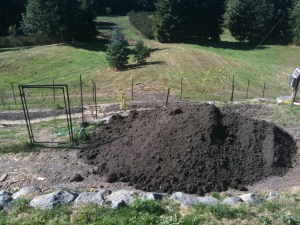
This is the second of two loads. The first 15 yards of compost/dirt only made three beds (you can see them in the background). We could probably use a third load, but I’m *really* tired of hauling dirt up and down this hill. We’ll expand next spring for version 2.0.
Note to self: a truck containing 15 yards of moist compost/dirt is pretty darn heavy. Heavy enough that it will snap any irrigation piping in the ground that it rolls over. Oops. This one only cost me $4 to fix, but several hours of digging to find the broken pipe.
First eggs
Posted: October 12, 2009 Filed under: 3. Food Security | Tags: chicken tractor, portable chicken coop Comments Off on First eggs
Ah, the joys of “maiden eggs” (as Joel Salatin brands these small pullet eggs). We finally get to enjoy the benefits of the chicken tractor investment.
Permaculture expert
Posted: September 30, 2009 Filed under: 3. Food Security | Tags: food forest, permaculture Comments Off on Permaculture expert
I mentioned a “food forest” we’re working in several posts. Here’s a bit of background and an image to explain what that is….
Growing your own
Posted: September 29, 2009 Filed under: 3. Food Security | Tags: food forest, permaculture Comments Off on Growing your own
“Growing food in one of the most dangerous occupations on the face of this earth, because you are in danger of becoming free.”
Portable chicken coop additions
Posted: September 10, 2009 Filed under: 3. Food Security | Tags: chicken tractor, portable chicken coop Comments Off on Portable chicken coop additions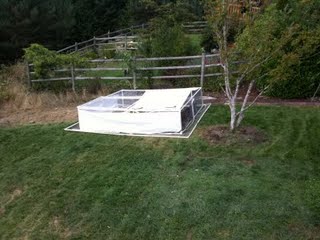 Our first couple of winter-style storms blew through recently. Had a chance to observe the effects on portable chicken coop.
There was no issue with the coop trying to turn into a kite via the tarp and sail off. But I found that if I added another section of tarp on the SW corner (the direction our storms come from), it served two purposes. The new tarp both stops the strong storm wind from chilling the chickens and also provides shade for the longer days of late summer, when the sun can still get quite hot.
In anticipation of our 15 birds beginning to lay eggs for the first time, we also added a few “nest boxes” to the coop as well. These are simply upside down 5 gallon buckets with doors cut into them.

Sand + dichotomous earth on the bottom gives enough weight to keep the buckets upright. The spikes on top keep the chickens from roosting and pooping all over them. I admitted defeat and used store-bought spikes after trying twice to make my own from bamboo sticks.
 Opt Out En Masse