Overpopulation
Posted: February 27, 2011 Filed under: 1. Philosophy | Tags: overpopulation Comments Off on Overpopulation The elephant in the room seems to be overpopulation. Our fight against the microbe has been so successful in recent decades that there may just be too many of us.
Some scientists and pundits are claiming we need (!) a virus to correct our population back to sustainable levels. Whether we “need” a corrective plague or not, we might get one anyway.
But starting in on this topic leads to heated and sticky debates about who lives and who dies. I notice almost all NGOs – whether planet-focused, animal-focused, or people-focused – tend to shy away from this conversation publicly.
But I continue to come back to this question, doesn’t it fix everything* if there are less of us demanding resources from the earth and each other?
* peak oil (peak everything, actually), climate change, food shortages, unnecessary plant/animal extinction, water wars…
(Double) stacking functions
Posted: February 20, 2011 Filed under: 1. Philosophy | Tags: david allen, gtd, iphone, tim ferriss Comments Off on (Double) stacking functions A typical afternoon finds me outside working on micro-farm chores. But I’m still technically “working” with the various folks that I interact with for my day jobs.
Because I prioritize my Most Important Task in the early AM, stack all email midmorning, actual project work midday, and all phone meetings in the afternoon, I can get away with doing chores while on the phone. I’ve already prepped for those meetings that morning, and a quick review of any needed spreadsheet is possible via my iPhone. Unless I get too close to the chickens, no one has a clue that I am not sitting in some downtown office.
My team eventually learns this portion of my schedule, so invariably almost all of those afternoon conversations start like this:
THEM: Hey, before we get started, what are you doing right now outside?
ME: Well, I’m focused on you, but I’m also [weeding, sowing, repairing, hauling, creating, digging, hammering, measuring, transplanting] something in the food forest.
THEM: Huh, OK. Well anyway, about my sales targets…
And what about the in-person meetings? For my own day jobs, I’ve banned them as counterproductive. If I do need to be face-to-face with someone for a legitimate reason, I schedule it at a cafe near someplace I need to go for an errand. One bicycle trip knocks out both the errand and the in-person meeting.
Permaculture calls this “stacking functions.” But I did not learn this behavior from permaculture, I learned it from guys like David Allen and Tim Ferriss. I guess when you apply those kinds of productivity tricks to permaculture, you could call it double-stacking.
US military prepares for economic collapse
Posted: February 15, 2011 Filed under: 1. Philosophy, 3. Food Security, 6. Personal Training, 7. Physical Security Comments Off on US military prepares for economic collapseI’m glad I live in a country where our military folks have the resources to learn via roleplaying and what-if scenarios. It’s a useful way to learn and explore all the aspects of a given topic. But it also makes me nervous-as-all-get-out when I read this:
The Army has launched an operation called “Unified Quest 2011” in which it studies the “implications of ‘large scale economic breakdown’ inside the United States that would force the Army to keep ‘domestic order amid civil unrest.'” The 2011 Unified Quest lends truth to assertions that the United States is indeed not witnessing an upward economic recovery, as so many in our federal government have asserted. Soldiers are being trained in evacuation and detainment as a response to rioting, revealing the possibility that the United States military may resort to martial law in order to maintain order. Unified Quest 2011 also prepares soldiers to act as diplomats in the event that there is a limited availability of diplomats at combat outposts, or on the streets contending with hungry and angry Americans.Ugh. You can read this either positively or negatively. I’m frankly not sure which is closer to the truth of reality.
What is your goal in life?
Posted: February 6, 2011 Filed under: 1. Philosophy Comments Off on What is your goal in life? One of the fellows I spar with is involved with the Pachamama Alliance. Funny name, serious mission. Their stated goal is:
I particularly appreciate that last part, “to educate and inspire individuals everywhere.” In that vein, they’ve started a one day seminar series that my wife and I recently took part in.
My top 3 takeaways from the seminar:
- Our goal is to leave each day in blessed unrest.
- We need to awaken from our collective trance.
- The assumption that we are separate is simply false.
Check them out, particularly the 4YG campaign to help spread the word.
Farewell, My Subaru
Posted: January 26, 2011 Filed under: 1. Philosophy Comments Off on Farewell, My Subaru This is a darn funny book. Even funnier to me, given that I own a beloved Subaru, and that this guy is recording his attempts at opting out, just as I am. But that’s where the similarities end, thankfully for Doug Fine.
Fine is a single guy with a decent amount of disposable income to drop on a new chunk of land, a significant amount of solar panels, and a truckload (literally) of other gear to “go green”. If that strikes you as a bit hypocritical, it strikes Fine the same way. He does a great job of relating his journey towards a carbon-neutral life, even the woes of purchasing “plastic crap from Wal-Mart” and thinking about the significant amounts of oil it takes to manufacture and deliver his stereo system.
And the whole time, he makes you laugh.
I appreciated the insight from his website about how all the aspects of his life are affected by his decision to living better on less oil:
What I’ve realized is that my attempts to start living a less oil-dependent life are inextricably linked to my personal life, my spiritual life, and, I’m sorry to report for those who aspire to Green living but aren’t in the Republican tax bracket, my financial life. I guess what I’m saying is that, for personal and planetary reasons, I hope this experiment works out, and maybe even serves as a Regular Human guide (even if it’s a guide as to what not to do).I also learned a bit of green geek wisdom from his book. For instance, did you know it takes 4.8 acres of agricultural land to maintain an American family of four on a mainstream diet? And significantly less land if they are vegetarian? We’re not vegetarians, and in addition to our nuclear family of four we house two additional adults full time plus lots of regular weekend guests. It makes me think that we need to make our 2.5 acres work very, very efficiently.
But most importantly, Fine taught me that all good books (and lives) should include a love story. His book does. My life does. Just as Fine learned an experimental adventure like his is best done as a two-person team, I’ve learned the same. Not sure what I would do without my best friend / wife. But it sure would not be this.
Highly recommended book, as is his first one I read a few years ago, Not Really An Alaskan Mountain Man.
Looking to the future
Posted: January 20, 2011 Filed under: 1. Philosophy, 8. Wealth Management Comments Off on Looking to the futureThis blog details these “opt out” experiments so others can opt out en masse without suffering our same learning curve. We invest our time, talent, and treasure with these experiments – both personally and professionally – to bring positive change to our world. It’s much better than the alternatives (complaining, worrying, giving up).
Personally, we are learning practical skills (e.g. farming) by ourselves and in conjunction with our neighbors. Individual self-reliance is not the goal. Community-based self reliance is much more attractive.
Professionally, my wife focuses on direct help to people through social work and Health & Wellness coaching. For my part, I focus on building triple bottom line businesses, both for-profit and non-profit. Thus far I’ve done that via eco and fair trade products, the abolitionist movement, teaching sustainability and advising MBA schools, and building resilience into local communities.While my wife’s coaching practice is taking off, I’m nearing another crossroads professionally. I can see in the near future (months, not years) when my current business will get on its legs and I can have someone else manage the team. That would free up 80%+ of my work hours to invest in a new venture.
I’m not sure what that will be, although I need it to generate a revenue stream; our savings account has been going the other way for too long while supporting these other new ventures that are just now hitting breakeven. If I follow my passion, it will be something with local food production/distribution.
Reversing the consumer mentality
Posted: December 31, 2010 Filed under: 1. Philosophy Comments Off on Reversing the consumer mentalityBeing a consumer is the opposite of being a citizen. Let me explain…
I was raised in a great home in North America. Lots of ethical training/modeling, lots of love, and *lots* of grace (given what they put up with me from ages 5-18). But I also received modeling and direct instruction that is decidedly at odds with what I believe is sustainable in our world today.
Heavy consumption was modeled to me; something for which I still need others to keep me in check. I was taught to throw out broken items, rather than seek to repair them myself or do without them. I was taught that love is given through tangible gifts.
Not sure if this was/is just my family, or if it was a generational thing. I suspect it is a generational thing, given the state of the planet. To me, this state of heavy consumerism is the exact opposite of self-reliance.
I missed out on learning a lot of real-world skills as a youth, skills that lend themselves to self-reliance as an individual and as a contributing member of a small town. Skills like welding, stitching, sustenance (not sport) hunting, gardening, basic CPR, self-defense, camping, firearm safety, keeping a knife sharp, and using hand tools (not electric powered), just to name a few.
A good friend my age in St. Louis wisely observed that our fathers and grandfathers were not “mountain men type” guys. There were very few of those type of guys in the last two generations in North America. And thus not many guys in my generation learned this seemingly wide variety of real life skills. I know *some* guys that know *some* of these skills, but not many that know 50%+ of them.
I’d like to reverse that trend starting with my children. My father’s plan for me was to become the best in very few aspects of life, and then outsource all the others. I agree with that to some extent, and I am quite thankful that I even had a father interested in my life, as many of my friends do not.
But encouraging specialization is something I’ll do with my children only after a wide foundational base of skills is laid. I plan for my kids to be fairly well-versed in the “fight, shoot, plant, build, weld, forge, invest, raise things, nurture, etc” categories by the time they leave home, much of it just by tagging along with my wife and me when we are doing it in our daily lives. THEN they can specialize in something like engineering, education, medicine, agriculture, or whatever they desire.
I believe if my kids leave home with those foundational skills, they will launch into the world with a true sense of living. And then be well-equipped to find their own true sense of purpose, including being a strong, useful citizen of our town and country.
A wise woman told me this year:
What is truly crazy is the modern lifestyle developed nations have adopted that has people totally disconnected from the business of “living”. Our happiness and health (or the lack thereof) can be in large part attributed to this one factor alone. Even if you discount away the value of living well with lower resource consumption/impacts – this one aspect alone is compelling enough reason for me to expend energy and time doing things that I know I could well afford to just purchase or have someone else do for me.
I hope to train my children to be self-sufficient, without forgetting our reliance on grace. I suspect many other folks do, as well.
Wealth and sustainability
Posted: December 28, 2010 Filed under: 1. Philosophy Comments Off on Wealth and sustainability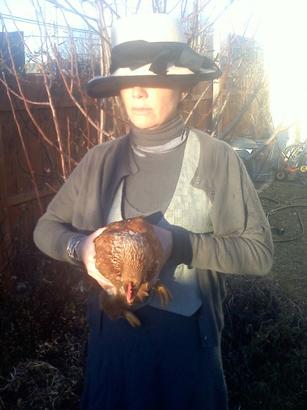 All too often I hear my MBA students tell me the target market for the product/service is LOHAS, the lucrative segment that includes folks with Lifestyles of Health & Sustainability.
They may be correct, but their sustainability solutions won’t really change the world unless they can extend their focus *way* past the wealth and celebrity of LOHAS.
Look no further than this post by a woman named Broke-Ass Grouch to understand why.
Mnmlist view
Posted: December 25, 2010 Filed under: 1. Philosophy Comments Off on Mnmlist viewI come from a family of excessive gifts on the holidays. So much so that we end up either avoiding or dreading spending Christmas with my extended family. The one-time wrapping and packaging kills me, the non-practical gifts that cost too much annoy me, and the loss of focus on relationships pushes me over the edge.
And then a read a cool post like this one from a fellow I respect and I gain hope again.
Powerdown v. Lifeboat :: which to pursue?
Posted: November 22, 2010 Filed under: 1. Philosophy | Tags: heinberg, lifeboat, nader, powerdown Comments Off on Powerdown v. Lifeboat :: which to pursue?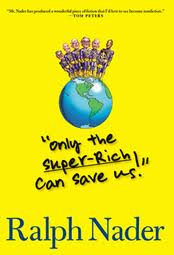 Richard Heinberg is a smart person with a tough message to deliver. In his writings he lays out several options for us as a human race. The two most interesting (to me) are “powerdown” and “lifeboats”. My crude summary defines “powerdown” as making enormous national/international efforts to get ourselves off oil, and “lifeboats” as a making significant local/regional efforts to prepare our communities for the coming system shocks.
Heinberg uses his professional time to focus on the powerdown strategy. This is wise; we must have brains like his doing so. But when asked which strategy he would pursue personally? He replies both, actually.
While much of this blog documents successes and failures in our family’s lifeboat experiments, much of my professional life revolves around the powerdown strategy. But frankly, my professional projects tend to make me depressed, as I see us gaining so little traction at the macro level. Then I read a new book.
It is potentially the most hopeful book related to the powerdown strategy, by Ralph Nader, I’ve read to date. Now for those readers who just rolled their eyes, give Nader another chance. His fictional book “Only the Super-Rich can save us” is a brilliant piece of fiction that just might come true, given the high quality nature of some of the world players he writes about (Warren Buffet, Bill Gates Sr, George Soros).
Highly recommended if you need a mood-lifter after reading too much negative news about our globe.
 Opt Out En Masse