Potato towers are a lot of hype
Posted: September 21, 2010 Filed under: 3. Food Security | Tags: food forest, potato towers Comments Off on Potato towers are a lot of hype…but don’t deliver as promised. The official tally is in and our trenches blew away the potato towers for production quantity, and ease of use. 214 pounds of eating potato from 20 pounds of seed potato! A few photos from our whole family harvest days (the middle photo just makes me happy):


What do you do when banks close?
Posted: September 20, 2010 Filed under: 8. Wealth Management Comments Off on What do you do when banks close?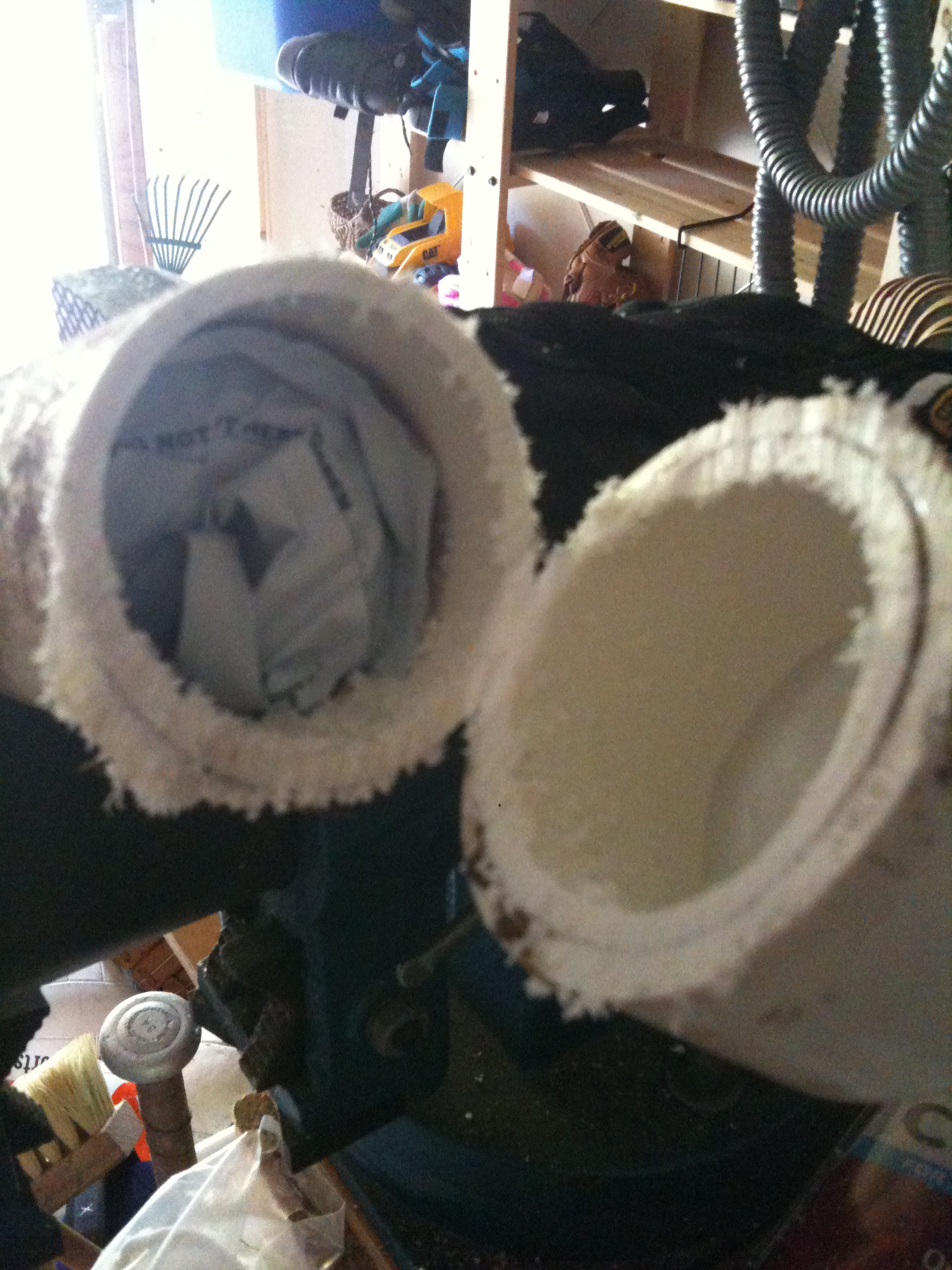 Our small town has seen all the local banks go under except one. All changed hands literally overnight with the SWOT-style efficiency of the federal banking folks. You could use the ATM the day before the takeover, and the day after the takeover. No problem. NPR’s Planet Money team did a great story on the nuts and bolts of this.
But what would you do in a short-term emergency if you could *not* get cash out of your bank’s ATM? Or any other ATM in your town? And the emergency made it such that the bank employees could not get to work, so you could not even go inside the branch to write yourself a check?
You might consider an addition to your go bags of a small bundle of cash to use in an emergency. But if you do, it might not be wise to have that cash sitting with the rest of your go bags in your garage. Our solution is to bury it on our property where it can quickly be accessed but is not findable by a burglar. We don’t keep cash or anything near it’s equivalent in our house for security reasons. But with this small amount of emergency cash, we’ve got enough to get by for a few days on the road, assuming the ATMs are not working.
Using a sealed plastic pipe (not metal, think metal detectors), we’ve kept cash on hand this way for years, safely and discreetly. This year I finally got smart and transitioned from a sealed pipe that had to be cut open to one that has a plunger style rubber gasket for waterproofing that can be opened without destroying the pipe. Add a few packs of oxygen absorbers and your cash will stay dry and mold-free.
Potato harvest
Posted: September 14, 2010 Filed under: 3. Food Security Comments Off on Potato harvest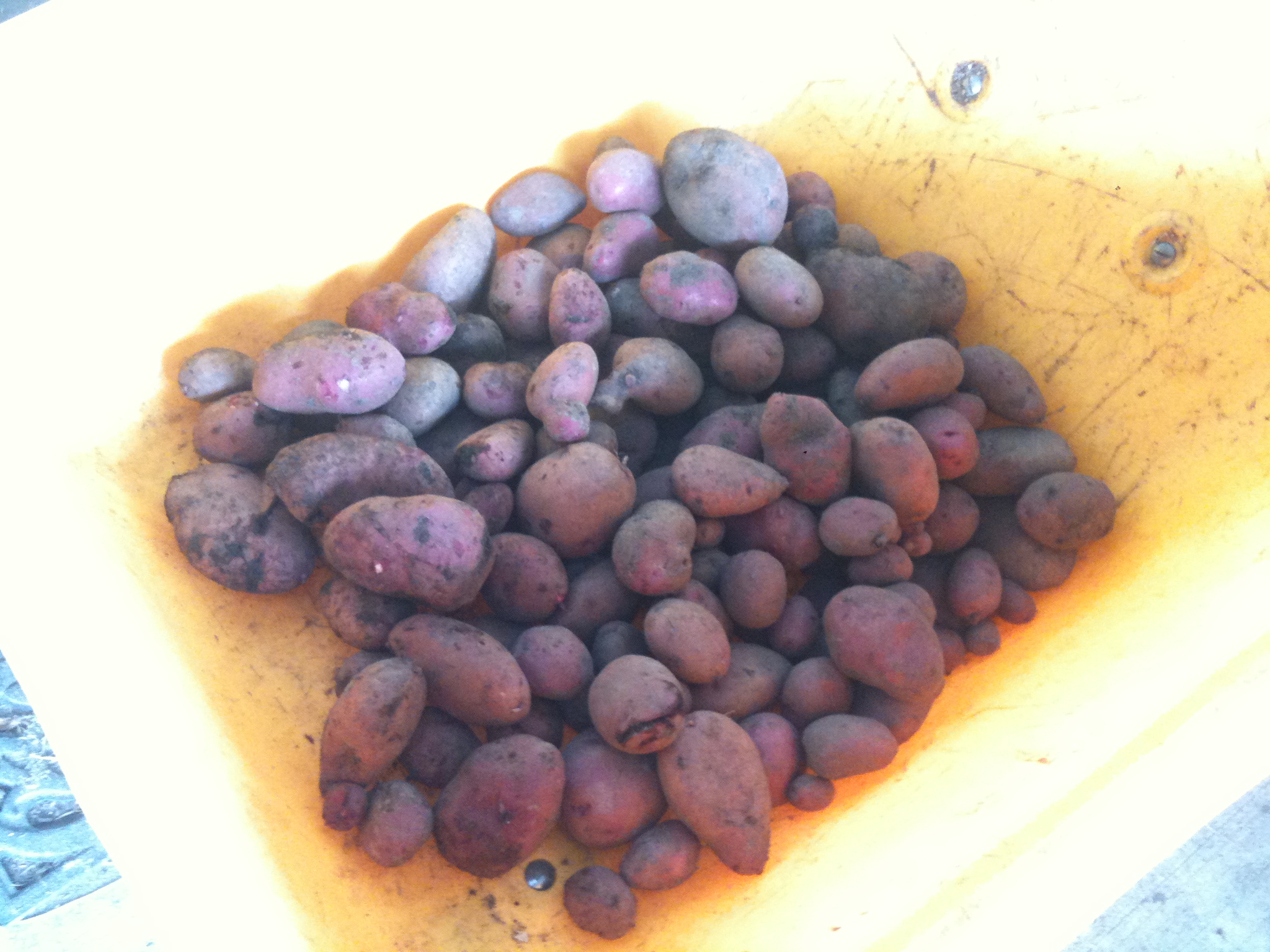 So far in the contest between potato towers and a normal potato setup in the ground (using trenches and hilling), the in-the-ground solution is the clear winner. We harvested just 10% of our in-the-ground potatoes today and got this.
Holy smokes. That is A LOT of potatoes and we’ve still got three more trenches to go that are twice as long as this one!
How to lose 5000 gallons of water
Posted: September 13, 2010 Filed under: Uncategorized Comments Off on How to lose 5000 gallons of water …in just 19 hours.
We have two cisterns that hold 5000 gallons. One day this past summer, they were almost full. The next day, they were bone dry. And the food forest was flooded. Oops.
I knew the water timer connected to the food forest’s drip irrigation system was broken, but I was too lazy to fix it that day. I literally said to myself, “It will be fine until this weekend.”
And then we had friends over, the kids play with the water sprinklers, the hydrant was accidentally left on, and the broken water timer locked into the open position. 24 hours later I went down to water at dusk and…nothing. No water. 5000 gallons gone.
It occurred to me on that fateful day – after I stopped cursing myself – that if I was a real subsistence farmer, my family would be in serious trouble. Thankfully, I’m not. So a bone-headed mistake like this simply meant that I had to run hoses from the house out to the various gardens, berry patches, fruit tree areas, and chickens.
Here’s the new timers that I like (and trust) more.
Harvest time makes me happy
Posted: September 9, 2010 Filed under: 3. Food Security Comments Off on Harvest time makes me happy …particularly for items like garlic and potatoes.
We’ve now got a year’s worth of garlic in cold storage.
Alternative shoe :: Five Fingers review
Posted: August 27, 2010 Filed under: 3. Food Security Comments Off on Alternative shoe :: Five Fingers review The Five Fingers alt-shoe by Vibram are like motorcycles. I like motorcycles.
I used to ride daily and experience the same responses from people when walking around in motorcycle gear that I do now walking around with these weird “shoes” on my feet. So here’s the Top 5 ways Five Fingers are like motorcycles:
- Five Fingers are riskier than a normal shoe, but still serve same purpose to get you from point A to point B. You have to watch where you step, just like on a motorcycle you have to pay 30% more attention to your surroundings.
- Five Fingers are galvanizing; people self-identify to me when I’m wearing these things: “I have some at home!” “I’ve been reading about those!” Same thing for bikes. Fellow riders (and those who just geek out for such things) will go out of their way to self-identify and start conversations about motorcycles.
- Five Fingers elicit excited responses from others. Those statements above really do always seem to end in exclamation points. Same for bikes.
- Five Fingers draw extra attention, mostly positive, whether you want it or not. Just as “What kind of bike is that?” is a common inquiry at roadstops, the question “What kind of shoe is that?” is a frequent inquiry from complete strangers.
- Five Fingers make some people mad. Really. Some people have illogical, belligerent reactions to you walking by wearing these things. It is like you are personally attacking their idea of what a shoe can and should be. Why are these people so passionate about footwear? Weird. But you get the same thing with motorcycles, especially when debating the merits of cruisers versus bullet bikes.
I don’t actually wear these to town much as I’m almost always wearing my clipless pedal bicycle shoes that look fairly normal. But I wear Five Fingers daily outside at home for food production chores. Check out the myriad of blogs and fan sites to learn about their benefits.
Only three hassles with these shoes:
- You simply can’t quickly slip these on/off for quick trips in/out of your home. Even after months of practice, I still have to bend over to shove my useless pinky toe in its slot.
- Your feet get wet no matter what, which is a hassle considering the annual rainfall where I live. I’ve got the Flow model with insulation for winter work outside in the garden, food forest, and hiking, but you still end up with wet feet.
- The tan lines on your feet look downright goofy when wearing normal thong sandals showing off your sparkly white toes. See attached photo taken by my daughter; she thinks it is hilarious.
Highly recommended if you find yourself with consistent back pain or other problems that better posture might remedy.
From chicken tractor to day-ranging
Posted: August 18, 2010 Filed under: 3. Food Security | Tags: Andy Lee, chicken tractor, day ranging chickens, Joel Salatin, portable coop Comments Off on From chicken tractor to day-ranging
We’re moving.
Not from our small town, but from our current Joel Salatin inspired chicken tractor setup to an Andy Lee style day-ranging setup.
Why?
- Transition most daily chores to weekly/monthly/quarterly.
- Enable remaining daily chore (egg collection) to be done by kids.
- Increase health of the birds. Hoping that more space means less pecking each other.
How?
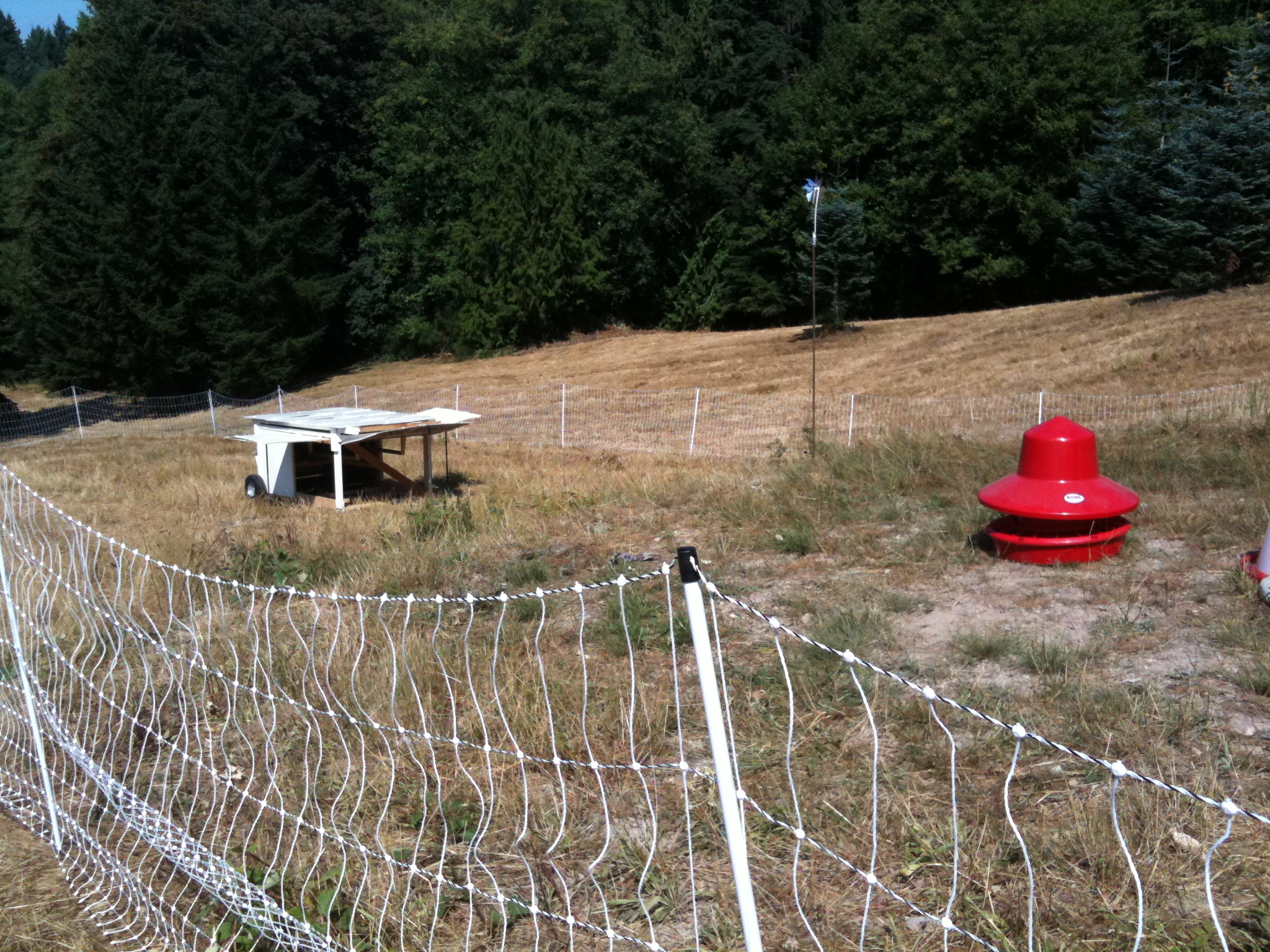
- Built a smaller coop meant to solely be a place to lay eggs and roost for the night. Protection from elements only, not predators. Self-imposed limit on the coop was it had to be made entirely from found materials. We used old political campaign signs as the wall/wings and roof, IKEA bed slats as framing lumber, etc. Local woodworker did the design work and let use use his awesome workshop.
- Added 1/4 acre of electronet fencing to protect from daily coyote visits and occasional raccoons. That’s enough pasture to not need to move the coop and fencing but once every 1-3 months, depending on the season.
- Added rebar posts with pinwheels to distract the local birds of prey. We get daily fly-bys from eagles, osprey, hawks…and owls each evening. They are beautiful, but I like to eat eggs.
- Added a range feeder that holds 50# of feed while keeping it dry. My daughter is wearing the top part as a hat in the nearby photo.
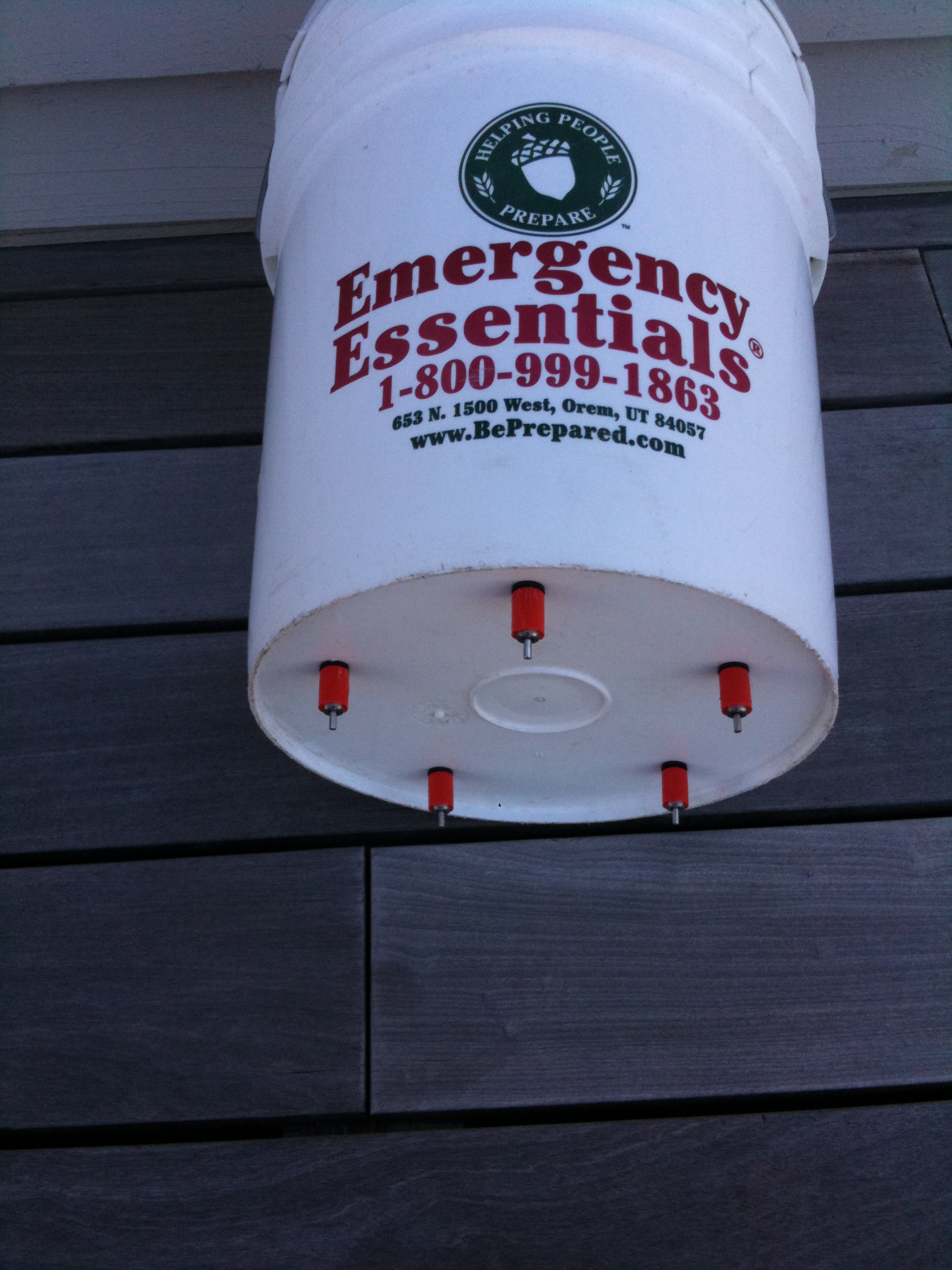
- Made my own 7-day waterer from an extra 5 gallon bucket and $1 chicken nipples (can’t believe I just wrote that) from Farmtek.
Here are some photos…


Staying to help
Posted: August 15, 2010 Filed under: 1. Philosophy, 6. Personal Training | Tags: emergency preparedness, go bags, self-reliance Comments Off on Staying to help A recent conversation with a friend reinforced the need to encourage local people to stay and help during an emergency, whether it is a long one or just a few days. Over the course of a few conversations, I could see his outlook change from “I need to escape to another country with my kids” (he’s divorced) to a more positive, healthy attitude of “I need to get trained up so I can stay and help my community.”
That’s a *great* change in attitude, applicable for many situations (I’d still use the Go Bags if you’ve got a nearby chemical spill on the highway). I appreciated watching the stages of my friend’s progression as I port my self-reliance projects from a personal level to a town level.
You can read a similair journey taken by the excellent writer Neil Strauss in his book, Emergency. Another author, Zachary Nowak has an interesting take on this attitude here. His editor Adam Fenderson, founder of the Energy Bulletin, commented on Nowak’s essay:
There is also a ‘third way’, one which combines self-sufficiency/survivalist type tactics with community building and some relatively positive visions. Eco-villages, Richard Heinberg’s lifeboats strategy, and the [Transition] town-scale efforts in places such as Kinsale in Ireland and Willits in California might be considered part of this approach.
Isolationist survivalism, constantly on the guard from marauding hordes, doesn’t sound like an existence most of us would consider worth living. And promoting it, where it takes our energies away from more collective energy descent tactics might actually increase the likelyhood of such uncontrolled collapse and desperate marauders. So the ethics of promoting such an approach are complex.
We publish Zachary’s article because it is full of excellent advice and resources of value to anyone with an interest in taking more than a superficial approach to sustainability (a term which ultimately does mean the same thing as survival.)
Stages of awareness
Posted: August 7, 2010 Filed under: 1. Philosophy, 4. Energy Security | Tags: Chris Martenson, CO2=PxSxExC Comments Off on Stages of awareness “Awareness arrives in stages” is still one of my favorites quotes because it passes the reality test every week in conversations I have with folks local or abroad. And now there is a useful corollary from Chris Martenson.
I personally spent the most time in the Bargaining stage. And although I currently sit at the Acceptance stage, I regularly return to Bargaining. And then I’m reminded of a very real need to get the worldwide carbon emissions to zero by 2050. Holy smokes, that’s a big goal. At least we have some of our brighter minds now thinking about it.
At which stage are you?
No go on hot beds
Posted: July 31, 2010 Filed under: 3. Food Security | Tags: cold frame, hot bed Comments Off on No go on hot beds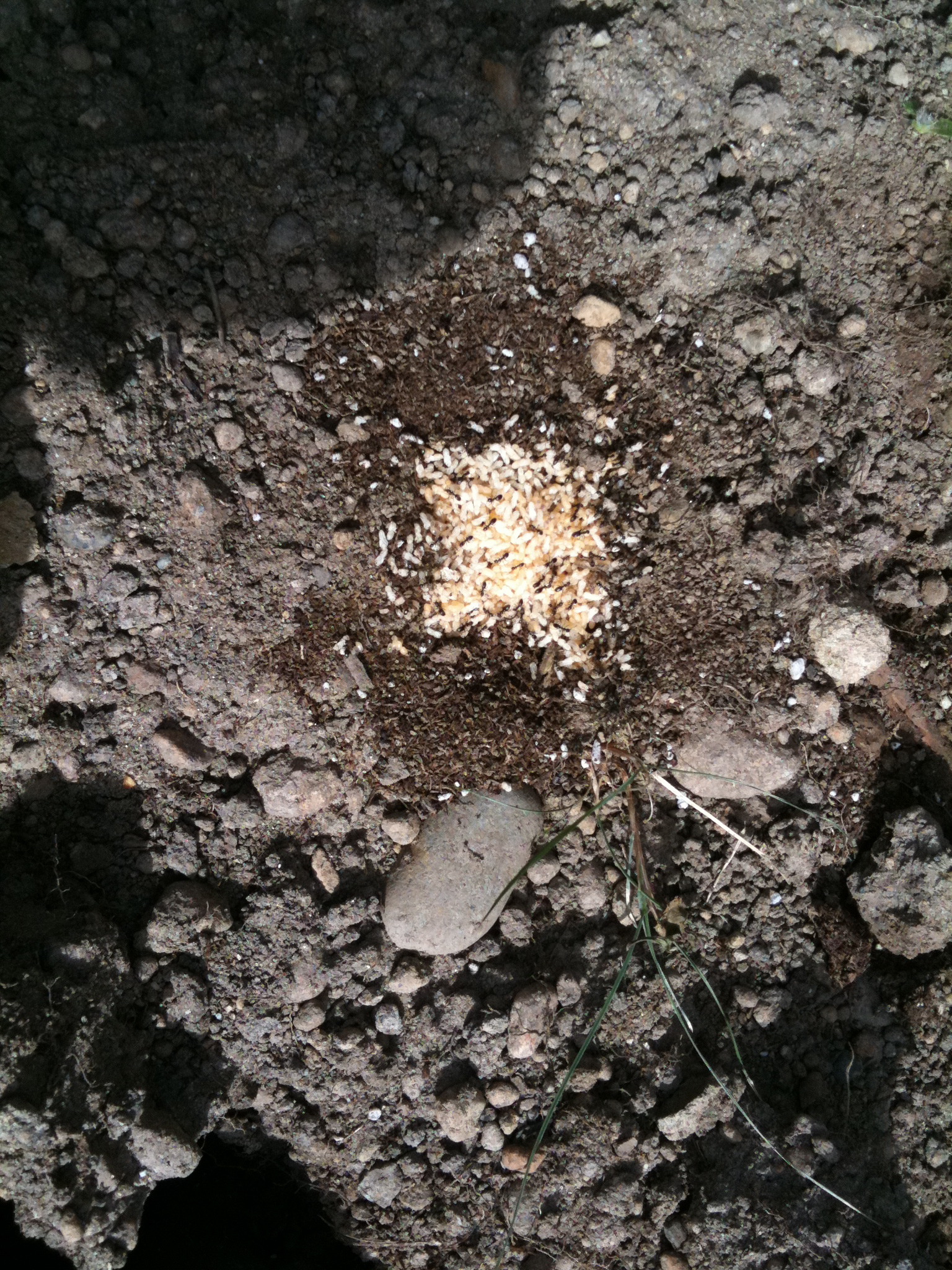 While watching the hot beds’ performance this past spring, the number of mature seedlings appearing in the hotbeds was significantly lower than the cold frame. It was primarily insects making a meal of the just-sprouted seedlings.
And once summer arrived, everything in there got scorched on a single hot day when I failed to vent it. Oops. Bummer for me.
I’ve permanently dismantled these hot beds for another reason, however. I did not think through the potential consequences of using actual glass windows (freecycle find) in the hot beds.
Given that we have two small children and one rambunctious dog running nilly willy right next to these all day long, it was only a matter of time before a sports ball or leg stepped right through the glass. And the glass is old school, non-safety glass. They’d probably go into shock from a massive cut before I could even get the EMTs here.
Upon disassembling the hot beds, I found multiple, significantly-sized ant nests. No wonder I could not get anything to grow in those things. I had similair issues with our floating row covers late winter / early spring which made for cozy homes for a myriad of not-helpful insects and slugs. For those of you who use hot beds and row covers to extend your growing seasons, how to you handle the significant increase in destructive insects?
I’ve gone back to heavy use of our single cold frame on our back deck that uses the solexx type material. Will likely either purchase a couple more of these in the fall and keep them up on the deck, or splurge for the full $750 solexx greenhouse kit and do battle with the insects again on the ground.
 Opt Out En Masse