Are electric cars a dead end?
Posted: September 15, 2011 Filed under: 5. Alt Transportation, 8. Wealth Management Comments Off on Are electric cars a dead end? Jackson Harper at Transition Voice (part of the international Transition Network movement) recently asked himself that question and offers some interesting insights.
While our Nissan Leaf is still battling with my home-built electric bicycle for top billing for my commute around town, I think James Kunstler is correct that our “happy motoring” days are numbered. A favorite recent quote from Kunster:
We are ignoring the most obvious intelligent responses to this predicament, namely, shifting our focus to walkable communities and public transit, especially rebuilding the American passenger railroad system – without which, I assure you, we will be most regrettably screwed ten years from now.
Despite the private investment in our railways by Gates and Buffet, we’re seeing minimal federal government interest, which is a shame as we’ll need it unless we want the rest of the world to pass us by (at high speeds).
How to recover corn from a blow down
Posted: September 7, 2011 Filed under: 3. Food Security Comments Off on How to recover corn from a blow down Returning from a long weekend away, we found our corn blown over from a windstorm. Bummer. Thankfully it can be recovered.
By driving wooden stakes throughout the corn and using twine to attach 2-3 stalks per stake, the corn is encouraged to put energy back into standing up straight on its own. After two weeks of staking, we removed the stakes to find the corn strong enough to stand and throw its tassels up.
While I can’t imagine trying to recover 3 acres of damaged corn in this fashion, it’s a quick and easy solution for micro-farming setups like ours.
Decorating with zucchini
Posted: September 1, 2011 Filed under: 3. Food Security Comments Off on Decorating with zucchini Each harvest season I’m reminded that I plant too much zucchini.
And reminded of the memorable Prairie Home Companion story that the only time folks lock their doors in the fictitious town of Lake Woebegone is when the zucchini harvest is in. Else you find your car full of extra produce when you return from church!
In addition to bartering much of our extra produce away (we set up a new weekly live barter session with friends right before our local farmers’ market), we’re now decorating our stairwells with it. Pictured here is a fun mix of french zucchini (looks like green pumpkins) and yellow cucumbers.
Here comes the sun
Posted: August 25, 2011 Filed under: 2. Water Security, 3. Food Security | Tags: Contrary Farmer, Gene Logsdon Comments Off on Here comes the sun Gene Logsdon recently described August as a Glut Month and the reason why farmers put up with the headaches from the rest of the year. Although we are just micro-farmers, I could not agree more.
Once the sun finally decided to arrive in the Pacific Northwest, both the food forest and the raised beds started pumping out produce.
Between a crazy-busy work schedule this month from my day jobs + harvesting, storing, and replanting for Fall crops, this blog almost looks like we went on a European-style vacation for the entire month of August.
And now for one of the annual photos that makes me smile…a year’s worth of garlic hanging up to dry.
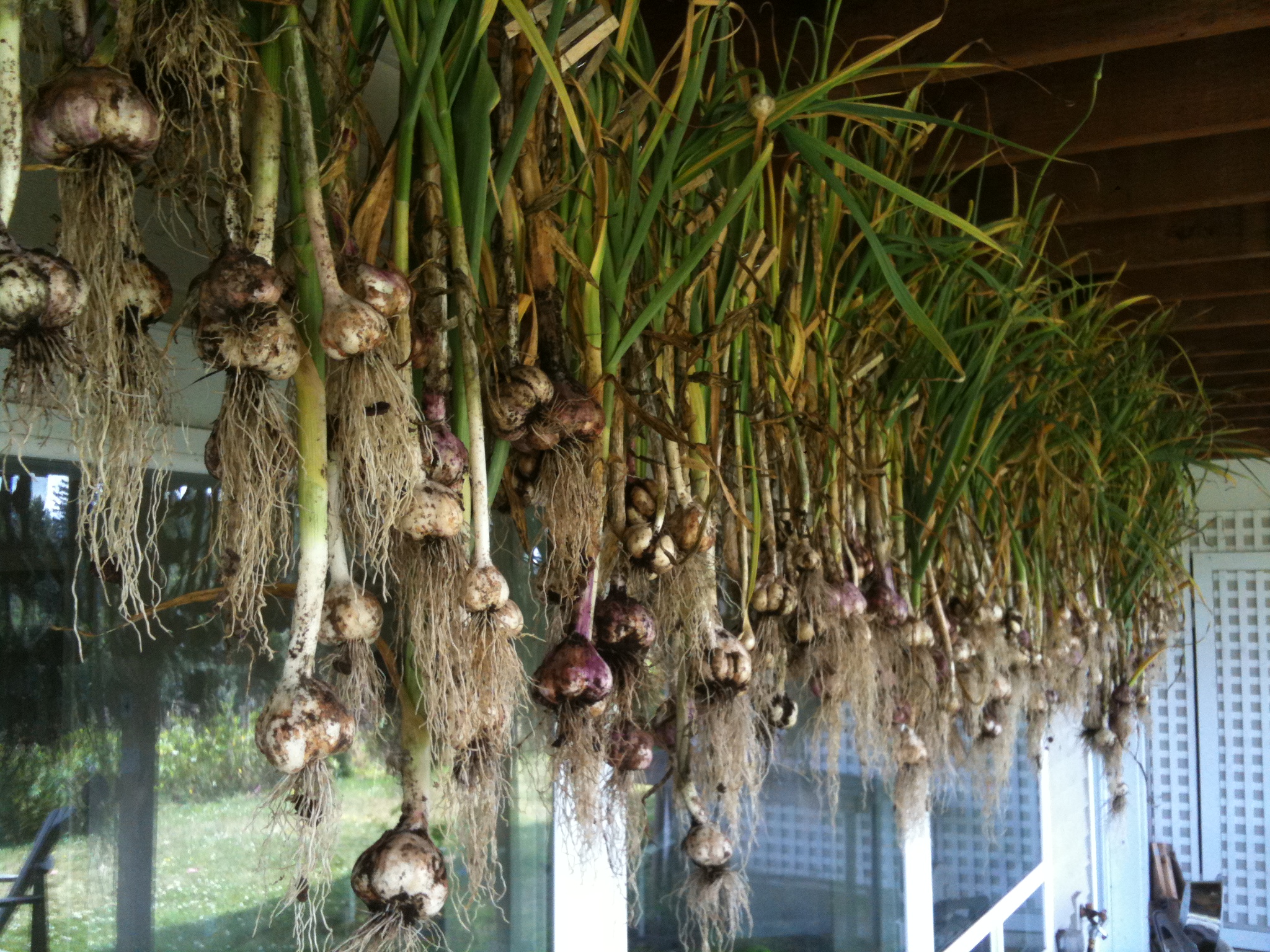 We’ll combine this with the tomatoes that are starting to come in heavy to make salsa for the winter months.
I did discover that with our recently expanded beds in the food forest (30 new blueberry bushes and more), our 5000 gallon water cistern system no longer provides the targeted two months of irrigation. In fact, we ran dry in just 10 days. Oops.
Next on the big project list: digging a 50,000 gallon pond and installing a solar pump to bring the water up to the cisterns for redistribution to the food beds.
Wishing for a dry spell
Posted: July 28, 2011 Filed under: 3. Food Security | Tags: calendula, food dehydrator, food production, plantain, yarrow Comments Off on Wishing for a dry spell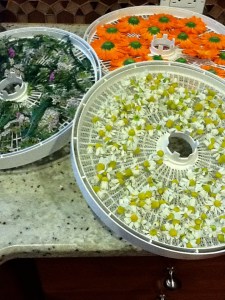
Unlike the rest of the country, we’re wishing daily for less rain and more sun to improve our food production.
While we’re trying to dry out ourselves, we harvested two sets of items this week that also need drying. Our garlic harvest is air-drying in the shade and our herbs are electric-drying in the food dehydrator this week.
The herbs are calendula, yarrow, and plantain. All useful for making your own medicines.
Bicycling sharing in urban areas
Posted: July 26, 2011 Filed under: 5. Alt Transportation Comments Off on Bicycling sharing in urban areas A lot of folks who email me comments are bicyclists who find this blog based on my experiments with alternative transportation, specifically cargo bikes and electric bikes.
So I’d love to hear thoughts on the pros and cons of our current bicycling sharing programs in US cities.
Bicycles have meant a lot to me for a long time. I even had my “peak moment” while on a bicycle, riding through downtown Seattle straight through the WTO protests. Before that week started, I could not even tell you what WTO stood for. By the end of the week, I knew my days in high tech were numbered and that I needed to change my lifestyle and career to help others.
Nissan Leaf makes people fat
Posted: July 23, 2011 Filed under: 5. Alt Transportation Comments Off on Nissan Leaf makes people fat Our Nissan Leaf is making me lazy.
I find myself actively planning trips to use the Leaf around when my wife + kids need the car…instead of just hopping on my bicycle to cruise into town.
As Leaf sales continue to rise I predict Americans will simply become more sedentary. This spells doom for the bicycle industry.
🙂
Letting go…while staying prepared
Posted: July 20, 2011 Filed under: 1. Philosophy Comments Off on Letting go…while staying prepared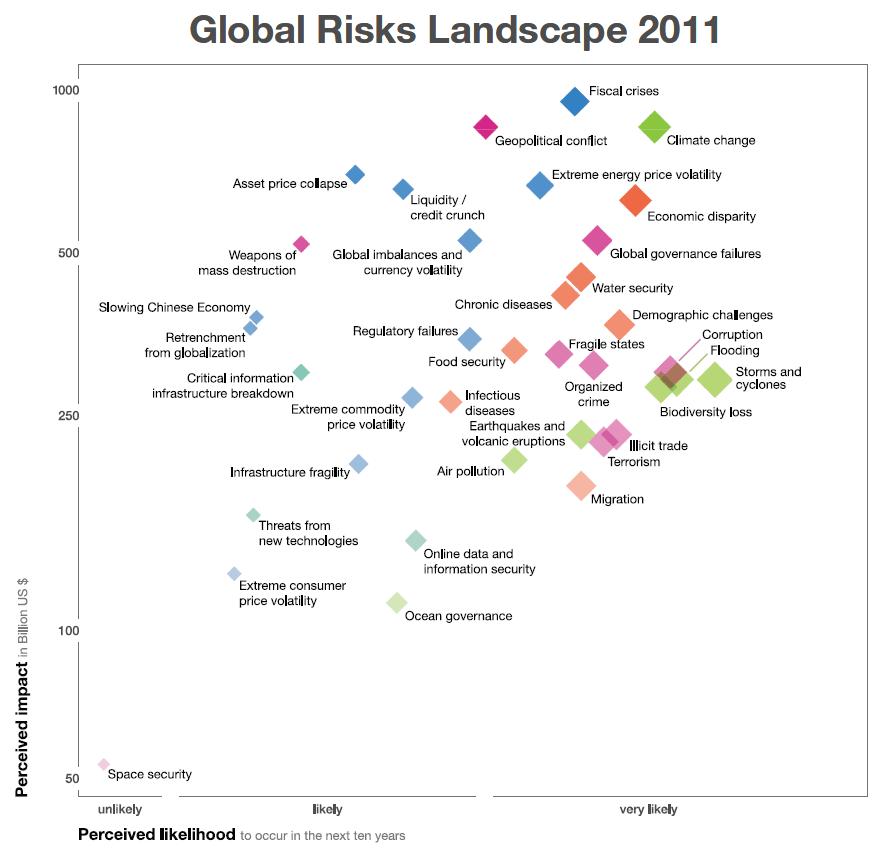 I found excellent insight from a super high-quality person on Transition Voice. I’ve spent time with the author David Johnson before and can assure you he is as thoughtful, calm, and far-thinking in person as he is on paper (or your browser).
Given my “control issues” that I constantly work on, I normally scoff at anyone advising me to “just let go.” But Johnson makes a compelling case. Recommended.
(The nearby graphic from the World Economic Forum details the risks facing our globe, plotted by their perceived impact versus likelihood).
Many hands makes light work
Posted: July 15, 2011 Filed under: 3. Food Security Comments Off on Many hands makes light work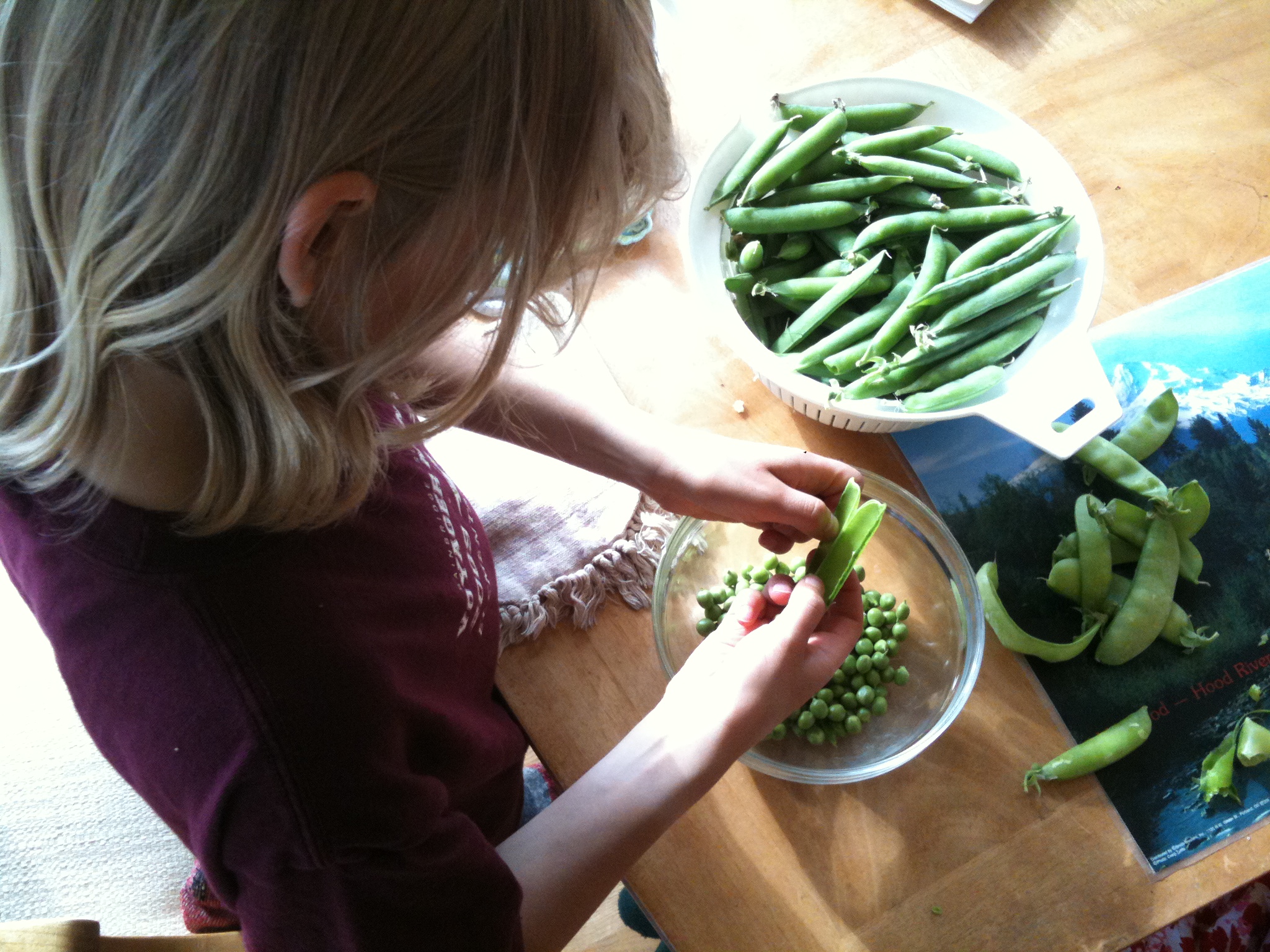 Nothing is better than to see your children actively seek to be involved in one of your hobbies.
One of the best things about my kids is their strong desire to connect with nature, particularly the version of nature they get to help create in our food forest.
Our shelling pea trellis recently attracted both my kids away from their daily chore of devouring strawberries and raspberries, to the point where they asked if they could help with harvesting. What a great day.
This Compost
Posted: July 10, 2011 Filed under: 1. Philosophy, 3. Food Security | Tags: Contrary Farmer, Gene Logsdon, Holy Shit, This Compost, Walt Whitman Comments Off on This Compost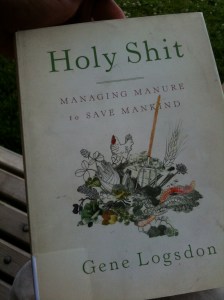 Hat tip to the Contrary Farmer Gene Logsdon, who referenced this great (and previously unread by me) poem in his book Holy Shit.
By Walt Whitman (1819-1892)
1
Something startles me where I thought I was safest,
I withdraw from the still woods I loved,
I will not go now on the pastures to walk,
I will not strip the clothes from my body to meet my lover the sea,
I will not touch my flesh to the earth as to other flesh to renew me.
O how can it be that the ground itself does not sicken?
How can you be alive you growths of spring?
How can you furnish health you blood of herbs, roots, orchards, grain?
Are they not continually putting distemper’d corpses within you?
Is not every continent work’d over and over with sour dead?
Where have you disposed of their carcasses?
Those drunkards and gluttons of so many generations?
Where have you drawn off all the foul liquid and meat?
I do not see any of it upon you to-day, or perhaps I am deceiv’d,
I will run a furrow with my plough, I will press my spade through the sod and turn it up underneath,
I am sure I shall expose some of the foul meat.
2
Behold this compost! behold it well!
Perhaps every mite has once form’d part of a sick person–yet behold!
The grass of spring covers the prairies,
The bean bursts noiselessly through the mould in the garden,
The delicate spear of the onion pierces upward,
The apple-buds cluster together on the apple-branches,
The resurrection of the wheat appears with pale visage out of its graves,
The tinge awakes over the willow-tree and the mulberry-tree,
The he-birds carol mornings and evenings while the she-birds sit on their nests,
The young of poultry break through the hatch’d eggs,
The new-born of animals appear, the calf is dropt from the cow, the colt from the mare,
Out of its little hill faithfully rise the potato’s dark green leaves,
Out of its hill rises the yellow maize-stalk, the lilacs bloom in the dooryards,
The summer growth is innocent and disdainful above all those strata of sour dead.
What chemistry!
That the winds are really not infectious,
That this is no cheat, this transparent green-wash of the sea which is so amorous after me,
That it is safe to allow it to lick my naked body all over with its tongues,
That it will not endanger me with the fevers that have deposited themselves in it,
That all is clean forever and forever,
That the cool drink from the well tastes so good,
That blackberries are so flavorous and juicy,
That the fruits of the apple-orchard and the orange-orchard, that melons, grapes, peaches, plums, will none of them poison me,
That when I recline on the grass I do not catch any disease,
Though probably every spear of grass rises out of what was once catching disease.
Now I am terrified at the Earth, it is that calm and patient,
It grows such sweet things out of such corruptions,
It turns harmless and stainless on its axis, with such endless successions of diseas’d corpses,
It distills such exquisite winds out of such infused fetor,
It renews with such unwitting looks its prodigal, annual, sumptuous crops,
It gives such divine materials to men, and accepts such leavings
from them at last.
 Opt Out En Masse