Step by step photos of new hugelkultur bed
Posted: December 31, 2013 Filed under: 2. Water Security, 3. Food Security Comments Off on Step by step photos of new hugelkultur bedThank goodness Solstice is here so our days start getting longer again. So happy we’ll be getting more light, both for the additional outside-work hours and for the sunshine itself!
This month we replaced our classic raised beds with a hugelkultur bed – reusing the rotting wood planks inside the new bed. Hugelkultur is the fancy way of saying “giant sloped-sided raised bed with a woody debris core that rarely needs summer watering”. It’s sure to get you weird looks at holiday cocktail parties, even among the gardening crowd.
The primary problem I was solving for was a massive multi-year infestation of perennial Morning Glory called Convolvulus Arvensis (bindweed). This stuff sucks. I’ve battled it for years after inadvertently planting it myself on the nearby rock walls from a seed packet of wildflower seeds. The most effective treatment I’ve found over the years is not pulling, but spraying the leaves with a salt-white vinegar mixture. But it’s still a losing battle. So the new solution is a 6′ wide, 2′ deep trench dug between the bindweed’s primary home (the wall of boulders) and the new raised bed. We’ll see if this helps.
After we transplanted the permanent (asparagus) and cold hardy veggies (kale, etc) to another nearby hugelkultur bed, we removed the infested topsoil down to 2′ and dug in the 6′ wide trench, which we filled with wood chips. Next step was to haul in two years of woody debris I’ve been saving from fallen trees, annual trimmings, fall leaves, and the (untreated) wood planks from previous raised beds to form the triangle shaped core. We then stuffed all the holes with straw so the soil would stay in place. With the help of a borrowed tractor, we then topped off with a fish compost mixture of soil to form the completed 6′ high raised bed.
Given that I thought this project would take two weekends (it took five) to complete this new woody-debris bed, my initial cover crop will not likely germinate in time for the winter. Will likely just re-seed early spring (covered with with Agribon paper) and hope I don’t lose too much structure/soil this winter.
-
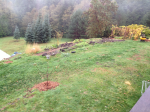
- Remnants of old raised beds
-
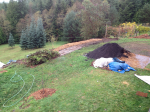
- Creating core of woody debris
-

- Wood debris core, holes stuffed with straw to hold soil
-

- Wood core complete, adding straw
-

- Finished hugel, 6′ high
Weekend Warrior projects
Posted: October 31, 2013 Filed under: 3. Food Security Comments Off on Weekend Warrior projectsThe rapidly shortening days here in the Pacific Northwest, combined with being buried at work, leave me gardening in the dark (literally) while humming REM’s Gardening at Night. On the weekends, we made a radical addition to our day-ranging chicken setup with a permanent coop. The birds still have day access to the pasture through a chicken tunnel (newly named as The Chunnel), but the permanent coop solves for two issues:
- I was losing all their valuable manure out on the pasture, where I won’t be able to take advantage of it for years until we expand the garden beds that direction.
- I was tired of hauling their feed such long distances, and hauling water at all when you live in the rainy Northwest just seems silly.
As I’m lousy with carpentry, the talented fellow behind Saltbox Designs took my crazy sketches, ideas, and ramblings to construct a structure that won’t fall down and looks great. When Berg was finished, I added a deep litter system on top of an earthen floor, automatic feeders (gravity) and water (harvesting rainwater), while maintaining full-time access to pasture through a Pullet Shut door and the aforementioned Chunnel. I’m pleased.
Another full weekend was spent hauling and spreading 51 yards of wood chip compost. Thank goodness for generous neighbors with tractors.
-
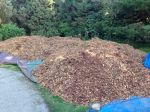
- 51 yards of chips!
-

- Food forest with new wood chips and new coop in the distance
-
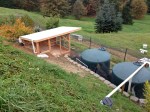
- New coop next to cisterns, both to hold (future) solar PV panels
-
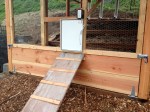
- Pullet Shut chicken door on automatic light sensor
-
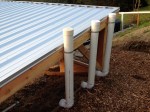
- Gravity-driven automatic feeders
-

- Roosts
-

- Chicken tunnel (the Chunnel) before connecting to pop door
-

- Removable wall for 1-2X deep litter clean out to nearby composting bins
-
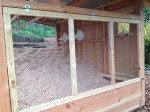
- Three walls in mesh for massive airflow and healthy birds
-
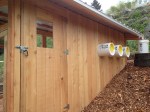
- Still using removable nest buckets for easy cleaning
-

- New coop making use of steep hillside with a semi-kickdown system for the litter
-
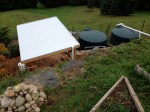
- New coop directly besides and below garden to route chickens through in off-season
-

- Rainwater fed gravity-driven automatic waterer
-
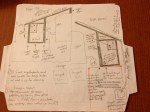
- Ramblings and sketches
Breathless from the bounty
Posted: September 30, 2013 Filed under: 2. Water Security, 3. Food Security, 4. Energy Security Comments Off on Breathless from the bountyThis month’s highlights, capturing the benefits of bounty:
- Oh my goodness, the tomatoes and tomatillos just kept coming, and coming, and…good thing the kids and I like sun-dried tomatoes. The sun-dried tomatillo is amazing as well. We’ve had the food dehydrator going 24/7 for weeks now.
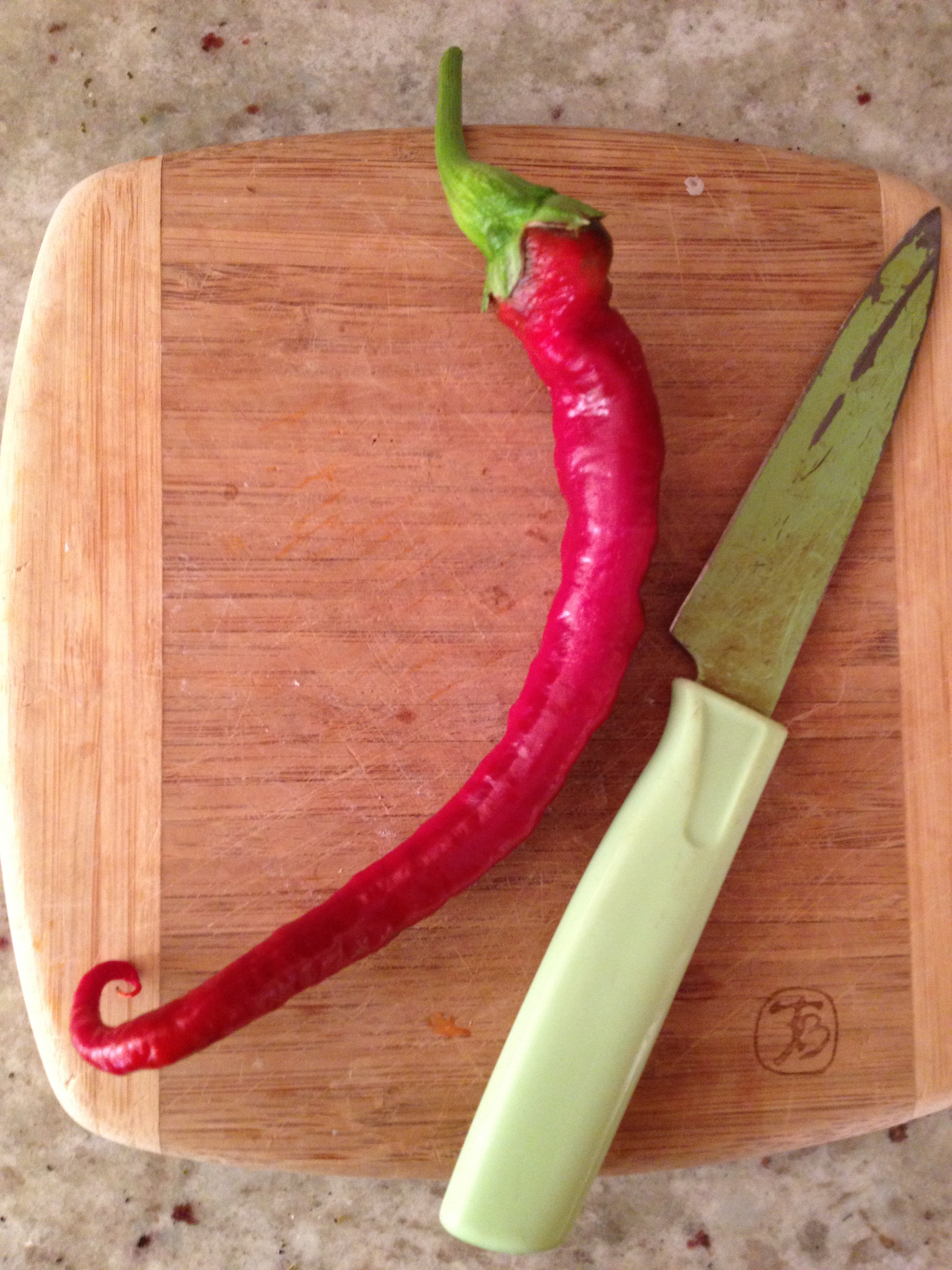
- And the chili peppers. I believe pure happiness is a little red fruit.
- A seasonal flush of the water cisterns and they are already full again.
- Both our wood burning stoves are the cleanest they will be all year. Ready to burn!
- New-to-us used bicycles for everyone. Just in time for the rains (oops!).
-
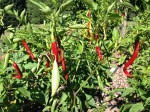
- Love = bright red chilies
-

- Big Jim chilies
-

- Dried chili peppers about to become powder for my morning eggs
-
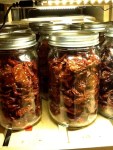
- A year’s worth of sun-dried tomatoes
-

- Cleanest ever!
Pausing to enjoy the harvest
Posted: August 28, 2013 Filed under: 3. Food Security Comments Off on Pausing to enjoy the harvestThe fast growth of spring and early summer is behind us and we’re now enjoying a brief pause as the crops finish their march towards ripeness. My daily tasks have moved from massive weeding to select harvesting, which is an enjoyable change.
Well, actually, I simply gave up on weeding and starting spraying our Morning Glory weed (er, beautiful plant that is growing in the wrong spot) with a combination of white vinegar, salt, and soap. After researching the futility of pulling MG’s roots (they just send out more runners), I’ve decided to follow the wisdom of attacking the plant through its prolific leaves.
The #1 highlight of this month came as a gift when I heard my son exclaim, “I’m going outside to get a snack!” and then heard the back door slam closed. The kids just wander through the gardens, eating and exploring, while their parents look on with smiles and joy.
The #2 highlight of the month came during one of my frequent evening sessions with my daughter, slicing and drying our tomatoes and tomatillos. As we worked to transform them into delicious sun-dried versions of themselves, crunchy with eye-popping flavor, the six year old commented “I want to grow food with you when I grow up, Daddy. Can that be my job?”.
-

- Healthy and hot
-
- Pears!

-

- Morning moon over a freshly cut pasture

Return of warmth
Posted: July 31, 2013 Filed under: 3. Food Security Comments Off on Return of warmth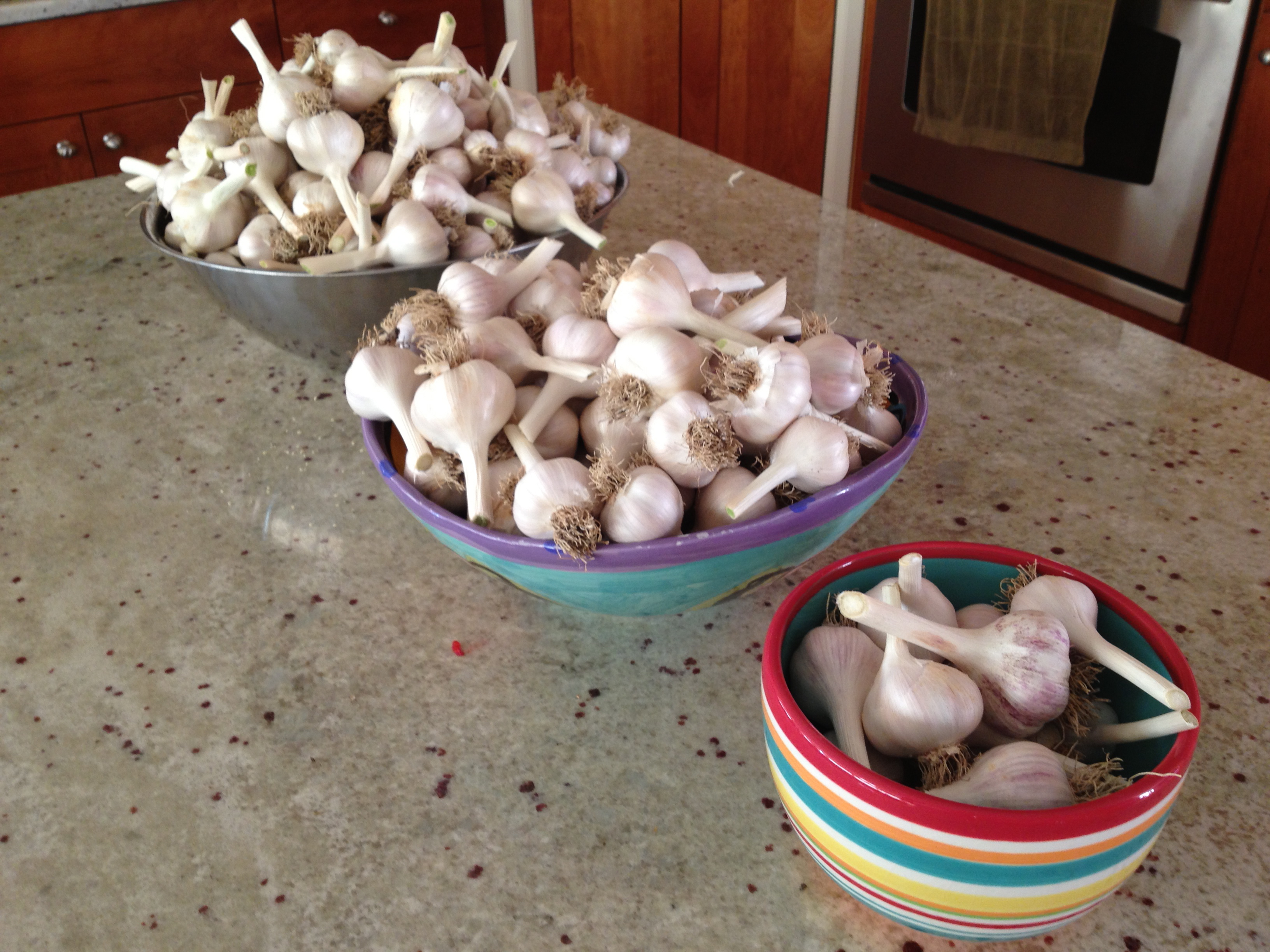
Garlic for the year
Loving our (mostly) warm weather here in the Northwest, especially when most of our friends are suffering under too-hot conditions elsewhere in the US and Canada. This month’s highlights:
- Our annual garlic harvest. Something about the curing process where a year’s worth of garlic is hanging in the breezy shade for several weeks makes me smile every time I walk past it.
- Our chili peppers are transplanted well from the greenhouse to the food forest once consistently warm temperatures arrived. They seem happy and are now loaded with peppers.
-
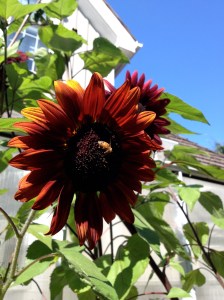
Little friend, big flower
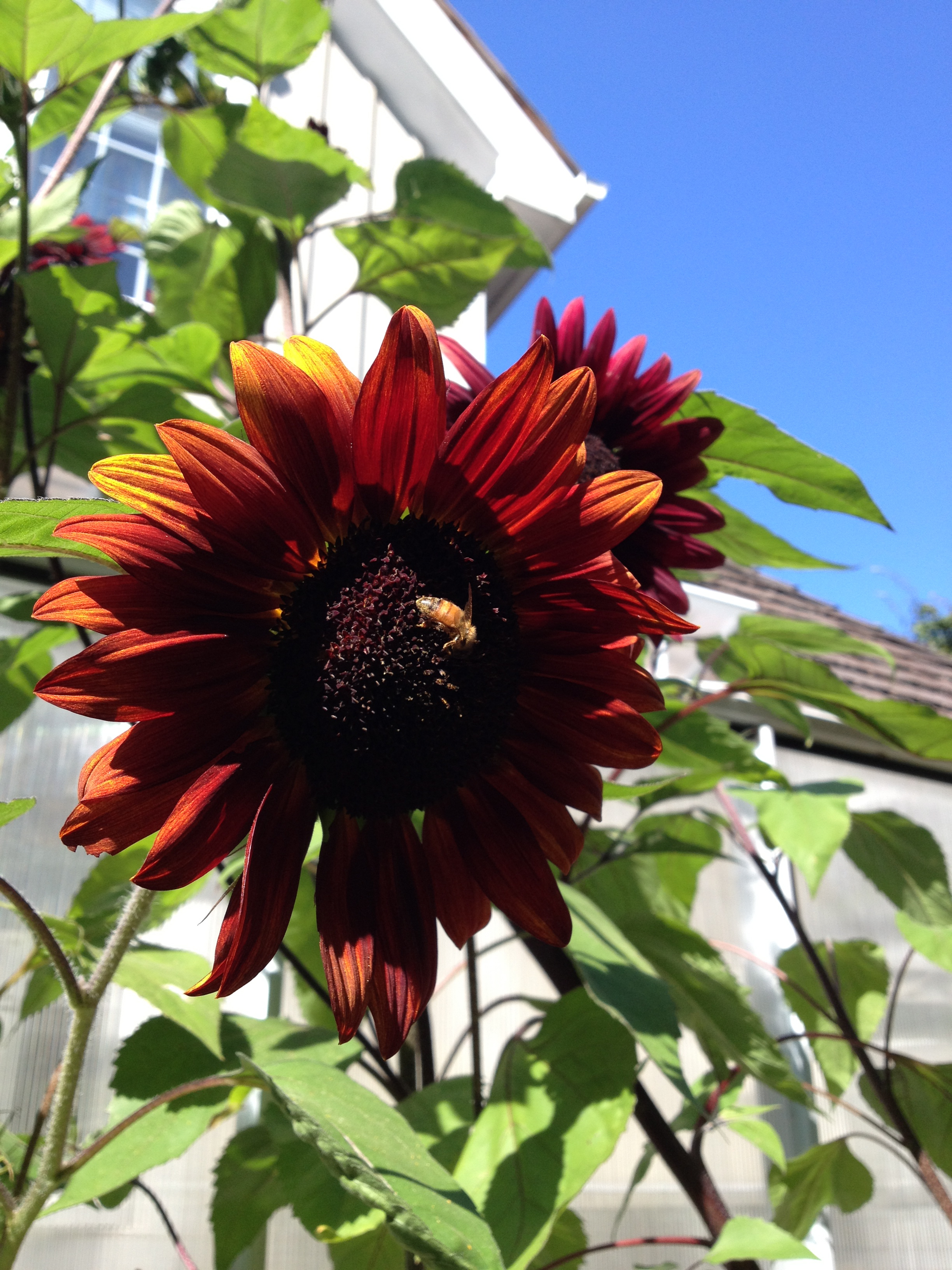
My little girl’s sunflowers that she started herself are now 10′ tall. Love the look of amazement on her face when she thinks about that growing process.
- We’ve officially become a family of scythers, with new scythes arriving for my wife and son from a Canadian woodworker.
- The anticipation of our first honey harvest of the year. Good thing, since we ate the last of last year’s harvest two months ago (I mistakenly sold off “extra” jars of honey this winter to a friend…oops!).
- Learning more lessons about the balance of sharing our berries (honey, blue, tay, rasp, goose, and black/red/white currants) with birds and wanting to actually eat some ourselves.
Summertime happiness…
Posted: June 29, 2013 Filed under: 1. Philosophy, 3. Food Security, 5. Alt Transportation, 8. Wealth Management Comments Off on Summertime happiness… When you live in the Pacific Northwest, you get used to thinking of “summer” based on the calendar alone, as you certainly can’t count on the weather to inform you. But despite overcast skies, colder temperatures, and drizzle, we have some spectacular days/weeks that give you a glimpse of what’s to come each July-August.
These glimpses also offer occasions where I reflect on true happiness, and it reminds me that each day I can choose happiness whether it’s dreary outside or not.
Taking a break from our normal highlights/lowlights update, many of you know that recently I’ve been reflecting on happiness instead.
Happiness is:
- A sharp scythe
- Colorful foxglove rising among blueberries
- Healthy bees
- A bicycle ride through blossoming cherry trees with your daughter in tow (and not needing rain protection gear!)
- Early morning sessions at dawn of moving meditation in the pasture, clearing paths
- Wildflowers spreading along pathways in a food forest
- Watching your son take 45 minutes to simply collect eggs as he’s carrying on extended conversations with the chickens…in their language
- A greenhouse full of chili pepper plants
- Calendula flower petals finding their way into your salad…medicine that tastes good!
- Finding carefully piled collections of natural materials curated by a six year old, ready to make another fairy house
- Hugelkultur beds actively producing crops with minimal watering
- The blessing of viewing Mount Rainier from above the clouds
- Finding semi-wild elderberry trees with bright red berries…medicine growing on trees!


May showers bring…hey, wait a minute…
Posted: May 28, 2013 Filed under: 1. Philosophy, 3. Food Security, 6. Personal Training Comments Off on May showers bring…hey, wait a minute… My wife and I got to escape the relentless rain and take a special trip to Hawaii this past month, where we met some super high quality folks. We were gone for 10 days, but given the amount of Morning Glory that invaded our garden beds while we were gone, you’d have though it was three months.
Highlights from this past month:
- We enjoyed several deep conversations in Hawaii, including new learnings from the eco-resort’s horticulture team about permaculture and much more. We returned to the overcast Pacific Northwest feeling relaxed, inspired for our future, and full of sunshine!
- We recovered more space from the useless lawn to create our second small hugelkultur bed (read: core of decomposing wood) in a keyhole design.
- I’ve been experimenting with aerated compost tea using $10 worth of aquarium parts, finished compost from our worm bins, and these simple instructions. Will report back at the end of the growing season how the beds treated with this tea faired against the control group. There is something about making compost tea that makes me feel like a mad scientist and fascinates my children.
- I found a sane voice of reason in one of the crowds I interact with…survivalists. I’ve had numerous conversations with these interesting folks over the past 5+ years as I dove deeper into the sustainability movement and then began connecting it to the survivalist movement via the topic of resilience. I recently used permaculturalists + preppers as one of the themes to my Prepared Neighborhoods book (currently undergoing punishment by my editor this summer). This post by Kirsten at Milkwood struck a chord with me as I’ve found my own responses the past year or two reflecting her grounded and positive sentiments:
So now, when occasionally someone comes up at a course and wants to talk survivalism, I almost want to get specific: “so, like, are we talking about just social upheaval, or economic collapse, or armageddon, or the full thing where people start to eat each other? Because you’ll need a different approach depending on what you’re thinking to protect yourself from…”
In reality, I don’t go there. If I and my family are going to manifest a thriving future for ourselves and our community, I need to compost those kinds of thoughts and regenerate them into something useful. I focus on what I can do. And make sure I keep up with my planting plan.
I think for a moment about how, compared to so many millions of people on this planet, we live in paradise. Maybe I should stick to being thankful for that. And building a kick-ass permaculture farm that can feed useful knowledge and nourishing food back into my community, no matter what the future holds.

Lowlights (that we’re transforming into highlights):
- A neighbor’s tree split in half, destroying the deer fence along that section of our land. And giving me another chance to use one of my favorite tools (outside of my hori hori and scythe), my Wilk Putsch one-person crosscut saw. Oh my goodness, I love this saw. It is less expensive, safer, and more enjoyable than my chainsaw. Faster, too, when you account for the time spent donning safety gear and maintaining the chainsaw itself (going to store for gas, oil, parts). And the sound it makes is beautiful.
- That tree is now cut into slices ready for transforming our classic raised beds into proper hugelkultuer beds late this summer, as we transition between growing cycles.
- For five nights in a row we had new deer damage, some significant like destroying years of growth on grapes and fruit trees. While I (hope) I finally found their access point, it forced me to complete several other projects related to deer protection.
- While we’re still spending a fair amount of time weeding, we finally wised up to using our chickens to help us by enclosing them in certain sections of the food forest. Next experiment will be using Ruth Stout levels of straw (read: lots) layered down in thick sections to smother weeds and build soil fertility.
- We’ve had plenty of dreary weather days in the rainy Pacific Northwest that I’ve spent inside with the kids, sketching our first-ever permanent chicken coop and a gravity-powered run I saw other permaculturalists trying. It takes inputs of straw, feed, and water at the top of our steeply sloped backyard and create outputs of daily eggs in the middle of the slope and piles of compost to remove weekly/monthly at the bottom of the slope, right next to our future vegetable patch area.
The fast growth of Spring is back
Posted: April 27, 2013 Filed under: 3. Food Security, 4. Energy Security, 6. Personal Training | Tags: bees and ants, biopod, BSF, hugelkultur, rocket stoves, soil blocks, woody beds Comments Off on The fast growth of Spring is back
This month marks a number of new experiments and the completion of several projects. Thank goodness for longer daylight; there is a ton of stuff to do.
Highlights:
- The fruit trees in the food forest are blossoming just in time for the arrival of our bees. This year I’m hanging rocks on various branches to help guide their shapes for balance and fruit production. Feels quite zen when walking by them.
- The kids and I have been training the chickens to follow us using scratch corn in a shake can so they can weed in the food forest for us. We enclose the area in an extra strand of electronet to keep them out of areas we don’t want them (like the burgeoning garlic patch) and let them do their chicken thing on the soil.
 Finished building a pair of rocket stoves built with a good friend (and our kids). We used perlite and cement inside, so while heavy, they are still luggable for car camping and at-home no-electricity cooking. We’ll rely on our Biolite rocket stove for backpacking. The initial test burns worked well and we quickly learned what type of fuel works best.
- Starting a hugelkultur (“woody beds”) experiment with our potatoes this year. Same soil, same location, same seed potatoes, but will compare the trenching method versus a hugel method of burying wood debris at the core of a bed with straw and soil on top. Hugels retain water well and attract mycelium to make for very rich growing soil. Here’s a 10-second visual description of hugelkultur.
Lowlights:
 I somehow messed up the recipe for soil blocks and had one grow light burn out unbeknownst to me while I was gone for a week of work travel. I came back to moldy soil blocks growing mushrooms rather than chili peppers and squash. Oops.
- The Biopod I purchased is not working. At first I failed to attract local Black Soldier Fly, and then when I stocked the unit with purchased BSF, they did not take. I’m sure this is user error rather than a flaw with the Biopod design, but I’ve not yet figured out what I’m doing wrong.
- Our new bees colonies are in, but we lost one immediately to an epic war with ants who showed up overnight en masse. Thankfully our local supplier had an extra package of bees which I installed after assisting the remaining bees in their righteous battle over the ants. Dug out the ants, *carefully* applied dichotomous earth, and left a bomb of boric acid + cat food for them to carry down to their queen. All three hives are now up and running.
Re-balancing pastured poultry paddocks, and prepping for bees!
Posted: March 12, 2013 Filed under: 1. Philosophy, 3. Food Security | Tags: bee hive comparison, biopod, chickens in paddocks, chickens in pasture, greenhouse, grow lights, grubs, Kenyan bee hive, Langstroth bee hive, pastured poultry paddocks, Perone bee hive, shifting chickens, Top Bar bee hive, vermicomposting Comments Off on Re-balancing pastured poultry paddocks, and prepping for bees!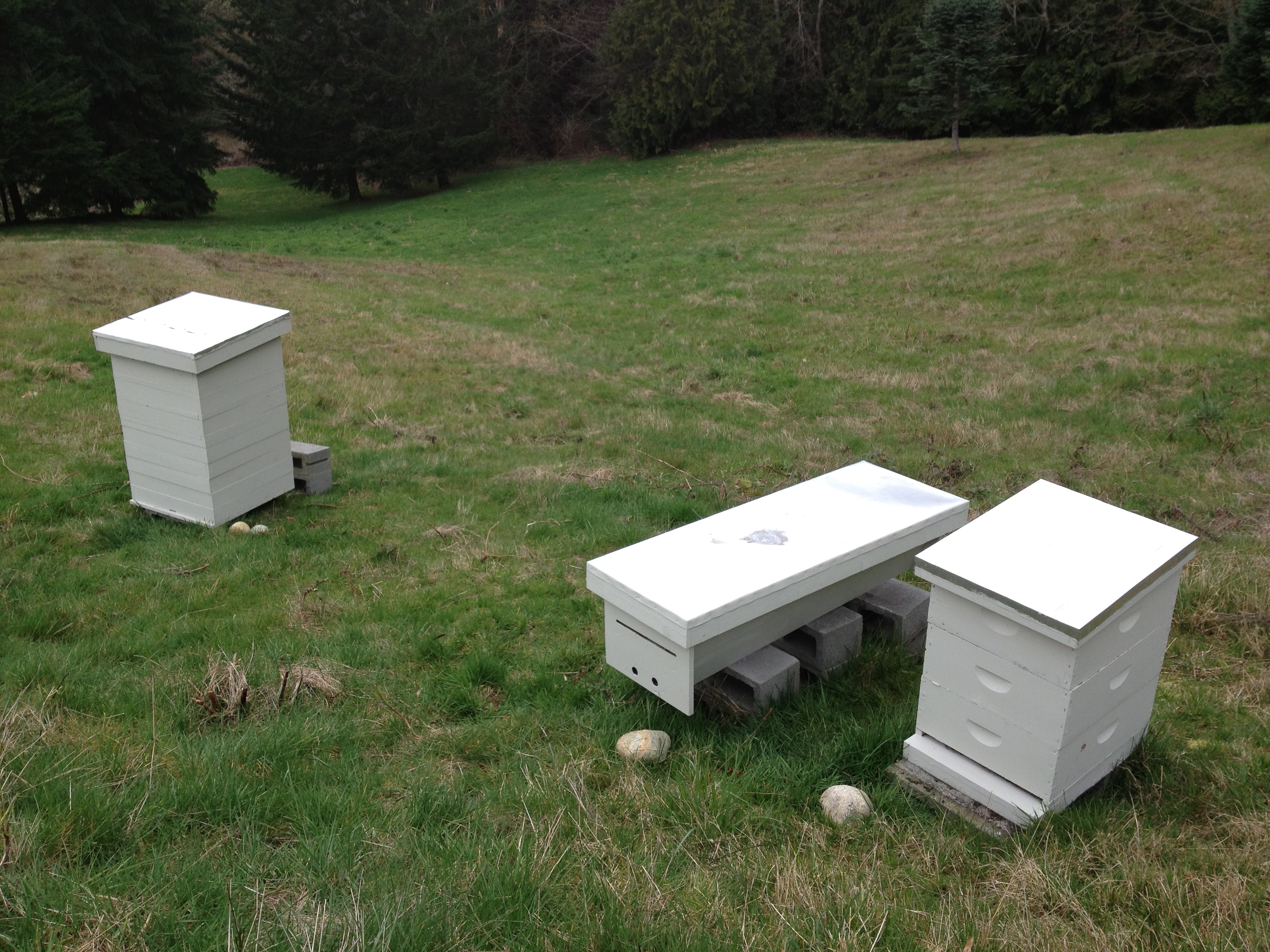
Bee Hive Comparison: Perone, Kenyan, Langstroth
Highlights for the month:
- We’re back in balance with a smaller flock of 20 layers after selling 10 birds to local farming friends. The smaller flock means less eggs for my son to sell in his first entrepreneurship venture, but also significantly less work for me hauling extra food/water and less work for our family when rotating the entire poultry paddock setup to fresh pasture. Now I’m re-thinking how to capture all that great compost that we’re currently leaving in the field through a combination of a permanent coop with movable paddocks.
- As my friend Laura – purveyor of Modern Victory Garden – says, we’ve returned to the season of the Seedling Shuffle with rapid rollout of seedlings from our grow lights to our greenhouse, and then (for the cold hardy) out into the food forest under mini hoop houses.
- After spending enough time on Permies.com forums, I finally realized I should be growing my own chicken food. I’m now reseeding our pasture with similar ingredients as what is in our commercial feed that we buy direct from the manufacturer via our homesteading group of friends. By the time the birds return to this same ground a year later, it should have a healthy crop of what they normally eat ready and waiting for them. I also added a Biopod to our vermicomposting setup to convert kitchen scraps into grubs for the chickens.
- Ready for the 2013 Battle of the Bees, where we’ll be able to directly compare how our Italian bees do in three radically different hives. From left to right you see a new Perone hive (named after the Argentine inventor) I recently built with our local Bee Godfather, a Kenyan (aka Top Bar) hive, and a classic Langstroth hive. When the bees packages arrive later this spring, we’ll install two packages in the large Perone hive and one in each of the others. Will report back later in the year how this direct comparison between the hive styles pans out, at least for our microclimate here in the Pacific Northwest.
Lowlights for the month can be summed up in just this one graphic. Ugh.

Signs of spring
Posted: February 16, 2013 Filed under: 1. Philosophy, 3. Food Security, 7. Physical Security Comments Off on Signs of spring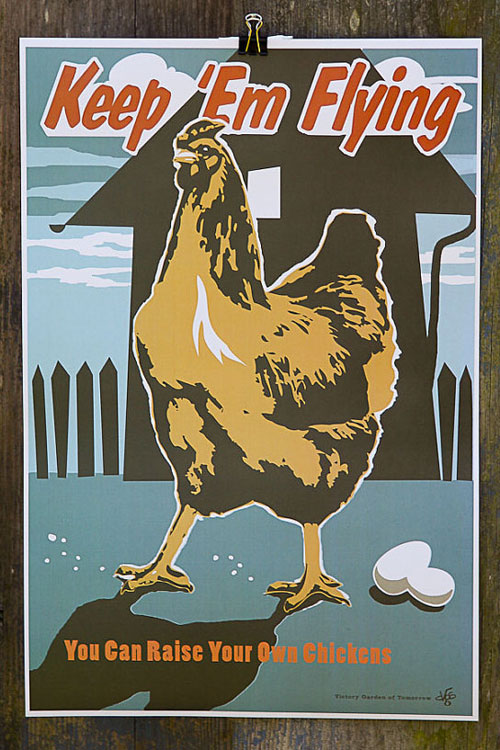 This past month marked the formation a new work team to work on a crazy big eco-project with Fortune 100 CEOs, as well as the milestone of finishing the first draft of my book on building neighborhood resilience.
Highlights:
- Snippets of the sun coming back. Some gorgeous days interspersed with gloomy cloud cover.
- Garlic shoots emerging. Better sign of spring for me than any decorative flower bulbs, although those are gorgeous, too.
- Ever watchful dog protecting my kids and letting me know when anyone is near when I’m deep in thought about how to fix my latest farming mistake.
- Found the best Big Picture summary of what actions our country needs to take that I’ve read in a long time. (note subscription to read is free)
- Two enjoyable weekend construction projects with trusted friends, building a semi-portable rocket stove and a new Perone style bee hive. Details on implementation of each next month after some testing.
Lowlights:
- Food crop beds riddled with mice holes, especially under the floating row covers. Time to add a pair of barn cats to the microfarm.
- Two separate dog attacks on our chickens, each time injuring one bird. Negligent dog owners drive me nuts.
- Last bee hive died (the Kenyan style one). They left stores and were OK two weekends ago, so I have some investigation to do to determine the cause.
- Too many laying chickens from our latest batch. They are beautiful healthy birds, but my life is now out of work/farm balance as they require more frequent rotation in the pasture and feed/water refills. Solving by selling off half the flock this week.
- And finally, a lowlight that will become a highlight. Due to my day jobs, I end up reading a lot of bad news. And I’m burning out on it. Yes, our society is due for a radical overhaul, which will most likely be painful. And our planet is reacting against all the damage we are causing it. Which will definitely be painful for us. But I’m weary of reading and researching the bad news each day. So I’m taking a cue from the permaculture revolutionary Paul Wheaton’s email signature about “making a better world through learning good things rather than being angry at bad guys.” Perhaps I’m not the only one going through this…
 Opt Out En Masse