Map Your Neighborhood Step 10
Posted: October 12, 2011 Filed under: 1. Philosophy, 2. Water Security, 3. Food Security, 4. Energy Security, 5. Alt Transportation, 6. Personal Training, 7. Physical Security Comments Off on Map Your Neighborhood Step 10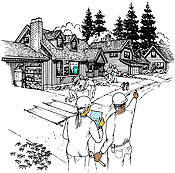 There is a brilliant woman named Dr. LuAn Johnson in Olympia, Washington who created the Map Your Neighborhood (MYN) program. It has the nine steps to complete immediately after a wide scale emergency such as a tornado or earthquake.
For our small town, we are adding a “Step 10” series to various citizens’ nine step guidebook to bridge the gap between an individual set of neighbors and the larger community surrounding them. Steps 1-9 of Dr. Johnson’s MYN program ensure you, your loved ones, and your direct neighbors are cared for and secured. As we roll out our town-wide plans to connect our neighborhoods for both emergency preparedness and sustainability projects, the Step 10 series will shift the focus of specific individuals to securing entire neighborhoods and then the whole town (which happens to be an easily defined area – it’s an island).
Perhaps this list will be useful for your town as well. Here are a few examples of our Step 10 additions for citizens to pursue after they have finished their Steps 1-9. They will seek to travel (safely, short distances) to their neighborhood’s designated shelter:
- Ham radio operators to begin communication coordination
- Doctors, nurses, EMTs and CPR experts to to provide medical attention
- Mechanics and engineers to ensure all generators are safely up and running
- Members of the horse and bicycle communities to begin transportation duties (medical supplies, communication devices, etc) where roads are likely blocked by landslides and fallen trees
As we do further work on these Step 10 actions, we’ll document them on our main website, as well as excerpts here on this blog.
New bio-fuel source from zucchini!
Posted: October 10, 2011 Filed under: 3. Food Security, 5. Alt Transportation Comments Off on New bio-fuel source from zucchini! My grandchildren will look back at all my fretting about Peak Oil as pure silliness.
“Thank goodness we discovered a bio-fuel source made from zucchini in 2013!” they will say as they poke fun of me riding around on my electric bicycle. Happy motoring, indeed.
(Good gosh did I overplant zucchini, cucumbers, and gourds this year.)
DIY disaster relief
Posted: October 7, 2011 Filed under: 6. Personal Training, 7. Physical Security Comments Off on DIY disaster relief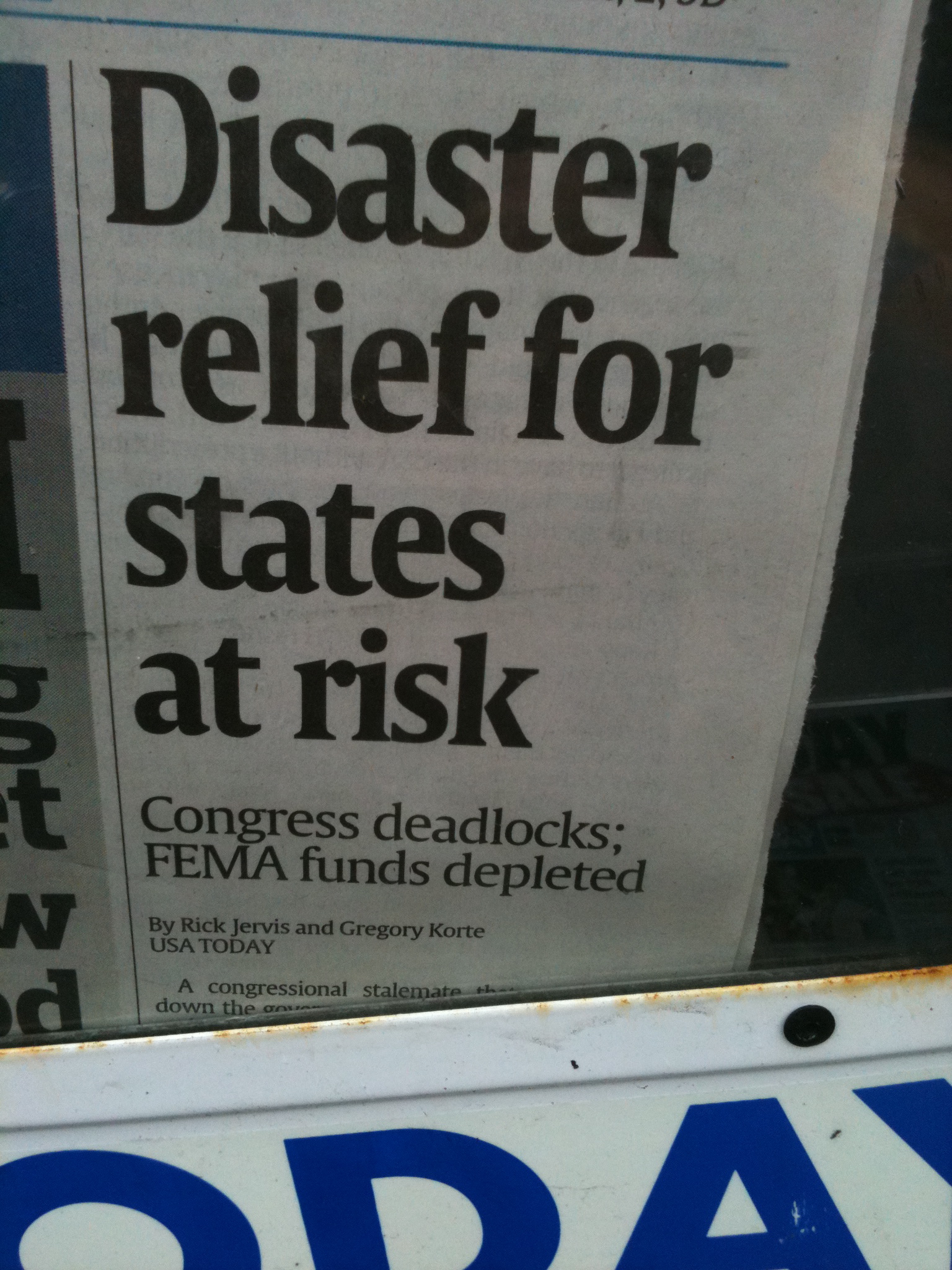 I noticed this headline the other day. It reinforced in my mind the need for citizens to be proactive and take charge of their own emergency preparations. Gone are the days when “they” will come to rescue you from the flood, earthquake, hurricane, or other significant disaster.
Locally we’ve just started a new focus on these efforts, building off the good work done by some professionals several years ago. We’ve put together a wide-reaching consortium of both professionals plus citizens to cover many different topics that an emergency – long or short – could affect.
From non-cellular communication to non-gasoline powered transportation, we’re seeing significant interest and buy-in from individuals and existing groups. It’s exciting to see.
In praise of the Golden Comet
Posted: October 3, 2011 Filed under: 3. Food Security Comments Off on In praise of the Golden Comet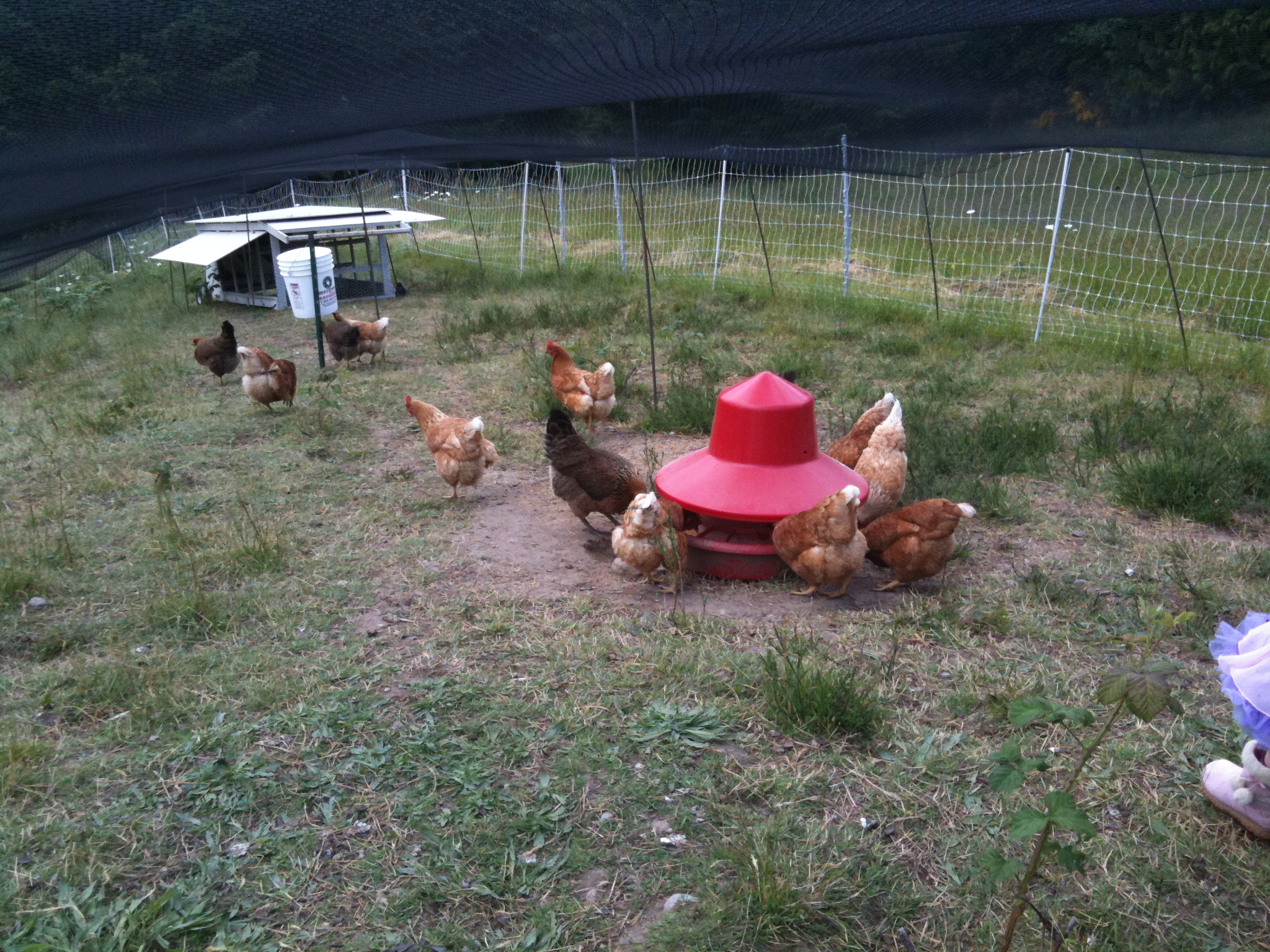 Reading a post recently about Golden Comets from a new farm on our island reminded me of just how much I’m enjoying this particular breed of laying chicken.
In comparison with our previous flocks of Araucana, Dominique, Barred Rock, and Speckled Sussex birds, the Golden Comets are the rock stars of the laying community. They are a smaller bird which requires less feed, that produces larger eggs more consistently than most other breeds. And for those of you with close neighbors we have, they are relatively quiet. Highly recommended whether your flock is 2 or 200 birds.
What can you do about the global food crisis?
Posted: October 1, 2011 Filed under: 2. Water Security, 3. Food Security Comments Off on What can you do about the global food crisis? Sending both financial and spiritual support to farmers across the globe is a good response to the global food crisis, but you can also directly help by growing your own food close to home.
Whether it is on the balcony of your apartment, the community pea-patch down the street, your own backyard, or via your local CSA, growing your own food not only helps you and your local loved ones, but those farmers around the world.
Learn more via OxFam’s interactive map on food prices around the world.
How to help bees survive the winter
Posted: September 29, 2011 Filed under: 3. Food Security | Tags: bait hives, bee swarm, bees Comments Off on How to help bees survive the winter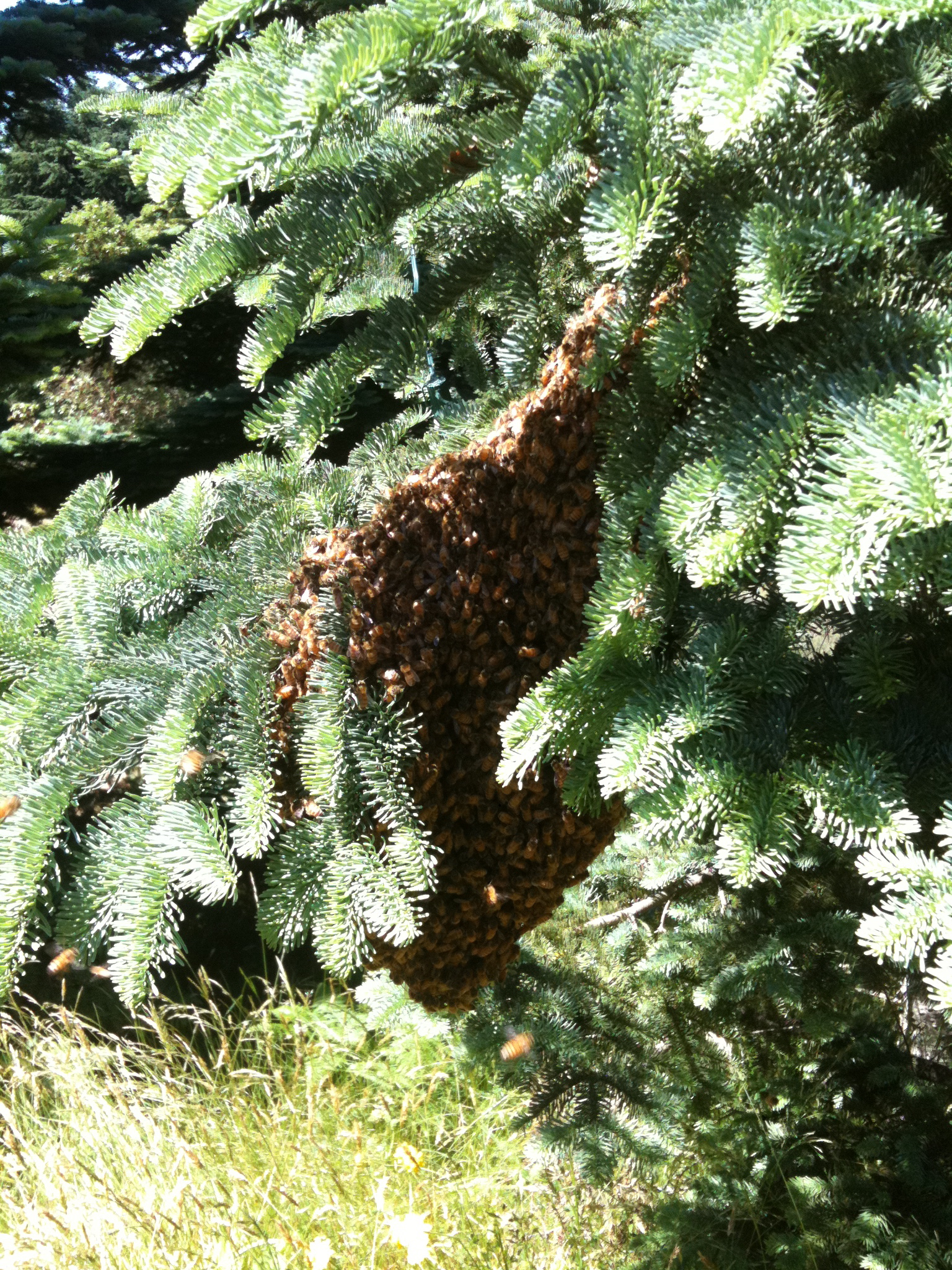 After our previous fun with bees, I got pretty good at capturing swarms (grabbed four more). But the last swarm got away as I was on an international work phone call patching together three different countries via Skype. It was frustrating as I watched out my window, tracking the swarm drift away in the forest. Bummer.
So given that our bee population dropped by half in one of the hives, we’ve got about 45 pounds of honey in one hive and 65 pounds in another. Since this is our first year with these colonies, we going to try to ensure their survival this winter by not harvesting at all.
Related: during the down time this winter I’m going to build several bait hives to put out for next year’s summer heat swarm extravaganza. We saw eight swarms other than our own go floating across our pasture during the several weeks when everyone’s bees took off. It looked like a bee highway!
Growing potatoes in straw bales
Posted: September 27, 2011 Filed under: 3. Food Security Comments Off on Growing potatoes in straw bales I read about folks having success growing potatoes directly in straw bales – no soil required – and tried a version of that plan this season. It did not work.
We used leftover straw with ample amount of manure in it from our sheet mulching experiment (which worked wonderfully for the blueberries) to form new beds on top of pasture grass. I’m not sure if we did not plant the seed potatoes deep enough, but we lost 50% of the crop this year to sunlight trickling down through the loose straw. You could see that the potatoes were attempting to grow as we layered on additional straw later, but the sunlight stunted them.
But at least we’ve got a good base material in these new beds for a winter cover crop to get ready for the Spring!
Keep Calm & Carry On
Posted: September 22, 2011 Filed under: 1. Philosophy, 2. Water Security, 3. Food Security, 4. Energy Security, 5. Alt Transportation, 6. Personal Training, 7. Physical Security, 8. Wealth Management Comments Off on Keep Calm & Carry On I have British friends who use this old catchphrase often and many times tongue-in-cheek. Which made me smile all the more when I saw the nearby graphic while reading one of my favorite blogs, Little Homestead in the City.
As we are ramping up our local efforts to build resilient neighborhoods on our island, it’s a good reminder to read about the history of victory gardens and related sustainability projects that our grandparents were quite familiar with, and that are becoming new again.
In her post Anais asks her readers their preparedness levels in these areas (at least one of which you’ll see we’ve not listed in our categories to the right – oops): Food, Water, Fuel Energy, Sanitation, Alternative Currency, Transportation, Communications, Medical & First Aid, Survival, Security.
I’ll prepare a future post regarding our sanitation plans in low or no power scenarios.
How to refresh permaculture pathways
Posted: September 20, 2011 Filed under: 3. Food Security Comments Off on How to refresh permaculture pathways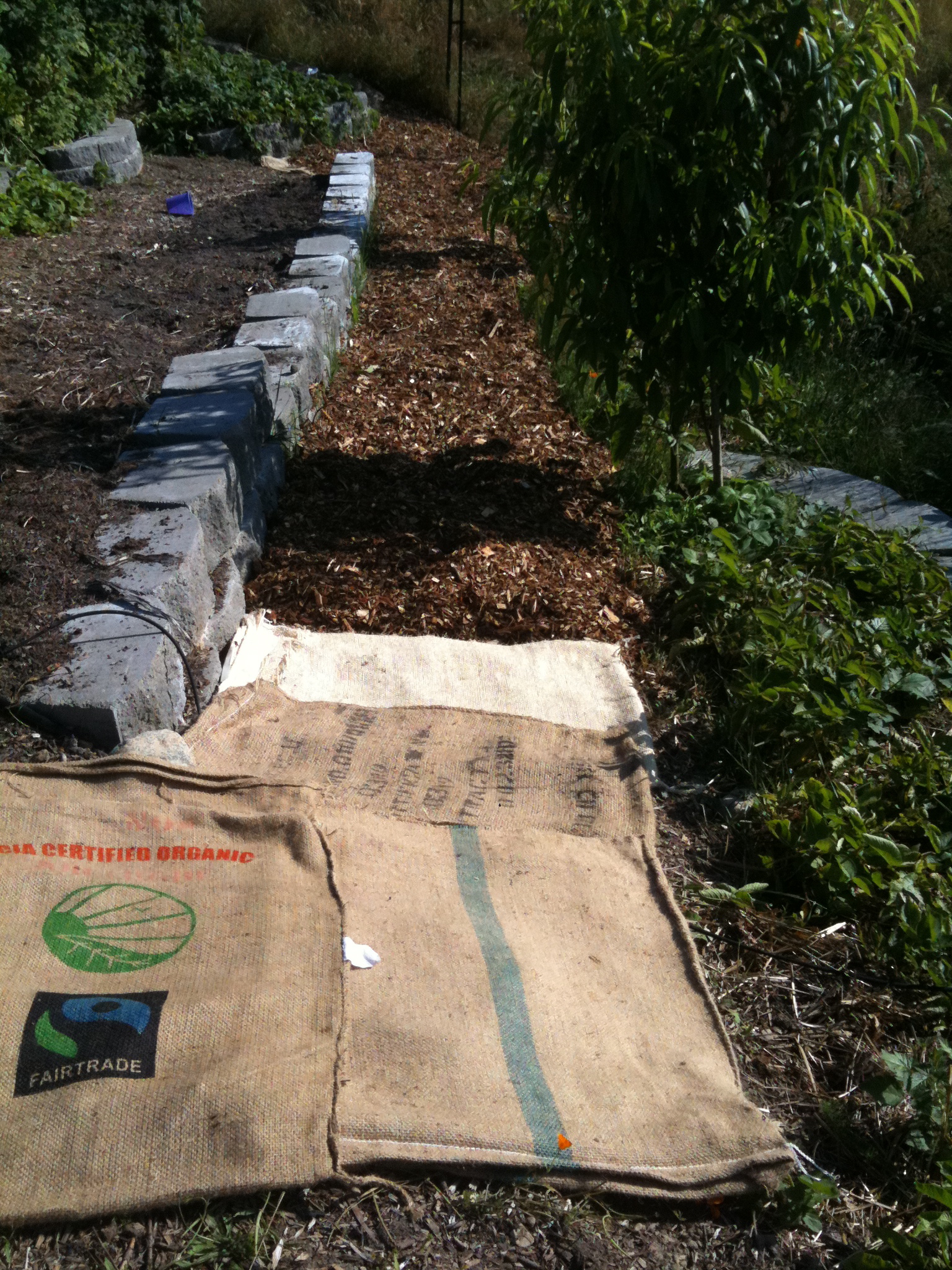 Every other year we bring in a load of wood chips (usually free from local arborists) to redo our pathways. This year with our expanded switchbacks in the food forest we needed 25 yards worth of chips!
Before laying down the new layer of chips, we coated the pathways with burlaps bags from a friend’s Fair Trade coffee roastery to help smother any persistent weeds.
On previous projects I did this with corrugated boxes retrieved from dumpster diving, but failed to remove the remaining tape before covering with chips. We’ve spent the last two years picking up pieces of plastic tape as they push to the surface. Oops!
Ah, so that’s why they’re called potato bugs
Posted: September 19, 2011 Filed under: 3. Food Security Comments Off on Ah, so that’s why they’re called potato bugs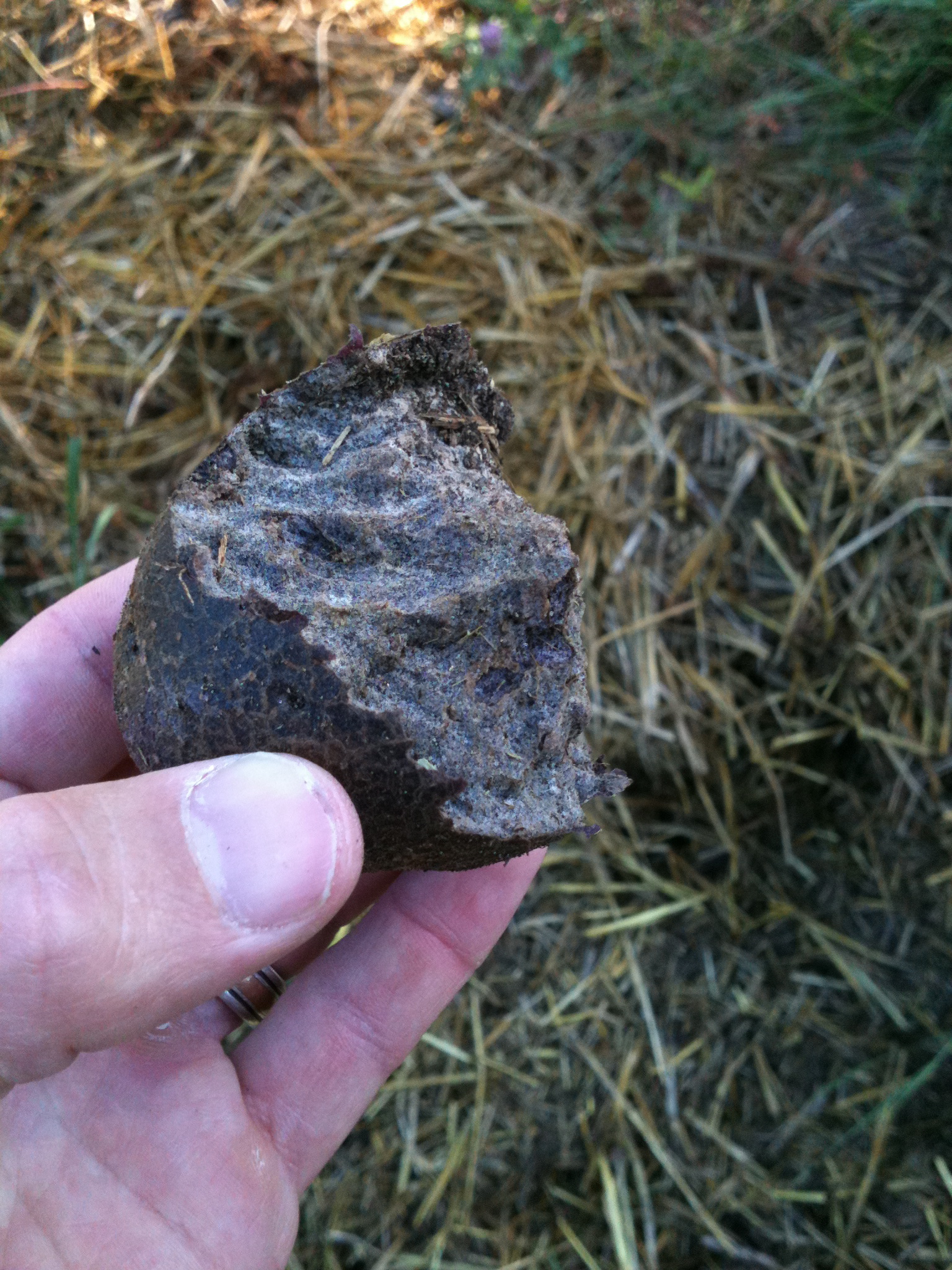 I never understood why those cute little pill bugs my kids collect were also called potato bugs until this season.
As we were pulling up our red, white, and blue potatoes, one entire section was half-eaten. The culprits were nearby, which delighted my daughter and educated me on the nature of their nickname.
Please ping me if anyone has ideas on how to protect potatoes from these guys next season without resorting to any kind of chemical spray.
 Opt Out En Masse